

Candlestick Chart Patterns for Nigerian Traders
📈 Master candlestick chart patterns to read market moves and make sharp trading decisions in Nigeria's equities, forex, and crypto markets with real local tips.
Edited By
Henry Collins
Chart patterns are essential tools for traders and investors who want to understand price movements and predict potential market direction. Whether you are trading on the Nigerian Stock Exchange (NGX) or the forex market, recognising these patterns sharpens your decision-making.
In straightforward terms, chart patterns are formed by the price action of stocks, forex, or commodities plotted on graphs. These shapes usually signal whether the market might continue a trend, reverse it, or enter into consolidation.

For example, a head and shoulders pattern often indicates a reversal after a strong uptrend, suggesting the asset may decline. Conversely, a flag or pennant pattern can signal a pause before a trend resumes. Understanding these signals helps traders know when to enter or exit trades effectively.
Mastering chart patterns improves your chances in trading by providing clues about market psychology. Patterns reflect the battle between buyers and sellers, revealing when momentum shifts.
Trend prediction: Patterns show if a current trend will keep going or change course.
Risk management: Identifying patterns early helps limit losses by setting clear stop-loss points.
Timing: They highlight optimal moments to enter or exit positions.
Local traders often face challenges like market volatility and liquidity constraints. By using chart patterns alongside other methods, you can better navigate such issues. For instance, recognising a double bottom pattern in NGX stocks can signal a strong level of support, guiding you on when to buy.
Many Nigerian traders find it helpful to refer to PDF guides from reputable sources. These often include:
Clean diagrams of patterns
Step-by-step instructions on identifying patterns
Practical examples from global and Nigerian markets
Having these PDFs accessible on mobile devices lets you review patterns offline, which is great for times when data is unreliable or expensive.
In addition, you can annotate these PDFs to highlight patterns relevant to your trading style or favourite sectors like banking or oil. This customised approach makes the learning process efficient and practical.
In summary, chart patterns are not just theoretical shapes but actionable tools. Combined with solid PDF references and consistent practice, they equip you to tackle the Nigerian market with confidence.
Chart patterns offer traders a visual way to understand how prices move in the market. They show recurring shapes and formations on price charts that reflect trader behaviour and market sentiment. Recognising these patterns can provide insight into probable future price movements, helping traders make more informed decisions.
Chart patterns are distinct shapes created by the price action on trading charts, such as candlestick or line charts. Examples include triangles, head and shoulders, and flags. Each pattern typically signals whether the current trend is likely to continue or reverse. For instance, the "head and shoulders" pattern often hints that an uptrend might be ending, signalling a potential shift to a downtrend.
Chart patterns help traders anticipate market direction before it fully unfolds, giving them an edge. Unlike relying solely on indicators or news, patterns provide context directly from price movements. For example, traders on the Nigerian Stock Exchange (NGX) might spot a "double bottom" pattern forming in shares like Dangote Cement, signalling a chance to buy before prices rise. Understanding patterns reduces guesswork and helps manage risk by identifying possible entry or exit points.
To read chart patterns effectively, you need to follow price highs and lows over time and spot how they connect. Price movements form trends—upward, downward, or sideways—that reveal the market's mood. Consolidation periods, where prices move within a tight range, often precede breakouts. Traders must watch volume alongside price: increased volume on a breakout confirms the move’s strength. For example, when a stock like MTN Nigeria breaks out from a triangle with strong volume, it often continues the trend.
Clear recognition of chart patterns combined with volume and trend analysis forms a practical foundation for profitable trading strategies.
By studying these patterns and their implications, you gain a practical edge in the markets, whether trading stocks, forex, or cryptocurrencies. It is especially valuable in volatile Nigerian and global markets where price swings can be swift. With practice, chart patterns become reliable tools in your trading kit.

Chart patterns reveal the market's psychology by showing how price action unfolds over time. For traders in Nigeria and beyond, recognising these patterns is like having a map to navigate market trends and potential turning points. They help anticipate whether a price will keep moving in the same direction or reverse, thus guiding entry and exit decisions.
Triangles are among the most reliable trend continuation signals. They form when price consolidates between converging trendlines, like a contracting channel. For instance, in the Nigerian Stock Exchange (NGX), a rising triangle usually suggests buyers are gathering strength to push prices higher once the resistance line breaks. Traders watch for volume spikes and breakout confirmations before committing funds.
Flags appear as small rectangles sloping against the prevailing trend, resembling a flag on a pole. After a strong price movement, the market pauses and forms the flag, indicating brief consolidation. For example, if Zenith Bank's share price rallies sharply, then drifts within a narrow down-sloping channel, this flag pattern suggests the uptrend will likely resume. Flags offer clear risk levels with their distinct boundaries, making them practical for stop-loss placement.
Pennants look like small symmetrical triangles following a rapid price move. Unlike flags, pennants converge more sharply, signalling a brief pause before continuation. In forex trading with pairs like USD/NGN, a pennant after a sharp rally signals potential upward continuation. Since pennants form quickly, traders must be alert to catch the breakout early.
Head and Shoulders is a classic reversal pattern indicating an imminent trend change. It forms three peaks: a higher middle peak (head) flanked by two lower peaks (shoulders). For example, if MTN Nigeria’s stock price forms this top pattern after a long uptrend, it suggests a possible downward reversal. Traders often set targets by measuring the head’s height and applying it from the breakout point.
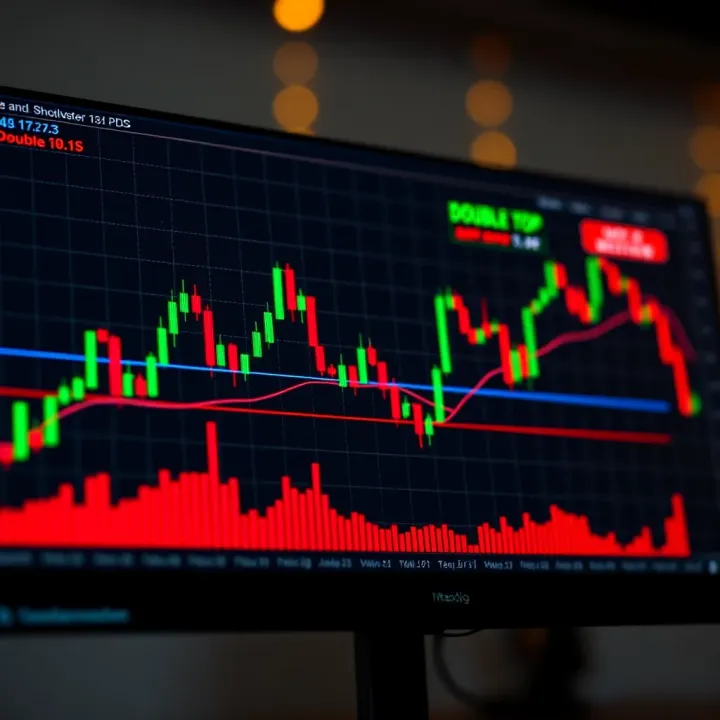
Double Tops and Bottoms signal a failure to break support or resistance twice, pointing to trend reversal. A double top shows price hitting the same high twice but failing to push higher, whereas a double bottom has the opposite with lows. In the Nigerian oil sector, if Nigerian National Petroleum Company Limited (NNPCL) shares form a double bottom during a bearish phase, it may indicate recovery signs. The pattern gives clear entry points on confirmation of breakout.
Cup and Handle resembles a rounded bottom followed by a small consolidation (handle). This pattern suggests bullish continuation after a pause. For example, Guaranty Trust Bank (GTBank) shares forming this pattern could signal steady gains ahead. It captures investor hesitation before renewed buying pressure drives prices up.
Rectangles mark periods where price moves sideways between parallel support and resistance levels. It shows a tug of war between buyers and sellers. For Nigerian traders, recognising rectangle patterns helps avoid unnecessary trades during indecision. Waiting for a breakout from this box provides clearer direction.
Symmetrical Triangles represent indecision with converging trendlines reflecting balanced buying and selling pressure. These patterns often resolve with a strong move whichever way, so traders carefully observe breakout volume. In volatile markets like crypto exchanges, symmetrical triangles warn of an upcoming strong directional move.
Understanding these chart patterns and their meanings equips you to read the market’s story. Combining this with volume analysis and market context improves your chances of making solid trading calls.
Chart patterns PDFs can serve as practical guides for traders looking to sharpen their analytical skills. Unlike scattered online content, these PDFs offer organised, detailed insights that you can access offline at any time. They are especially useful for Nigerian traders who might face intermittent internet connectivity or want to study on the go using their phones or tablets.
PDFs are portable and easily saved on any device, making them perfect for frequent review. Their fixed format ensures charts, annotations, and explanations retain clarity regardless of the device, unlike some web pages that break layouts. Also, many PDF resources collate various chart patterns and detailed explanations in one place, saving you from hopping between several sites. For example, a well-prepared PDF might include trading signals from patterns like head and shoulders, clear before/after breakout illustrations, and tips tailored for markets like the Nigerian Stock Exchange (NGX).
Visual clarity in a chart patterns PDF is non-negotiable. Traders learn best when they can easily spot pattern shapes and key price points like support, resistance, and breakout levels. PDFs with high-quality, zoomable charts help you identify patterns such as triangles or flags without strain. Clear labelling of axes, trendlines, and timeframe adds to usability, especially when studying on smaller screens common in Nigeria. For instance, a PDF showing a symmetrical triangle with marked entry and stop-loss points provides immediate practical value.
A PDF should do more than show charts; it must explain the meaning behind the patterns. Understanding the signals—like volume spikes confirming a breakout or false break indications—prevents costly mistakes. Good resources break these down in simple language, avoiding jargon overload. For example, a section clarifying that a double bottom signals potential upward reversal and how that impacts trade decisions is essential for beginners and pros alike.
Examples grounded in real price movements give context and build confidence. PDFs that reference recent NGX stock charts or popular forex pairs add relevance. They demonstrate how theoretical patterns work amid market noise unique to volatile Nigerian markets, where news events or local factors can affect price. Seeing a cup and handle pattern play out on MTN Nigeria Plc shares during a known rally season strengthens your grasp more than abstract diagrams.
Trusted educational platforms, established trading communities, and recognised Nigerian financial websites often publish quality PDFs. For Nigerian traders, checking local brokerage firms’ research portals or fintech hubs like Cowrywise and Piggyvest may lead to accessible and relevant materials. Also, international resources such as those from Investopedia or reputable brokerage education sections can supplement local content, provided the examples align with Nigerian market realities.
Having the right chart patterns PDF can noticeably raise the quality of your learning, turning theory into actionable skill that suits local trading conditions. Save time and reduce guesswork by choosing resources that prioritise clarity, explanation, and real-world examples.
With these tips, you can confidently pick PDFs that refine your trading strategy and enhance your market understanding.
Applying chart patterns effectively requires understanding their relevance both locally and internationally. The Nigerian stock market behaves differently from global markets, influenced by unique factors such as government policies, currency fluctuations, and local economic events. For traders, recognising these distinctions helps interpret chart patterns with more accuracy and improves decision-making.
The Nigerian Exchange Group (NGX) presents opportunities to apply chart patterns for stock trading, but traders must account for market-specific dynamics. For instance, the NGX is prone to low trading volumes compared to larger exchanges. This means that a double top or head and shoulders pattern might carry less weight if volume confirmation is lacking. Monitoring volume alongside price action is crucial. A stock like Dangote Cement might form a bullish flag pattern during a stable economic period, signalling a probable upward move. However, government announcements related to subsidies or tariffs often trigger sudden shifts, requiring traders to blend chart analysis with current events.
Volume confirmation is often the missing piece when interpreting patterns on the NGX. Always check if the pattern is accompanied by adequate trading activity before making a move.
Forex and crypto markets are accessible to many Nigerian traders thanks to platforms like MT4, Binance, and OPay's forex offerings. Chart patterns in these markets appear frequently due to high liquidity and 24-hour trading. For example, the forex pair USD/NGN often displays symmetrical triangles during consolidation phases before a breakout. Cryptocurrencies like Bitcoin and Ethereum form cup and handle or pennant patterns regularly. However, these assets are highly sensitive to global news, such as regulatory changes or macroeconomic data. Therefore, relying solely on patterns without acknowledgement of fundamental news can lead to losses.
To succeed here, combine chart patterns with news tracking and risk-management tools unique to the fast-moving forex and crypto markets.
Volatility is a defining feature of many Nigerian and global markets, especially during ember months or political cycles like guber elections. Patterns that might be reliable in calmer markets often produce false signals amid heightened volatility. Traders should therefore adjust their expectations: widen stop-loss limits, confirm patterns over multiple time frames, and avoid trading based on single signals.
For example, a breakout from a pennant pattern in the NGX may quickly reverse if the naira suddenly weakens against the dollar or if fuel scarcity affects manufacturing sectors. Being aware of such context helps traders avoid being caught on the wrong side.
Use higher time frame charts (daily or weekly) to confirm patterns.
Supplement pattern analysis with indicators like Average True Range (ATR) to gauge volatility.
Stay updated on local and global news impacting markets.
By tailoring chart pattern usage to the realities of Nigerian and global markets, traders can sharpen their edge, improve timing, and reduce risk in their trades.
Chart patterns are powerful tools, but traders often slip into common pitfalls that can cost them dearly. Recognising these errors helps safeguard your investment and sharpen your trading strategy. Let's look at some key mistakes Nigerian traders and investors should watch for.
Low trading volume can distort chart patterns, making them less reliable. Volume reflects market interest and liquidity; when it's thin, prices can swing irregularly, causing false breakouts or misleading trends. For example, a breakout on the Nigerian Exchange Group (NGX) stock with unusually low volume might not indicate a true upward move. Instead, it could be a brief spike from a few trades. Always check volume alongside price action. Without sufficient confirmation, acting on patterns in low-volume contexts can lead to losses.
Chart patterns alone don’t paint the full market picture. Relying solely on them is like navigating Lagos traffic without a map — risky and unpredictable. Always combine pattern analysis with other tools like moving averages, Relative Strength Index (RSI), or support and resistance levels. For instance, spotting a head and shoulders pattern on FTSE 100 shares but ignoring broader economic indicators or earnings reports can mislead your decision. Multiple indicators provide layers of confirmation, reducing chances of false signals.
The market does not operate in a vacuum. Events like Central Bank of Nigeria (CBN) policy changes, oil price fluctuations, or political developments affect price movements beyond technical patterns. For example, a bullish flag might signal continuation, but if the Nigerian naira suddenly weakens due to external shocks, the pattern may fail. Understanding these fundamentals is essential. Combining technical with fundamental analysis helps you avoid blindly trusting patterns when market conditions shift unexpectedly.
A chart pattern without context is like a car without fuel — it won't get you far. Always pair pattern readings with volume checks, complementary tools, and current market realities.
By steering clear of these mistakes, you'll develop a more robust trading approach that works better under Nigerian market conditions and beyond. Remember, the charts tell a story, but you must read the whole book to understand it well.
📈 Master candlestick chart patterns to read market moves and make sharp trading decisions in Nigeria's equities, forex, and crypto markets with real local tips.
📊 Understand key trade chart patterns to spot market trends and smart price moves. Access trusted PDF guides tailored for Nigeria's financial markets. 📈

📈 Discover how to spot key candlestick patterns for stocks, forex, and crypto. Learn practical strategies and risk tricks tailored for Nigerian traders' market realities.

📊 Master price action chart patterns with our practical guide! Learn to spot key signals and trade confidently in Nigerian markets plus handy PDF resources to download.
Based on 10 reviews