

Understanding Binary Investment in Nigeria
Explore binary investment basics, risks, rewards, and smart strategies ⚖️ tailored for Nigerian traders to navigate this fast-moving market confidently 📈.
Edited By
Charlotte Evans
Trade chart patterns are essential tools for anyone involved in markets, from traders on the NGX (Nigerian Exchange Group) to brokerage analysts and finance students eager to comprehend price movements better. These patterns form when price points create shapes on charts, signalling potential future trends or reversals. Understanding them helps you make smarter decisions rather than relying on guesswork.
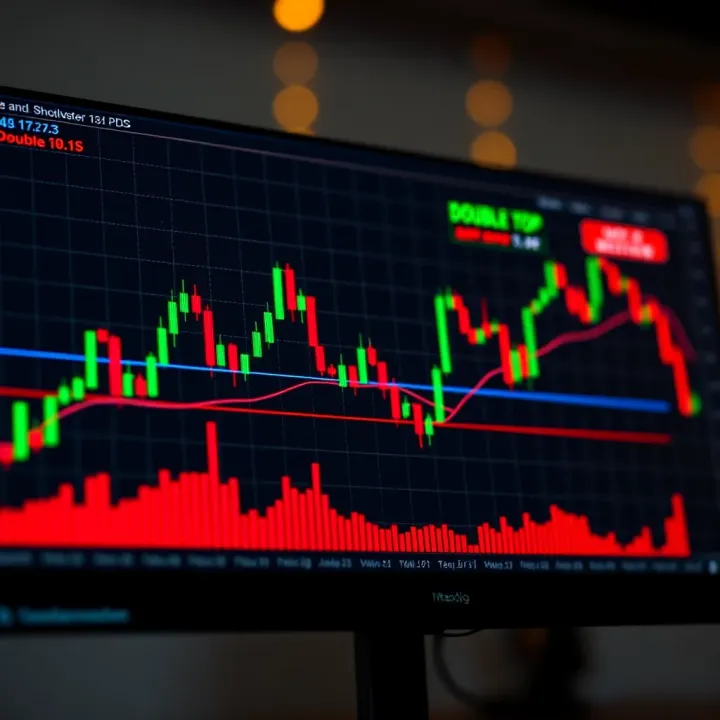
When you look at price charts, patterns like head and shoulders, triangles, or double bottoms reveal the sentiment behind buying and selling. They hint when a stock or commodity might rise, fall, or pause. For instance, a triangle pattern often suggests the price is gathering strength before a breakout. Recognising such signs lets you time your entries or exits more effectively.
In Nigeria’s market, where volatility can be caused by political events or naira fluctuations, knowing how to read these signals adds an extra edge. You avoid rushing in after a sharp move or missing out on a good opportunity.
Head and Shoulders: Indicates a likely reversal from bullish to bearish or vice versa.
Double Top and Bottom: Shows strong resistance or support levels where price may turn.
Triangles (ascending, descending, symmetrical): Point to continuation or reversal depending on the breakout direction.
Each pattern carries its own story and probability. Combining them with volume data or RSI (Relative Strength Index) boosts reliability.
Spotting a pattern isn’t enough — understanding what it means and when it is confirmed separates successful traders from hopefuls.
Easily accessible charting software like MetaTrader or investing apps with Nigerian market data allow you to analyse these patterns daily. For example, if you notice a bullish flag in a popular Nigerian bank stock during a time of positive CBN policy announcements, it might hint at further gains.
To master these insights, use PDF guides from reputable sources that explain pattern identification alongside case studies in Nigerian equities and forex. These materials often provide downloadable worksheets and examples tailored to our financial ecosystem.
Chart patterns are visual tools showing likely price moves.
They inform better trading strategies, especially in volatile Nigerian markets.
Combining patterns with other indicators improves accuracy.
Practical PDF resources help deepen your understanding and application.
Building confidence with chart patterns means practising with real-time data and reviewing guides focused on Nigerian contexts. This approach sharpens your ability to anticipate market moves, leading to smarter investment decisions.
Trade chart patterns form the backbone of technical analysis for traders and investors. They help decode the market's movements, providing clues about what price might do next. For anyone active in Nigerian markets, whether on the Nigerian Stock Exchange (NGX) or Forex platforms, understanding these patterns offers a sharper edge in making buy or sell decisions.
Studying these patterns can reveal the psychology behind price actions—who is buying, who is selling, and the strength of those moves. For example, a 'head and shoulders' pattern might signal a trend reversal, giving you advance notice to exit a position before losses pile up. By decoding these visual signals, you reduce guesswork and trade with stronger conviction.
Trade chart patterns are distinct formations created by price movements on a stock or currency chart over time. These shapes reflect repeated behaviours of market participants, such as accumulation, distribution, or shifts in supply and demand. For instance, a 'double bottom' forms when a price hits the same low twice and bounces, suggesting strong buying interest at that level.
These patterns help traders spot trends early and predict probable price directions. They’re like the market's own language, speaking volumes about crowd sentiment without using words. Learning to recognise them means you don’t only react to price changes—you anticipate them.
Technical analysis relies heavily on chart patterns to confirm trends or warn about reversals. Unlike fundamental analysis, which looks at company data and economic factors, technical analysis focuses purely on price data history. Patterns act as signals backed by past market behaviour, making them practical guides to future price action.
For example, combining a ‘flag’ pattern with volume analysis can strengthen your trade signal. If volume drops during the flag formation and surges at breakout, it confirms the market's commitment to the next move. This reduces false signals and helps manage risk effectively.
Nigerian financial markets have unique traits—volatile naira exchange rates, fluctuating liquidity, and sudden shifts caused by macroeconomic policies. Chart patterns help decode these complex behaviours by offering visual insights into market momentum and potential shifts.
Consider the NGX All-Share Index during ember months when market activity intensifies. Chart patterns can reveal when the index is likely to rally or pull back, assisting traders in timing their moves better. This insight is particularly useful when fundamentals are unclear or shifting rapidly.
Chart patterns improve decision-making by providing clear entry and exit points. In Nigeria’s Forex market, where rapid swings are common, spotting a ‘triangle’ or ‘pennant’ can help traders catch breakouts early. This means you don’t have to rely solely on news or rumours, which often cause delayed or emotional reactions.
For NGX traders, recognising patterns on shares like Dangote Cement or MTN Nigeria can guide effective portfolio management. For instance, seeing a ‘double top’ on MTN’s chart might warn of a potential drop, prompting you to adjust your holdings on time.
Mastering trade chart patterns gives Nigerian traders a practical tool to navigate volatile markets, cut losses, and maximise gains with greater confidence.
Understanding the common trade chart patterns is essential for Nigerian traders aiming to make informed decisions in volatile markets like the Nigerian Exchange (NGX) or the Forex space. These patterns act like signals, showing probable price directions and helping you spot potential entry or exit points. Recognising the differences between reversal, continuation, and neutral patterns can improve how you time your trades and manage risks.
Head and Shoulders is a classic reversal pattern signalling a likely trend change. It features three peaks—the left shoulder, the head (the highest peak), and the right shoulder—forming a shape resembling a human head and shoulders. Once the price breaks below the “neckline” connecting the shoulders’ lows, it often indicates the end of an uptrend and a shift to a downtrend. For example, if a top-performing NGX stock forms this pattern after a bullish run, a savvy trader might consider taking profits or placing sell orders.
Double Top and Double Bottom patterns also signal reversals but differ in shape. The Double Top looks like the letter 'M' and signifies a resistance level has been tested twice but failed to break upwards, hinting at bearish movement ahead. Conversely, the Double Bottom resembles a 'W' and suggests a support level held firm twice, indicating bullish reversal. Such patterns are practical in Forex trading, where repeated support or resistance levels often trigger trend shifts.
Flags and Pennants indicate short pauses in an ongoing trend before the price continues along the same direction. Flags appear as small rectangles slanting against the trend, while pennants are small symmetrical triangles formed by converging trendlines. Picture an NGX share price shooting upwards, then sideways drifting for several sessions (the flag) before rising again. These patterns help traders anticipate continued momentum, useful for setting stop-losses or adding to winning positions.
Triangles come in three main types—ascending, descending, and symmetrical—and they suggest consolidation before a breakout. An ascending triangle has a flat resistance with rising lows, generally hinting at upward breakout. Descending triangles show a flat support and descending highs, often signalling downward moves. Symmetrical triangles feature converging highs and lows, indicating indecision with breakout direction to be confirmed. Nigerian traders can watch these patterns during periods of low liquidity or market uncertainty to prepare for significant price swings.
Rectangles and Channels show price moving within parallel support and resistance lines, indicating market indecision or balance between buyers and sellers. Channels tilt up, down, or move sideways, helping traders plan trades by buying near support and selling near resistance. On the NGX, some stocks exhibit channel patterns during range-bound periods, allowing disciplined traders to profit from predictable swings.
Doji and Other Candlestick Patterns reveal indecision in the market. A Doji forms when opening and closing prices are nearly equal, signalling a tug-of-war between bulls and bears. They often appear before reversals when confirming with volume or other indicators. These candlestick patterns are vital for short-term trading, especially when combined with the overall chart pattern setup to confirm potential changes.
Recognising these common patterns equips Nigerian traders to decode price action better and align their strategies with real market behaviour, rather than relying on guesswork or hearsay.
Trading with chart patterns requires a clear understanding of what to look for and how to act on it. Proper reading of these patterns helps reduce guesswork, enabling traders to anticipate price moves based on historical behaviour. For Nigerian traders especially, where market conditions like naira fluctuations and liquidity challenges affect patterns, mastering this skill improves decision-making in the NGX or forex markets.
When spotting patterns, focus on price movements forming recognizable shapes—like peaks, troughs, and trendlines. For instance, a "head and shoulders" pattern shows a peak (the head) between two smaller peaks (the shoulders), signalling a potential reversal. Watching volume alongside these shapes helps confirm validity: rising volume during pattern formation strengthens the signal.
Other vital indicators include support and resistance levels. These horizontal lines mark price points where assets often bounce back or struggle to break through, crucial for confirming breakout or breakdown points. Using live charts from platforms like MTN Stocks Portal or investing apps popular in Nigeria can help spot these indicators in real time.
Chart patterns vary across timeframes—daily, weekly, or intraday candlestick charts. Short-term traders might focus on 15-minute or 1-hour charts to make quick decisions, useful in volatile markets like Nigerian forex trading. Conversely, long-term investors tracking NGX shares use daily or weekly charts to identify sustained trends.
Choosing the right timeframe depends on your trading style. For example, during the ember months, when market volatility often spikes, closer attention to shorter timeframes can prevent unexpected losses caused by sudden price swings.
Volume confirms the strength of a chart pattern. For instance, a breakout from a triangle pattern accompanied by increased volume indicates genuine momentum. Without volume support, the breakout risks being a false signal.
In Nigerian trading environments, where liquidity is sometimes thin, volume spikes might be less frequent but more telling. Tracking volume through tools on local platforms like Remitano or Binance Nigeria offers insights on when a pattern is trustworthy.
Moving averages (MAs) smooth price action and reveal trends. When a chart pattern breaks out above or below a key MA, such as the 50-day or 200-day moving average, it provides extra confidence for trades.
Similarly, the Relative Strength Index (RSI) helps spot overbought or oversold conditions. For example, a bullish chart pattern paired with RSI rising above 30 from oversold levels strengthens the buy signal. Nigerian traders can use these indicators on popular apps like Kuda or GTBank trading portals.
One major challenge is acting on patterns that later fail. These false signals often arise from irregular or incomplete patterns, or when market news abruptly invalidates technical setups. For example, a double top might look set to trigger a sell-off, but sudden CBN policy changes could reverse the price instead.
Avoid relying solely on patterns; always cross-check with volume and other indicators. Practice on demo accounts can help recognise real signals from misleading ones.
Chasing every pattern leads to overtrading, which drains capital through transaction costs and poor entries. Some traders jump into trades just because a pattern forms, without confirming the bigger market context.
Patience is vital. Nigerian traders should remember that not all patterns will play out as expected. Setting clear rules on entry, stop-loss, and exit points based on confirmed patterns protects capital against fatigue and rash decisions.
Reading and using chart patterns effectively means combining sharp observation with discipline. This approach turns charts from confusing lines into practical tools that inform smart trading decisions in Nigeria’s complex markets.
Chart pattern PDFs are vital tools for traders and investors in Nigeria who want to deepen their understanding of market behaviours. They provide clear, structured content that you can refer to repeatedly without dependence on internet access—this especially matters in Nigeria where power outages and unstable connectivity are common.
PDF guides allow you to study and revise important chart patterns anywhere, anytime, without worrying about data or network issues. Imagine a trader located in rural Kaduna who can download quality guides during stable network periods to review offline later, even during NEPA power cuts.
Course materials, annotated examples, and illustrations in PDF format serve as solid reference points. Having all this in one place means you avoid the hassle of jumping between websites or videos, and you can quickly revisit sections to reinforce your learning, especially when analysing live charts on platforms like the Nigerian Stock Exchange (NGX).
Platforms linked with recognised bodies such as the NGX or global providers like Investing.com often have trustworthy PDFs. These sources ensure you get verified and updated information, reducing the risk of following outdated or misleading guides.
Several Nigerian fintech companies and brokerages — including Kuda, Trove, and Chaka — provide educational content tailored to Nigerian investors. Their resources often incorporate local market examples, making the patterns easier to relate to Nigerian market nuances like naira fluctuations and liquidity variations.
Active engagement with PDFs is key. Use digital annotation tools or a printed copy to highlight crucial patterns, jot down observations, or track how a pattern played out in recent NGX stocks. This approach turns passive reading into active learning and sharpens your pattern recognition skills.
Applying the patterns you learn on PDFs to real Nigerian market cases consolidates your understanding. For example, examining how a 'double bottom' pattern influenced the price movement of Cadbury Nigeria Plc shares during the ember months teaches you more than theory alone. Such exercises align your learning with actual trading scenarios, improving decision-making.
Downloading and actively using chart pattern PDFs fortifies your trading arsenal, especially amidst Nigeria's unique market conditions and infrastructure challenges.
Understanding trade chart patterns is one thing, but applying them effectively in the Nigerian market requires some practical adjustments. Nigerian markets, especially the Nigerian Stock Exchange (NGX) and Forex trading, have unique characteristics that influence how these patterns behave. This section offers hands-on tips to help you adapt chart patterns to local conditions and combine them with traditional investment strategies.
Considering volatility and liquidity differences
Nigeria’s financial markets show more volatility and often thinner liquidity compared to global markets. Stocks in smaller sectors or less popular shares on NGX tend to have wider price swings and fewer daily trades. This means that chart patterns might appear distorted or false signals could arise from limited market activity. For example, a descending triangle pattern could appear to break down sharply simply because a few big trades caused a price gap, not due to genuine market sentiment.
Being mindful of these liquidity constraints helps traders avoid jumping into trades based on unstable patterns. Using longer timeframes for pattern confirmation can reduce the chance of being misled by erratic price movements typical in Nigerian markets.
Impact of naira exchange rates and power disruptions on trading
The naira's fluctuating exchange rate influences market sentiment, especially in Forex and multinational NGX-listed firms. Rapid depreciation or appreciation often causes sudden price moves that can break chart patterns unexpectedly. Traders should watch macroeconomic indicators such as CBN’s forex policies closely when interpreting patterns.
Another local challenge is inconsistent power supply, which affects both market participants and infrastructure reliability. During power outages, internet access may falter and real-time data feeds can become unreliable. These interruptions heighten the risk of missing key pattern developments or executing delayed trades at less favourable prices. Building contingency plans such as mobile data backups or alternative power sources will help you remain alert and responsive.
Balancing technical analysis with fundamental data
In the Nigerian context, technical analysis should complement fundamental insights rather than replace them. For instance, understanding company fundamentals such as earnings reports, governance standards, or industry challenges provides vital context for chart patterns.
If a head and shoulders pattern forms on a banking stock during a period of regulatory uncertainty, the pattern’s reliability might increase. However, if the fundamentals are strong and the company just released a stellar quarterly report, the pattern might not indicate a real downturn. Nigerian traders who integrate both approaches improve their decision confidence and reduce the risk of false trades.
Case study: Using patterns in NGX-listed stocks
Consider the example of Dangote Cement, a highly liquid stock on NGX. During one trading period, an ascending triangle formed, signalling a likely breakout. Observing volume alongside the pattern, traders noticed increasing trade volumes—a classic confirmation of a breakout.
However, around the same time, news of naira depreciation and rising cement demand surfaced, giving a strong fundamental reason for the price surge. Traders who acted swiftly on the combined technical and fundamental insight captured significant gains before the price consolidated.
Combining chart patterns with local economic dynamics and firm-specific information increases your odds of trading success in Nigeria’s complex markets.
By understanding the quirks of the Nigerian market and blending technical and fundamental insights, you can make smarter, more informed trading decisions that suit your strategy and risk tolerance. This approach ensures chart patterns serve as a useful guide, not a standalone signal, in your trading toolkit.
Explore binary investment basics, risks, rewards, and smart strategies ⚖️ tailored for Nigerian traders to navigate this fast-moving market confidently 📈.

Discover how binary bots work in options trading ⚙️, their risks, types, and legal issues 🇳🇬. Get tips to judge legitimacy before using them!

Explore how binary option robots 🤖 operate in trading, their risks, benefits, strategies, and tips for Nigerian traders to choose reliable tools safely.

🤖 Discover how binary bots operate in trading, their pros and cons, and smart tips for Nigerian traders to use them safely and effectively in the market.
Based on 12 reviews