

Key Chart Patterns Every Trader Should Know
📈 Discover 7 key chart patterns in trading to spot price moves and make smarter decisions. Clear tips and visuals tailored for Nigeria's traders. 💡
Edited By
Isabella Turner
Price action trading focuses on studying raw price movements on charts rather than relying heavily on technical indicators. For traders and investors in Nigeria, this approach offers a straightforward way to read market sentiment and make decisions based primarily on what price is telling you.
In simple terms, price action chart patterns are shapes or formations created by the highs, lows, opens, and closes on price charts. These patterns help traders identify potential market turning points, continuation signals, or periods of indecision.

Understanding these patterns doesn't require expensive software or complex algorithms. Instead, it involves recognising formations like pin bars, inside bars, double tops, head and shoulders, and triangles. Each pattern suggests different price behaviour, guiding you whether to buy, hold, or sell.
Price action tells the story of supply and demand without noise. It helps you cut through the clutter especially in volatile markets like Nigerian equities or forex.
Simple and clean: You don’t need many tools; price itself is the main signal.
Works across markets: Whether you trade Nigerian stocks, currencies, or commodities, patterns hold true.
Adaptable to local markets: Nigerian market conditions—such as naira fluctuations or power disruptions—reflect swiftly in price and patterns.
Look for key levels where price reacts frequently; these become support or resistance.
Watch for reversal patterns like double tops or pin bars near these key levels.
Use volume and candle colour (colour fills in markets like MTN Nigeria on the Nigerian Exchange) to confirm moves.
Avoid overcomplicating with too many indicators; price action keeps analysis grounded.
This guide will help you spot the most common and reliable price patterns through clear charts and examples. To make learning easier, downloadable PDFs are provided, allowing you to study offline or on the go. Whether you are a beginner trying to read your first chart or a professional aiming to sharpen your skills, understanding price action starts here and now.
Price action forms the backbone of many traders' decision-making process in financial markets. It refers to analysing the raw price movements of an asset over time without the crutch of lagging technical indicators. Understanding price action helps traders decipher market behaviour firsthand, enabling quicker responses to changing conditions and clearer insight into trends.
Price action trading involves reading charts to spot patterns, levels, and movements that reflect buying and selling activity. Instead of relying on complex indicators like moving averages or RSI, traders focus on candlestick formations, swings, and support or resistance zones. For instance, if the Nigerian Stock Exchange (NGX) share price of a bank hits a resistance level repeatedly but fails to break through, a price action trader might interpret this as a potential reversal or consolidation point.
Many Nigerian traders prefer price action due to its simplicity and real-time responsiveness. Indicators often lag because they depend on past data, which might cause delayed signals in fast-moving markets like forex or equities during ember months. Price action allows traders to react swiftly to market sentiment, reducing dependence on complicated formulas or software. Moreover, price action adapts across different markets and timeframes without needing constant adjustment, making it well suited for the diverse Nigerian trading environment.
Price movements are direct expressions of trader psychology — fear, greed, uncertainty. For example, a strong bullish engulfing candle on an OIL price chart might suggest growing confidence among investors anticipating increased demand or supply disruptions. Conversely, a series of pin bars with long wicks on the NGX All-Share Index could indicate hesitation and a tug-of-war between bulls and bears. By tracking these signals, traders gauge the overall market mood and make informed entries or exits.
Understanding price action equips traders with a direct window into market dynamics without waiting for indicators to catch up.
In summary, appreciating the basics of price action offers Nigerian traders practical advantages: it simplifies analysis, sharpens timing, and connects trading decisions with real-world market behaviour. This foundation is essential for applying chart patterns and enhancing trading outcomes in local and global markets alike.
Price action chart patterns are vital tools that help traders anticipate market moves without relying solely on technical indicators. Recognising these patterns allows you to make timely entries and exits, combining market psychology with price behaviour. In the Nigerian market, where volatility can spike suddenly, understanding these patterns can give you an edge in both stocks and forex trading.
Flags and Pennants: Flags and pennants signal brief pauses in an ongoing trend before price continues in the original direction. A flag looks like a small parallelogram slanting against the trend, while a pennant resembles a tiny symmetrical triangle. For example, a bullish flag during a rally suggests traders are taking a breather before the price surges higher. This pattern can be spotted on the daily chart of Nigerian banking stocks during earnings season, hinting at further gains.
Rectangles: Rectangles form when price moves sideways within parallel support and resistance lines, indicating a consolidation phase. Once price breaks out upwards or downwards, it usually resumes its prior trend. For instance, if a forex pair like USD/NGN consolidates within a rectangle and then breaks above resistance, it may signal a strong continuation of the uptrend. Traders use rectangles to identify low-risk breakout points and set stop-losses appropriately.
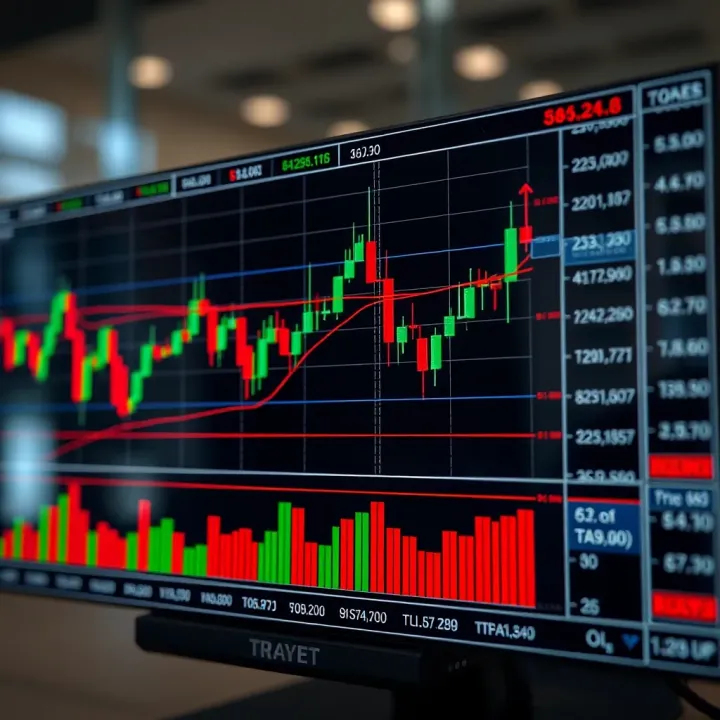
Head and Shoulders: This is a classic reversal pattern signalling an end to an existing trend. It consists of three peaks — two smaller 'shoulders' flanking a higher 'head'. In Nigerian equities, the head and shoulders pattern has shown signs of market top formation, where an uptrend turns bearish. Noticing this pattern early helps traders prepare to exit longs or consider short positions.
Double Tops and Bottoms: Double tops occur when price hits a resistance level twice without breaching it, suggesting sellers are stepping in. The opposite, double bottoms, indicate strong support after price tests the same low twice. For Nigerian market traders, spotting a double top on something like the NGX banking index can warn of impending declines, while double bottoms often mark recovery zones.
Triple Tops and Bottoms: Similar to doubles but more significant, triple tops or bottoms reflect multiple tests of key levels, reinforcing the likelihood of a reversal. Though rarer, these patterns are prominent in longer time frames and can be valuable in Nigerian market analysis to confirm trend exhaustion or strong support.
Triangles: Triangles represent a pause in price action where buyers and sellers reach equilibrium. There are ascending, descending, and symmetrical triangles, each hinting at potential breakout directions. An ascending triangle often suggests bullish continuation, while descending triangles can warn of bearish moves. For instance, an ascending triangle observed in the forex pair EUR/NGN may hint at a pending uptrend continuation.
Wedges: Wedges are similar to triangles but with sloping support and resistance lines converging. They usually indicate a slowing momentum before a reversal or continuation. A falling wedge in a Nigerian stock’s daily chart might show that bearish momentum is weakening, potentially signalling an upcoming bullish breakout.
Recognising these patterns on price charts sharpens your ability to read market sentiment and execute trades confidently. For Nigerian traders, combining these patterns with local market insights and risk controls makes price action trading a practical strategy.
Flags and Pennants: Short-term pauses before trend continuation
Rectangles: Sideways consolidation prior to breakout
Head and Shoulders: Signals trend reversal
Double/Triple Tops and Bottoms: Indicate strong support or resistance tests
Triangles: Equilibrium zones hinting at breakouts
Wedges: Momentum shifts signalling reversals or continuation
Understanding and applying these chart patterns can help you navigate the Nigerian financial markets more effectively, avoiding false signals and catching real moves early.
Reading and interpreting price action charts is vital for traders who want to understand market movements without over-relying on complicated indicators. By focusing on pure price behaviour, you get clearer signals directly from supply and demand forces at work. This skill helps in making timely decisions whether you’re trading Nigerian equities like MTN Nigeria or forex pairs like USD/NGN.
Support and resistance levels are foundational to price action trading. Support marks a price where buyers tend to step in, preventing further decline, while resistance is where sellers come in to cap gains. Spotting these zones on charts helps forecast likely reversal points or breakouts. For example, if Guaranty Trust Bank (GTBank) stock repeatedly bounces off ₦30 per share, that suggests a strong support zone. Conversely, if it struggles around ₦40, that marks resistance. Knowing these levels alerts you when price is set to react, informing entry and exit points.
An engulfing candle pattern occurs when a larger candle completely covers the previous smaller candle’s body. This often signals a sharp change in sentiment. In an uptrend, a bullish engulfing pattern shows buyers overpower sellers, hinting the price may climb further. On the other hand, a bearish engulfing candle after an uptrend warns of potential sell-off. For example, if Access Bank’s share price forms a bullish engulfing at support, it could offer a strong buy signal.
Pin bars feature long tails or wicks and small bodies, showing rejection of a certain price level. A long lower wick (bullish pin bar) means buyers pushed the price back up after a dip, suggesting a potential upward reversal. Conversely, a long upper wick (bearish pin bar) signals sellers pushed back after a rally. Traders use pin bars at support or resistance areas to confirm probable reversals. Seeing a bullish pin bar at ₦500 for Dangote Cement may suggest the price will rebound from that level.
A doji candlestick forms when the opening and closing prices are nearly the same, producing a cross or plus-shaped figure. It reflects market indecision—a tug-of-war between buyers and sellers. After a strong trend, a doji hints that momentum might be slowing and reversal or consolidation may follow. In Nigerian markets, spotting a doji near important levels warns traders to prepare for a change or pause in price movement.
Volume is a key factor in validating price action signals. High trading volume accompanying a breakout or reversal pattern confirms genuine interest and makes the move more reliable. For instance, if a stock like Nestlé Nigeria breaks above resistance with a significant surge in volume, it confirms strong buying support behind the move. Conversely, a breakout with low volume may caution you to be wary of false signals. Integrating volume data strengthens your confidence in price action decisions, especially in volatile environments such as the Nigerian stock or forex market.
Recognising how price interacts at support and resistance, interpreting candlestick signals, and confirming moves with volume form the backbone of successful price action trading. These tools empower you to trade intelligently without congestion from many lagging indicators.
This groundwork prepares you to spot conditions where you can take advantage, be it investing in blue-chip shares or trading forex pairs on the Lagos market. Expect better timing, improved risk control, and clearer insights into market behaviour by mastering these reading techniques.
Price action patterns offer a solid way for traders in Nigeria to navigate the complexities of local markets, where volatility and sudden shifts are common. These patterns help simplify decision-making, cutting through the noise without depending heavily on indicators that may lag or give conflicting signals. Applying price action trading to Nigerian stocks and forex markets provides a practical edge by focusing on what the market truly signals through price movement itself.
Nigerian stock markets, particularly the NGX (Nigerian Exchange), have unique behaviours influenced by economic policies, political events, and foreign exchange pressures. Price action patterns such as flags, head and shoulders, or double tops provide clear visual cues for entry and exit points on stocks like Dangote Cement or MTN Nigeria. In the forex market, where pairs like USD/NGN can swing wildly due to Central Bank of Nigeria (CBN) interventions and oil price fluctuations, recognising these patterns helps traders anticipate reversals or continuations without overthinking.
For example, spotting a bullish pennant on the NSE banking index after a series of green candles might signal continued upward momentum, prompting traders to enter positions before the wider market reacts. Similarly, forex traders tracking the NGN's value against the dollar can use reversal patterns to hedge currency risks effectively.
Nigerian markets are often volatile, with price spikes caused by unexpected government announcements or supply chain disruptions impacting sectors like agriculture or manufacturing. Price action patterns help traders filter out daily noise by highlighting sustained trends and patient setups rather than impulsive price moves.
Using consolidation patterns like triangles or rectangles allows traders to wait for clear breakouts instead of reacting to momentary price fluctuations. This approach reduces false signals often caused by the 'ember months' rush or fuel scarcity spells, helping traders maintain discipline in choppy conditions.
Managing risk is critical in Nigeria’s financial environment, where economic shocks can trigger swift market corrections. Price action signals such as pin bars or engulfing candles not only indicate potential trade setups but also provide clear levels for stop-loss placement.
For instance, a bearish engulfing candle on the share price of a company like Guaranty Trust Bank after a strong rally suggests a possible pullback. Traders can set stop-loss just above the engulfing candle to limit losses if the signal fails. This technique ties risk to real market behaviour rather than arbitrary points, increasing the chance of preserving capital.
Understanding and applying price action effectively in Nigerian markets demands staying alert to local events and economic shifts. However, its practical nature makes it one of the most straightforward and precise strategies available, especially when combined with robust risk management.
By focusing on price movements alone, traders in Nigeria can cut through complexity and sharpen their trading edge while managing exposure prudently. This makes price action patterns an indispensable tool in a Nigerian trader’s toolkit.
Having reliable PDF resources on price action chart patterns can greatly improve your trading effectiveness. These PDFs condense vital information into easy-to-use formats that can fit into your daily routine. Especially for traders in Nigeria who face fluctuating market conditions and intense volatility, having a reference that clarifies complex patterns quickly is an advantage you cannot overlook.
For those new to price action trading, PDFs like "Price Action Simplified" or "The Beginner's Guide to Chart Patterns" provide clear explanations without unnecessary jargon. They break down key patterns like head and shoulders or flags with sample charts tailored towards markets similar to Nigeria’s NSE or the forex pairs commonly traded here such as USD/NGN. Look for PDFs that include illustrative examples from real market data to give practical context, not just theory.
A good beginner PDF should also include exercises or quizzes to test your understanding and build confidence. Resources published by reputable financial education platforms or experienced Nigerian traders tend to be more trustworthy. Many come with downloadable worksheets for you to print and interact with, which helps internalise reading charts better.
Using PDF guides actively during trading means more than just reading once. Keep these files accessible on your phone or laptop for quick review, especially before market open. For example, if you spot a candlestick pattern you’re unsure about, consult the PDF to confirm what the pattern suggests before placing a trade.
Some traders underline or highlight key sections and add personal notes directly on the PDF using annotation apps. This turns the guide into a living document customised for your trading style and preferred markets, like NSE blue chips or local forex brokers’ platforms. Regularly revisiting these notes reinforces pattern recognition and sharpens decision-making.
To deepen your understanding, create personalised PDFs by compiling your trading observations and favourite patterns. Screenshot charts from Nigerian markets where certain patterns caused clear trend shifts and add notes explaining what worked or didn’t. Over time, this library becomes a priceless tool tailored exactly to the conditions you trade.
You can also summarise insights from videos, seminars, or articles into concise PDF cheat sheets. Make sure to date your files and organise by pattern type (such as reversal or continuation) to find information fast. This active process of creating your own materials improves retention far beyond passive reading.
Having well-curated PDF resources puts you in control of your learning and boosts confidence when markets get choppy. In Nigerian markets, where rapid shifts test traders every day, mastering price action through practical PDFs is a smart move.
Using, curating, and personalising price action PDFs will sharpen your chart reading skills, helping you make timely and more confident trades amid Nigeria’s dynamic markets.
📈 Discover 7 key chart patterns in trading to spot price moves and make smarter decisions. Clear tips and visuals tailored for Nigeria's traders. 💡

💻 Explore how binary format shapes computing and data storage, learn binary number basics, applications, and clear up common misconceptions in tech.
🔢 Learn binary addition step-by-step with clear examples and essential rules. Discover its role in digital systems and avoid common mistakes! 💻
Explore binary operations in math ➕✖️: their definitions, properties, and uses in algebra, computer science, & logic. Perfect for learners in Nigeria 🇳🇬.
Based on 15 reviews