

Guide to Candlestick Patterns for Trading
📈 Explore a complete guide to major candlestick patterns in trading! Learn how they form, their market impact, and tips for smarter trading in Nigeria and beyond.
Edited By
Isabella Green
Chart patterns have long been the bread and butter for many traders aiming to predict future price movements. In Nigeria's vibrant trading scene, understanding these patterns can give you a real edge, whether you're dabbling in forex, Nigerian stocks, or commodities like oil.
This article walks through seven essential chart patterns every trader and analyst should know. Each pattern comes with practical tips so you can spot them quickly and rely on them to make better decisions when the market gets choppy.

We’ll cover not only the basics but also how these patterns behave in real scenarios, especially within markets relevant to Nigerian investors. By the end, you'll be able to look at a price chart and confidently identify opportunities or warnings based on these recognizable formations.
Getting familiar with key chart patterns is like having a seasoned guide whispering clues about where prices might head next — it’s not foolproof but definitely helps you avoid flying blind.
Throughout the article, expect clear descriptions, localized examples, and some useful hints to apply this knowledge right away. So, buckle up; this isn’t just book theory but a practical guide geared toward Nigeria’s trading environment.
Chart patterns form the backbone of many trading strategies, offering traders a visual tool to gauge market directions. For those navigating the often choppy waters of financial markets in Nigeria, mastering chart patterns can mean the difference between guessing blindly and making informed decisions based on recognizable price behaviors.
Recognizing these patterns helps traders anticipate shifts in supply and demand, which directly influence price moves. Let's say you spot a pattern signaling an upcoming price rise; acting on this insight might bring profitable trades. On the other hand, ignoring these visual cues can often lead to missed opportunities or unnecessary losses.
More than just technical shapes on a chart, these patterns tell stories about buyer and seller interaction. This section sets the stage by explaining what these patterns are, how they work, and why every serious trader should give them a close look.
Chart patterns are specific formations created by the prices of an asset over time, typically visible on candlestick or line charts. They represent the result of psychological and technical factors influencing traders' decisions. The purpose is straightforward: to help predict future price movements by identifying repeating shapes that historically precede certain market behaviors.
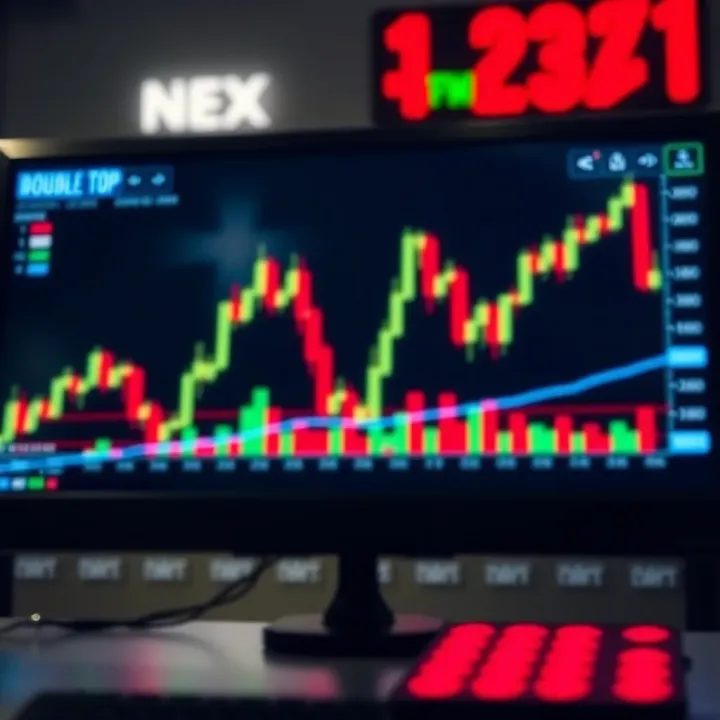
For example, a double top pattern looks like a capital "M" and often warns of a price falling soon. Spotting this early gives traders a chance to exit or short the market, preventing avoidable risk.
Traders scan charts daily, hunting for these patterns to make educated guesses about what will happen next. They combine this with other tools like volume analysis or moving averages but often use chart patterns as the initial red flag or green light.
A local Nigerian trader might notice a head and shoulders formation on the NSE chart indicating a potential trend reversal. Acting on this knowledge, they might adjust their positions accordingly. It’s less about crystal ball predictions and more about stacking probabilities in your favor.
By understanding chart patterns, traders stop relying on gut feelings alone and start basing trades on defined signals. This improves consistency and helps avoid impulsive moves that burn cash. An informed approach reduces emotional decision-making, crucial when markets turn turbulent.
Imagine a trader in Lagos using the flag pattern—a short pause in an uptrend—as a signal to add to their position once the price breaks out upwards. This tactic can make winning trades more frequent and losses smaller.
At its core, every chart pattern reflects collective emotions: greed, fear, hope, or hesitation. Learning to interpret these shapes is like reading the crowd’s mood. During a symmetrical triangle pattern, for instance, shrinking volatility means indecision before a big move in either direction.
A student of the market in Abuja might recognize this and prepare for a breakout, either up or down, thus staying ahead instead of reacting late.
Mastering chart patterns is like gaining a sixth sense about market moves—they’re a window into the market’s collective mindset, helping traders make smarter, less risky choices.
Chart patterns serve as a fundamental tool in technical analysis, offering traders visual cues about market behavior and future price directions. In this section, we'll unpack how these patterns help traders read price movements, spot potential opportunities, and manage risks better.
One of the core benefits of chart patterns is their ability to reveal whether a trend is likely to continue or reverse. Trend identification is the backbone of making informed trades. For instance, the "Head and Shoulders" pattern often signals a trend reversal—from bullish to bearish—alerting traders to potentially sell or short the asset. In contrast, when you see a series of higher highs and higher lows forming a rising channel, it suggests an ongoing uptrend.
Understanding these signs can prevent jumping into trades too early or holding onto positions as the market shifts. For example, during the Nigerian stock market trading sessions, spotting a double top in Dangote Cement’s chart could signal that the previous bullish run might be set for a drop.
On the flip side, continuation patterns like flags and pennants indicate that the current trend will likely keep moving in the same direction after a brief pause. These patterns often form during short consolidation periods. For example, after a strong upward move in MTN Nigeria’s shares, a flag pattern might develop, suggesting that the bullish momentum is just taking a breather before charging ahead.
Traders use these patterns to time entries better, jumping in during the breakout phase. Recognizing continuation patterns helps avoid mistaking a temporary pause for a reversal, which can save from premature exits.
While chart patterns offer valuable insights, relying solely on them can be risky. Patterns can sometimes give false signals, resulting in unexpected price moves. That's why pairing them with other indicators is a good move.
Common tools like moving averages, Relative Strength Index (RSI), and volume analysis add layers of confirmation. For example, spotting a triangle pattern with a rising volume during the breakout gives traders more confidence about the price direction. Conversely, if volume is low, the breakout might be weak and subject to reversal.
Combining these indicators with pattern recognition provides a more balanced and reliable trading approach.
Even with clear patterns and confirmations, no prediction is ever guaranteed. Managing risk remains essential. Always set stop-loss orders aligned with pattern structures. For instance, after entering a trade based on a double bottom pattern, placing a stop loss just below the pattern’s lowest point helps cap potential losses.
Risk management also involves sizing positions appropriately. Never bet the farm on a single pattern; using only a small portion of your trading capital limits damage if the trade goes south. Remember, no pattern works all the time, and the market can throw unexpected curveballs.
Trading with chart patterns demands patience and discipline. They give probabilities, not certainties—treat them as one part of a wider toolkit.
By understanding both the usefulness and the limits of chart patterns, traders in Nigeria and beyond can make smarter, more informed decisions, blending technical signals with sound risk strategies for better results.
Knowing common chart patterns is like having a map when navigating the market. They help traders identify potential price moves and make decisions that aren’t just guesses. These patterns reflect investor behavior and can signal when a trend might continue or turn around. Understanding these can significantly improve timing entry and exit points.
Formation and recognition
The Head and Shoulders pattern looks like three peaks: a high middle peak (the head) flanked by two lower peaks (the shoulders). It’s recognizable when the price forms these peaks in a roughly symmetrical way. The "neckline" connects the lows between the peaks and acts as a key support level.
Traders spot this pattern to anticipate a trend reversal. It often appears after a sustained uptrend and hints that bullish momentum is fading.
What it indicates for price direction
When the price breaks below the neckline after forming the right shoulder, it usually signals a bearish reversal. This means prices might start falling as sellers take control. Conversely, an inverse head and shoulders pattern suggests a potential bullish reversal after a downtrend.
For example, in Nigerian stocks like Dangote Cement, spotting a head and shoulders pattern on the daily chart can warn traders ahead of a price dip, allowing timely exits or short positions.
Characteristics and examples
A Double Top looks like the letter “M,” formed when price hits a resistance level twice but can’t breach it, then starts to drop. The Double Bottom forms like a “W,” indicating two strong support bounces.
These patterns reflect clear battle points where bulls or bears can’t push prices further. For instance, if Guaranty Trust Bank stock hits ₦35 twice but pulls back both times, that’s a Double Top signaling possible decline.
Trading implications
A Double Top often means prices will drop once the support level gives way. Traders may set stop losses just below this support to avoid big losses.
A Double Bottom hints at growing bullish momentum, so traders might look to buy as price breaks above the peak between the two bottoms.
Types of triangles: ascending, descending, symmetrical
Triangles form when price swings get tighter, showing indecision in the market.
Ascending triangle: flat resistance on top, rising support underneath; bullish bias.
Descending triangle: flat support below, falling resistance above; bearish bias.
Symmetrical triangle: converging trendlines; market can break either way.
These patterns allow traders to anticipate breakout directions and prepare accordingly.
How to trade breakouts
Successful trading involves waiting for a confirmed breakout beyond the triangle bounds, ideally with increased volume for validation. Entering trades too early can lead to whipsaws.
For example, a symmetrical triangle forming on Nestle Nigeria shares may signal a big move. Traders watch daily for a price break above or below to catch momentum early.
Short-term continuation signals
Flags and pennants are brief consolidations after sharp price moves, resembling small rectangles or tiny triangles slanting against the prevailing trend. They suggest the market is catching breath before continuing in the same direction.
How volume influences these patterns
Volume typically spikes during the initial move (flagpole), drops during consolidation, then surges again on the breakout. Checking volume helps filter false signals.
For example, in Forex trading with the Naira-Dollar pair, spotting a bull flag after a steep rise can give traders confidence that the uptrend will resume, so they prepare to buy on breakout.
Recognizing and understanding these patterns can give traders a better edge. They are not foolproof but combined with good risk management, they greatly enhance trading decisions.
Master these and you’re well on your way to trading with a clearer view of where prices might head next.
Understanding chart patterns through practical examples transforms theory into real-world skill. When you spot a pattern forming on an actual market chart, it brings clarity to the technical analysis process and helps tighten your trade entries and exits. Real-world examples demonstrate how patterns unfold over time, revealing the market's rhythm in a way that out-of-the-book diagrams simply can't capture.
For traders and analysts, seeing actual price movements linked to familiar patterns boosts confidence in interpreting signals and prevents false alarms. Examining these charts also exposes you to nuances—like subtle shapes or volume shifts—that textbooks might miss. Plus, applying theoretical knowledge to live or historical price data is a must if you want to avoid guessing games in trading.
Spotting patterns on a market chart isn't just about recognizing shapes; it's about following a process that sharpens your judgement. First, identify the general trend—up, down, or sideways. Then, zoom in on the price action to spot highs and lows that shape the pattern. For instance, with a head and shoulders pattern, you look for three peaks where the middle one is the tallest.
Next, check the volume changes. Is the volume increasing during the formation of the shoulders and dipping at the head? That's a strong sign. After marking these, draw trend lines for confirmation—connecting the lows for bullish patterns or the highs for bearish ones.
This step-by-step approach reduces errors and reinforces your understanding by breaking down complex price moves into clear, manageable chunks. Practice with live charts from the Nigerian Stock Exchange or forex pairs popular in Nigeria, like USD/NGN, to make learning more relevant.
Once a chart pattern completes, the market typically follows through in a predictable direction. For example, completing a double bottom pattern often signals a bullish reversal, so prices tend to rally afterward. Conversely, a double top usually paints a bearish outlook, with prices likely heading down.
What's important is to watch for confirmation signals before jumping in—like a breakout above the neckline in a head and shoulders pattern or a solid volume surge. In Nigeria's oil sector stocks, you might see this behavior clearly when prices break out after consolidating in a pennant pattern.
Being patient until the pattern completes and confirmation arises can save you from entering too early and getting caught in "fakeouts." Remember, no pattern guarantees results, but understanding typical price reactions helps manage risk better.
Having chart pattern PDFs at your fingertips is a great way to study whenever you've got a moment—on your commute, during a break, or before trading hours. These guides summarize key patterns with visuals and brief notes, making it easier to revisit concepts quickly without scrolling through dense articles.
PDFs are portable and don’t need active internet, meaning you can study offline, right at your small Lagos café or during power outages common in some areas. Many PDFs offer checklists or simplified diagrams, helping you train your eyes to spot patterns faster.
Moreover, some PDFs include examples drawn from actual markets, including emerging markets like Nigeria's, which adds local context that's often missing in generic study materials.
Don’t just passively read; engage actively with your PDFs. Print them out or mark them up with colored pens to highlight key elements. Create flashcards based on the patterns and quiz yourself regularly.
Integrate PDF learning with real chart practice—pause on a pattern in the guide and hunt for similar setups on live charts from platforms like TradingView or MT4. Also, keep a small notebook summarizing each pattern's traits and typical price moves.
Lastly, pair your PDF study with journaling your observations about patterns in actual trades. Writing down how you saw the pattern unfold, whether the predicted move took place, and what volume did helps cement knowledge beyond theory.
Regular, hands-on study combined with real market application is the difference between knowing patterns and actually using them to your advantage.
Following these practical steps will make chart patterns a reliable tool in your trading toolbox rather than just a textbook curiosity.
Chart patterns can be powerful tools, but their effectiveness depends on how well you use them. Simply spotting a pattern isn’t enough; you need to combine that insight with other tools and your own solid strategy. This section helps you understand how to make chart patterns work for you, highlighting practical tips and ideas that go beyond just pattern recognition.
Relying solely on chart patterns can be risky. Incorporating other technical indicators like moving averages, Relative Strength Index (RSI), and volume analysis adds layers of confirmation to your trades. For example, if you spot a bullish flag pattern on the Nigerian Stock Exchange for a company like Dangote Cement, check if the 50-day moving average also shows an upward trend and if RSI isn’t overbought. This combination reduces chances of false signals and boosts confidence in your trade.
Volume often tells a story that price alone doesn’t. A breakout on high volume points to genuine interest and increased chances of sustained movement. Conversely, low volume breakouts might be false alarms. Keep an eye on volume spikes to validate chart patterns.
Not every pattern plays out as expected. False signals can lead to unnecessary losses. One way to dodge them is by looking for extra signs that support the pattern’s validity. For instance, waiting for the price to close beyond a breakout level rather than reacting immediately can save you hassle.
Stop-loss orders also help manage risk if the pattern fails. Combining patterns with trendlines or indicators like MACD (Moving Average Convergence Divergence) can also help weed out fake signals. In practice, don’t rush in just because a pattern looks textbook-perfect; patience and cross-verification with other tools pay off.
Customizing resources to fit your style can deepen your understanding of chart patterns. While many online PDFs show generic patterns, tailor your own versions by annotating charts with your personal observations—like noting common pitfalls or particular behaviors from stocks you follow, such as MTN Nigeria or Stanbic IBTC.
Custom PDFs serve as quick references, especially for newcomers or traders who like to study during downtime. You could highlight examples of rising wedges or double bottoms and add comments about the context in which they appeared. This personal touch helps you spot those patterns faster when analyzing live charts.
A trading journal is more than just writing down profits and losses. Tracking your trades based on chart patterns sharpens insight over time. Record the setup, entry point, outcome, and what indicators you combined with the pattern.
For instance, note if a triangle pattern on Zenith Bank’s stock led to the anticipated breakout or fizzled out. Over weeks, you’ll identify which patterns consistently work for your trading style and which don’t. This self-review keeps you honest and improves your strategy by learning from mistakes and successes alike.
Effective use of chart patterns means blending knowledge, practice, and your own personalized tools to navigate markets more confidently.
By combining patterns with other indicators and recording your experiences, you build a solid foundation that goes well beyond just seeing shapes on a chart. This approach equips you with practical skills for the real-world trading grind, especially on markets like Nigeria’s where volume and volatility can vary widely.
Gaining confidence with chart patterns isn’t just about spotting shapes on a chart. It’s about understanding what these patterns really mean for price movements and how they fit into your trading strategy. When you get the hang of reading patterns like head and shoulders, triangles, or flags, you’re no longer guessing; you're making informed decisions. This builds trust in your analysis and helps you spot opportunities before others do.
For instance, if you see a double bottom forming on a Nigerian stocks chart, recognizing that it may signal a strong price bounce could tip you off to a good entry point. More than theory, this confidence means reducing hesitation and sticking to your plan even when the market gets a bit choppy.
Practicing chart pattern recognition over time is what sharpens your skill. Patterns don't always play out perfectly, so the more charts you study, the better you get at spotting the subtle differences and avoiding false signals. Traders in Lagos, Abuja, or anywhere else need to study not just local markets but global ones too, since patterns can behave differently depending on market conditions.
Regular practice helps you develop an intuition for market behavior. Keeping a trading journal to note when patterns worked or failed is a solid way to hone this skill. It's not about memorizing; it's about learning the dance between price and pattern.
To stay ahead, catch up with free resources like educational videos from platforms like Investopedia, online courses on technical analysis by Coursera or Udemy, and eBooks focused on Nigerian markets. Following market analysts on Twitter or reading brokerage houses’ market commentaries also helps you see how professionals interpret patterns in real-time.
Don't overlook downloadable PDF guides that summarize patterns and indicators; they make quick referencing easier, especially when you're live-trading. Even attending webinars or local trading workshops can provide practical insights distinct from textbook knowledge.
Consistency is what separates successful pattern traders from those who get whipped by the market's swings. Create a checklist for your trading day: first identify patterns, then verify with volume or RSI, set your stop losses, and define your exit points. If you spot a triangle breakout, for example, don’t jump in blindly; confirm it with volume increase and maybe a moving average crossover.
Knowing your rules and sticking to them takes the emotion out of trading. Even if a few trades go sour, following a process over time will help build your edge. Consistency also makes your trading practice more measurable, so you can see what works and tweak what doesn’t.
Discipline means trusting your analysis even when the market goes against you temporarily. Many traders bail out too soon or chase losses, which leads to bigger problems. Staying disciplined involves setting clear risk parameters and respecting them — for example, never risking more than 2% of your trading capital on a single pattern trade.
Moreover, discipline helps you avoid the trap of overtrading patterns that look promising but don't fit your setup criteria. An unfinished or irregular head and shoulders pattern might look tempting, but waiting for confirmation before acting saves you from unnecessary losses.
"Discipline in trading is not a restriction; it's your safety net." Keeping cool, sticking to your plan, and reviewing your trades regularly will build that safety net over time.
By combining continuous learning with a structured and disciplined approach, traders can steadily build real confidence in their ability to use chart patterns effectively in Nigeria’s markets and beyond.
📈 Explore a complete guide to major candlestick patterns in trading! Learn how they form, their market impact, and tips for smarter trading in Nigeria and beyond.

📉 Learn to spot bearish candlestick patterns in trading and improve your market predictions. Get tips on interpretation and combining tools for smarter decisions.

📈 Discover powerful candlestick patterns with our detailed guide—learn how to spot, interpret, and trade them confidently. Includes a handy PDF with 35 key patterns!

📉 Learn how to spot bearish reversal candlestick patterns and use them alongside other tools to predict downtrends for smarter trading decisions in Nigeria.
Based on 11 reviews