
Crypto Trading Guide for Nigerians
Explore how to start crypto trading in Nigeria 🇳🇬 with this detailed guide covering basics, smart strategies, risks, and local regulations ⚖️💹.
Edited By
Elizabeth Harding
Crypto arbitrage trading has become a hot topic for many in Nigeria's growing cryptocurrency scene. Traders here are looking for ways to take advantage of price differences between exchanges to secure profits with relatively low risk. But understanding how this works, especially in a fast-moving market, can be tricky.
This guide will break down the ins and outs of crypto arbitrage specifically tailored for Nigerian traders. We'll cover what arbitrage is, explore different types you might come across, and explain the strategies that can help you spot and act on profitable trades. Equally important, we’ll discuss the risks involved—not something to overlook—and suggest practical ways to protect your capital.
Whether you're a seasoned trader or just starting, the information here is aimed at providing clearer insight into how you can navigate this niche opportunity. Nigerian crypto markets have unique characteristics, like exchange availability and currency conversion factors, which affect arbitrage opportunities. Understanding these details will be essential to making smarter, safer moves.
In a market where prices can vary wildly even across exchanges in the same country, knowing how to identify and act quickly on price gaps can make a big difference in your trading results.
Let's jump in and demystify crypto arbitrage so you can see if it fits into your trading approach, what tools to use, and how to stay safe while chasing those price differences.
Crypto arbitrage trading refers to the process of exploiting price differences for the same cryptocurrency across various exchanges. In simple terms, it's buying a digital asset where it's cheaper and selling it where the price is higher to pocket a profit. This might sound straightforward, but when you dig a bit deeper, it’s clear why this method fascinates traders, especially in a fast-moving market like cryptocurrencies.
For Nigerian traders, arbitrage presents a unique opportunity. With the country’s restrictions on direct cryptocurrency exchanges, and the fluctuations caused by factors like exchange variation and currency conversion rates, spotting these price gaps can be a practical way to make gains without relying solely on price trending upwards.
Imagine Bitcoin trading for ₦21 million on Binance but ₦21.5 million on another platform like Luno. A trader with accounts on both might buy Bitcoin on Binance and sell it on Luno, capturing that difference before prices align. This takes skill, timing, and understanding of underlying market behaviors.
At the heart of arbitrage lies simply this: prices aren't the same everywhere. Crypto exchanges differ in liquidity, user base, and even the geographic location of their servers. Because of these differences, Bitcoin or Ethereum, for example, might trade at slightly varied rates from one exchange to another.
For the Nigerian trader, this is especially eye-opening. Prices on platforms like BuyCoinsNG or Quidax might not always mirror those on global exchanges like Binance or Kraken. Knowing where these price differences pop up is the first step toward making arbitrage profitable. It’s a matter of constantly watching market prices because these gaps can disappear as fast as they appear.
The classic rule of trading: buy low, sell high. Arbitrage applies this principle with a twist—doing it almost simultaneously to pocket a near risk-free profit. If you buy Bitcoin at a lower price on one platform and promptly sell it for a higher price on another, you’re executing arbitrage.
However, the key is speed and timing. Transaction times, withdrawal limits, and transfer fees can eat into the profit margin quickly. For instance, if transferring Bitcoin between platforms takes an hour and prices converge in that time, the opportunity vanishes.
Crypto markets aren’t centralized; they’re fragmented across numerous exchanges worldwide. Unlike traditional stock markets with regulated and unified price-setting, cryptocurrency prices fragment due to the sheer number of platforms and differences in trade volumes.
This fragmentation results in price mismatches. Traders in Nigeria might find Bitcoin priced slightly differently on a local exchange like Patricia, compared to global platforms. Each exchange operates independently, leading to opportunities for arbitrage—as long as one can navigate the fragmented landscape effectively.
Another reason arbitrage thrives in crypto is latency — the slight delays in updating prices between exchanges due to network speeds, server response times, or system inefficiencies.
For example, if Binance’s servers update prices milliseconds faster than another exchange, traders using bots can spot and act on opportunities in that tiny window. Exchange inefficiencies might also include slower withdrawal processing, manual approval delays, or temporary glitches, which sometimes cause prices to temporarily diverge.
Nigerian traders can benefit from understanding these delays. Quick transactions and the right tools can help them capitalize on moments when the market isn’t fully synchronized.
Whether you’re a seasoned trader or just starting out, grasping what crypto arbitrage is all about sets a foundation. It's a blend of vigilance, timing, and understanding market quirks—especially relevant for Nigeria’s evolving crypto scene where exchanges range widely in accessibility and price consistency.
Crypto arbitrage comes in different shapes, each with its own way of spotting and exploiting price differences. Nigerian traders, especially, can benefit from knowing how these types operate, because understanding specifics helps minimize risks and maximize returns. The main types to focus on are spatial arbitrage, triangular arbitrage, and statistical arbitrage with automated strategies.
Spatial arbitrage is about buying a cryptocurrency on one exchange where the price is lower and selling it on another exchange where the price is higher. For Nigerian traders, this works well if local and international platforms have noticeable price differences. For example, Bitcoin might be selling for ₦24,500,000 on Binance, but ₦24,800,000 on Luno. That ₦300,000 gap is the potential profit margin. The key here is monitoring multiple exchanges closely and fast because these gaps tend to close quickly as traders take advantage.
The catch in spatial arbitrage is the time and cost it takes to move crypto between exchanges. Sending Bitcoin from Binance to Luno can take anywhere from a few minutes to half an hour, depending on network congestion. Transfer fees also apply and can eat into potential profits, especially for smaller trades. Nigerian traders should calculate if the price gap covers withdrawal fees from one exchange, deposit fees to another, plus the blockchain's own transaction fees before making a move. Otherwise, what looks like free money can slip away due to these hidden costs.
Triangular arbitrage involves three trades that start and end with the same currency but take advantage of inconsistencies in exchange rates between pairs. For instance, on an exchange like Binance, a trader might convert Bitcoin to Ethereum, then Ethereum to Litecoin, and finally Litecoin back to Bitcoin at slightly better rates than a direct Bitcoin trade. This type of arbitrage doesn't require moving coins between exchanges, making it faster and less costly.
Say 1 BTC buys 15 ETH, 15 ETH buys 300 LTC, and 300 LTC can be converted back into 1.02 BTC. Starting with 1 BTC, after these trades, you'd end up with 1.02 BTC — a 2% gain. While 2% might seem small, repeated trades and higher volumes can add up to real profits. Nigerian traders should watch the exchange’s fee schedule carefully since trading fees in each step can reduce or erase the returns.
Statistical arbitrage relies on algorithms and bots to spot patterns and price inefficiencies across various assets over short periods. Bots can instantly analyze huge data sets and execute trades within milliseconds, a speed no human can match. Nigerian traders using platforms like 3Commas or HaasOnline can automate these processes to act on small price movements repeatedly.
While bots offer speed and efficiency, they’re not foolproof. Algorithmic trading risks include software bugs, incorrect strategy settings, or sudden market crashes that the bot can’t respond to quickly. Nigerian traders should regularly monitor bot performance, start with small amounts, and avoid blindly trusting any software. Bots also require an internet connection and uninterrupted API access to exchanges — any downtime can lead to losses.

Understanding these common arbitrage types can help Nigerian traders choose strategies that fit their risk tolerance, capital, and trading style. Whether jumping between exchanges, cycling between currencies, or letting bots do the work, the core principle is clear: timing, fees, and quick moves make or break profits in crypto arbitrage.
Getting hands-on with crypto arbitrage in Nigeria means understanding the nuts and bolts of the process and choosing the right setups. The opportunity to earn from price differences across exchanges is quite attractive but getting started requires clarity on exchanges, tools, and practical steps. The unique Nigerian market with its regulatory environment and transactional limitations makes it crucial for traders to handpick exchanges and software that suit local conditions well.
Nigerian traders face the choice between local platforms like BuyCoins and Bundle, or international giants such as Binance and Coinbase. Local exchanges tend to offer easier fiat on/off ramps aligned with naira and are better in handling local payment methods. However, they might have lower liquidity and higher spreads, which can reduce arbitrage margins.
On the flip side, international exchanges generally provide more trading pairs, larger volumes, and tighter spreads. That said, withdrawal delays to Nigerian banks or crypto wallets, and sometimes restrictions imposed by the Central Bank, can complicate matters.
Choosing wisely here boils down to balancing speed and accessibility. For instance, if you spot a price gap on Binance but need faster execution without lengthy transfers, a local exchange could be your go-to for quick buys or sells, even if the spread is a bit wider.
Higher liquidity and steady volume smooth out order execution and help avoid price slippage, which can eat into tiny arbitrage profits. In Nigeria’s context, some popular pairs like BTC/USDT typically have higher liquidity on international exchanges like Binance or Kraken.
When volumes drop or liquidity thins out, your buy or sell orders might push prices unpredictably, messing with your planned arbitrage margin. Checking order book depth before entering a trade can save you headaches.
Manually watching several exchanges for price differences is like searching for a needle in a haystack. That’s where price monitoring apps come in handy. Apps like CoinMarketCap’s alert system or Blockfolio give real-time notifications when prices drift apart enough to consider a trade.
For Nigerian traders, apps that support multiple exchanges and provide alerts in local timezone are especially useful. For example, Triangular arbitrage opportunities might be brief, so quick notifications help catch them before they vanish.
Pro tip: Combine price alerts with volume and fee considerations for a fuller picture before jumping in.
Automating trades with bots and APIs can speed up executions and reduce emotional mistakes. Bots like Zenbot or HaasOnline enable programming your arbitrage strategy to react instantly when conditions are right.
However, bot usage is a double-edged sword on Nigerian platforms, due to occasional API limitations, internet speed hiccups, and exchange restrictions. Many Nigerian traders start with semi-automated setups where the bot signals opportunities, but they manually approve execution.
Using APIs that support Nigerian exchanges or international ones with good deposit/withdrawal relations is crucial to avoid locked funds or canceled orders mid-trade.
Starting with crypto arbitrage in Nigeria means blending local market nuances with global tools and strategies. Picking the right exchanges, keeping an eye with good apps, and carefully automating your trades—these practical steps help build a solid foundation for making profits from arbitrage opportunities without falling into common traps.
Crypto arbitrage looks tempting with its promise of quick profit by exploiting price differences across exchanges. But Nigerian traders should be aware there are several key challenges and risks that can chip away those gains. Knowing these pitfalls helps in developing strategies that protect your profits and keep trading sustainable.
One of the silent killers of arbitrage profits is transaction fees. Even though price gaps might seem attractive, various fees along the way can turn a winning trade into a losing one.
Each exchange has its own fee structure for withdrawals and deposits. For example, if you're moving Bitcoin from Binance to a local Nigerian exchange like Quidax, Binance may charge a withdrawal fee that could be fixed or based on the network congestion. Quidax might also have deposit fees or limits. These charges eat directly into the arbitrage margin, so it’s vital traders always check these costs before executing an arbitrage trade.
In practical terms, if the price difference between two exchanges is 1%, but combined withdrawals and deposit fees amount to 0.8%, your real profit shrinks drastically. Always factor in these fees upfront to avoid nasty surprises.
Network or blockchain fees are another expense to consider—especially on busy chains like Ethereum during peak usage. These are the costs paid to miners or validators to process your transactions. When Ethereum gas fees spike, for instance, transferring tokens between wallets or exchanges can become prohibitively expensive, sometimes standing at $20 or more per transaction.
For Nigerian traders, timing transactions during low network traffic periods or opting for cryptocurrencies with cheaper fees, like Litecoin or Binance Coin, can help preserve margins. This means watching the mempool or transaction backlog and planning your transfers carefully.
Unexpected price moves and execution delays can wreck arbitrage deals, so it’s no small matter in this line of trading.
Crypto prices can change in the blink of an eye. A gap evident a few seconds ago may vanish or even invert when you’re about to complete your trade. Nigerian traders, often dealing with slower internet or higher latency to international exchanges, feel this pinch more.
For example, you spot a 2% price difference in Bitcoin between Binance and Luno Nigeria. But by the time your buy order on Binance and sell order on Luno execute, the spread narrows to 0.5%, cutting expected profits severely. Fast-moving markets demand quick decision-making or automated trading tools to capitalize before prices adjust.
Execution delays arise when orders don’t fill instantly, which can happen due to low liquidity or exchange processing speed. Partial fills or orders stuck in queue might leave you exposed to market risk.
Case in point: If your sell order on an exchange lingers while price drops, you may end up selling at a lower price than planned. To manage this, always check order books for liquidity and consider using limit orders to set minimum price thresholds.
Nigerian regulators have shown keen interest in crypto trading, so arbitrageurs need to keep their eyes peeled on legal rules that can impact operations.
The Central Bank of Nigeria (CBN) has issued circulars prohibiting regulated banks from facilitating crypto transactions directly. This means Nigerian traders often use peer-to-peer platforms or alternative payment methods, adding layers of complexity and risk.
Traders must be cautious to comply with local rules and avoid fraudulent platforms. Staying informed through reputable Nigerian crypto news sources and regulatory updates can help avoid disruptions or penalties.
Profits from crypto trading—including arbitrage gains—may attract taxation in Nigeria, depending on the latest tax laws and enforcement.
While the Nigerian Tax Authorities are still evolving their stance, it's wise for traders to keep clear records of transactions and consult tax professionals. Failure to declare gains could lead to fines or other consequences down the line.
Understanding these challenges upfront is not just about avoiding losses—it’s about building a trading approach that’s realistic and sustainable in Nigeria's unique crypto environment. Always do your homework, measure costs carefully, and stay up to date with the legal landscape to keep your arbitrage game sharp.
Getting crypto arbitrage right requires more than just spotting a price difference. It’s about managing your trades smartly to avoid losing your shirt when the market moves unexpectedly. For Nigerian traders, where the ecosystem can be a bit bumpy and regulations are still evolving, following best practices is essential. These strategies help protect your capital, optimize gains, and navigate uncertainties effectively.
Putting all your eggs in one basket is never a smart move, especially in crypto arbitrage. Spreading your trading activity across multiple exchanges reduces the risk of being caught off guard if one exchange suddenly freezes withdrawals or experiences technical glitches. For instance, instead of relying solely on Binance Nigeria, you could also use KuCoin or Luno to diversify your trades. This approach safeguards against liquidity crunches or unexpected downtime on a single platform.
Using various exchanges also lets you tap into different price gaps that might not exist uniformly across all platforms. However, managing multiple accounts means keeping track of different fee structures and withdrawal times, so it's important to weigh the pros and cons when diversifying.
Price slippage can turn what looked like an easy profit into a loss in the blink of an eye. Setting stop-loss orders helps you cap potential losses by automatically selling a crypto asset if its price drops to a predetermined level. For example, if you buy BTC on an exchange where the price is lower, but the price suddenly dips during transfer, a stop-loss order can prevent deeper losses.
In Nigerian markets where volatility is commonplace, this tool is especially handy. It enforces discipline by taking emotions out of the equation and ensures you don't hold onto losing trades longer than you should. Many exchanges like Binance and Kraken offer stop-loss features, so make good use of them.
Staying updated with the latest crypto news helps you anticipate market moves that affect arbitrage opportunities. Nigerian traders should track platforms like CoinDesk, The Block, and local sources like Nairametrics Cryptos for regional insights. News about large exchange hacks, new regulations, or major coin listings can drastically affect prices.
Also, social media channels such as Twitter and Reddit often break news quickest, but exercise caution to verify information before acting on it. Being informed means you're less likely to get blindsided and can react faster to exploit or avoid tricky situations.
Regulatory changes in Nigeria can come with little warning, impacting how exchanges operate and how cryptocurrencies are taxed or controlled. Following updates from the Central Bank of Nigeria (CBN) and the Securities and Exchange Commission (SEC) ensures you’re trading within legal boundaries.
For example, after the CBN’s 2021 directive limiting banks’ dealings with crypto exchanges, traders had to adapt quickly to maintain access to liquidity. Keeping a finger on the regulatory pulse helps you avoid penalties and align trading strategies to comply with new rules.
Successful crypto arbitrage isn't just about chasing price gaps—it's about risk management, staying informed, and smart execution. Nigerian traders who master these best practices stand a much better chance of turning arbitrage into a steady profit stream.
Looking ahead, the future of crypto arbitrage in Nigeria is shaped by how exchanges evolve and the pace of regulatory changes. Traders need to stay sharp as the landscape will likely shift, opening new opportunities and closing others. Keeping an eye on technological advancements and legal frameworks is essential to not get caught flat-footed and to make the most of this approach.
Liquidity and speed on crypto exchanges are like the lifeblood of arbitrage. Nigerian traders often struggle with delays and limited trade volumes that eat into potential profits. Fortunately, some global exchanges like Binance and Kraken have boosted their liquidity pools and streamlined transaction times, which can help reduce slippage and execution lag.
For instance, faster transaction speeds mean you can capitalize on price gaps before they narrow. This makes it more practical to execute arbitrage trades between exchanges quickly, minimizing risk. Nigerian traders should prioritize exchanges known for these qualities, even if it means handling international platforms, to improve their results.
Decentralized Finance (DeFi) protocols bring a fresh twist to arbitrage. Unlike traditional exchanges, DeFi platforms on Ethereum or Binance Smart Chain work without intermediaries, offering instant access to pools of assets and lending services.
This allows Nigerian traders to engage in arbitrage within decentralized exchanges (DEXs), such as PancakeSwap or Uniswap, which often have price differences compared to centralized counterparts. DeFi arbitrage can be complex, but using smart contracts to automate trading helps exploit fleeting inefficiencies.
Leveraging DeFi requires some tech-savvy and understanding of smart contract risks, but it opens doors for Nigerian traders to tap into a growing part of the market beyond just spot exchanges.
Nigerian authorities are becoming more attentive to crypto activities, aiming to protect investors while not stifling growth. This tightrope walk means arbitrage traders will face increased scrutiny around KYC/AML requirements and transaction reporting.
Balancing innovation with compliance means traders need to keep their practices above board without losing the agility that arbitrage requires. For example, sticking to exchanges that comply with Nigerian or international regulations helps avoid account freezes or sudden withdrawals limits that can jeopardize trades.
This balance also encourages the adoption of better trading tools and transparency in transactions, which can benefit serious arbitrageurs in the long run.
Adapting to tighter regulations isn’t just about paperwork. Nigerian traders should:
Diversify platforms to avoid disruptions if one exchange tightens restrictions
Use regulated platforms that offer API access for automated trading while ensuring compliance
Stay updated on Central Bank of Nigeria directives and tax laws
Having plans in place to quickly shift strategies or exit positions is vital. For example, if a sudden regulatory announcement affects withdrawal limits, knowing alternative routes can prevent losses.
For Nigerian crypto arbitrageurs, staying ahead means not only scanning for price gaps but also keeping an eye on regulatory winds and evolving technologies. Those who adapt thoughtfully will position themselves well for sustainable profits.
Explore how to start crypto trading in Nigeria 🇳🇬 with this detailed guide covering basics, smart strategies, risks, and local regulations ⚖️💹.
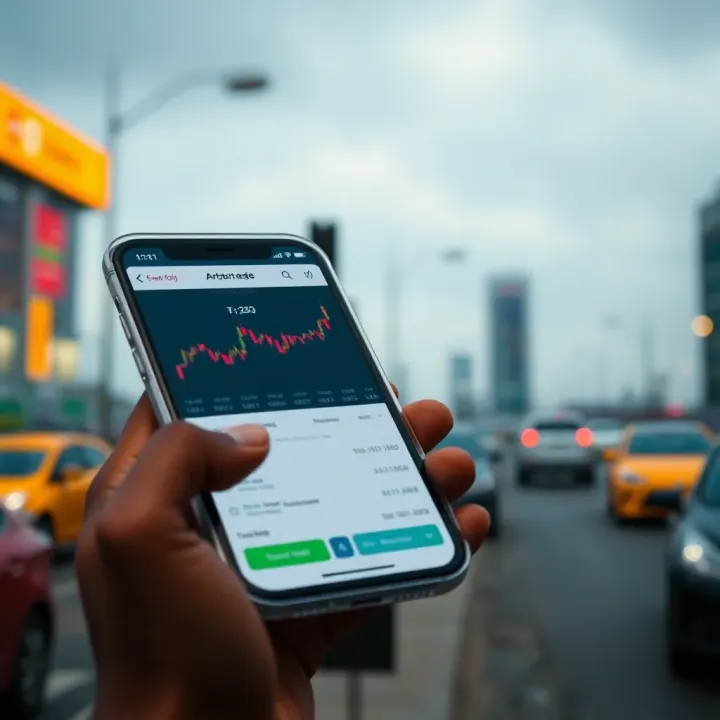
📱 Discover how arbitrage trading apps work in Nigeria! Learn key features, benefits, risks, and steps to trade smartly and boost your profits.

Explore crypto trading basics, winning strategies, and risk management tools to trade safely in Nigeria’s market. Start your crypto journey today! 💹🔍🇳🇬

Explore the best crypto trading bots in Nigeria 🤖. Learn how they work, key features, security tips, and how to pick the right one for your trading goals.
Based on 10 reviews