
Best Trading Apps in Nigeria: A Practical Guide
Find the best trading app in Nigeria 🇳🇬 with ease. Compare fees, security, assets, and support to pick the perfect platform for your investments 📈.
Edited By
Thomas White
Arbitrage trading has become buzzworthy, especially in fast-moving markets like Nigeria’s. If you’ve been curious about how traders make a quick buck by spotting price differences on different platforms, arbitrage trading apps are exactly the tools allowing that kind of strategy to thrive.
These apps are designed to catch tiny price gaps between markets—say, between cryptocurrency exchanges or forex platforms—and execute trades instantly to lock in a profit. For Nigerian traders, where currency fluctuations and exchange rate disparities happen frequently, understanding these tools could well be a game changer.

This guide will cover what arbitrage trading apps do, how they work, and practical tips on using them smartly in the Nigerian market. From the basics of spotting arbitrage opportunities to the risks that might make your head spin, we’ll unpack everything without losing you in jargon.
Whether you’re a trader hunting for fresh opportunities, an investor looking to diversify your approach, or a finance student eager to get hands-on with modern trading apps, this article is built to give you real insights you can apply right away.
"In markets where prices don’t always tell the same story, knowing where and how to look is half the battle won."
Let’s dive into the nuts and bolts of arbitrage trading and why these apps have become a hot topic among Nigerian traders in recent times.
Arbitrage trading is essentially the practice of taking advantage of price differences for the same asset in different markets. For Nigerian traders, understanding this concept isn’t just academic; it’s a hands-on way to spot quick profit chances without gambling on market direction. Think of it as buying tomatoes from a local market where they are cheaper and selling them at a different market where the price is higher. The principle is straightforward, but executing it with precision is where skill and good tools, like arbitrage trading apps, come into play.
Understanding arbitrage in detail helps traders avoid pitfalls and maximize their chances. This section lays down the fundamentals – what arbitrage really is, the types you might run into in financial markets, and the mechanics behind spotting and seizing those brief price gaps before they close.
At its core, arbitrage trading involves simultaneously buying and selling the same asset in different places to capitalize on price differences. It’s not about guessing if the price will go up or down but about exploiting the market inefficiency before it corrects itself. This means if the price of Bitcoin is $30,000 on Binance and for some reason $30,500 on Coinbase, an arbitrage trader could buy on Binance and sell on Coinbase nearly at the same time, pocketing the $500 difference minus fees.
For Nigerian traders, the practical value lies in the margin even if small—it’s a low-risk way of earning if executed well. The challenge? Timing and costs like transaction fees or withdrawal delays can eat into profits so understanding the mechanics is vital.
There’s more than one way to skin the cat in arbitrage. Some main types include:
Spatial arbitrage: The classic buy-low, sell-high across different exchanges or markets.
Triangular arbitrage: Common in currency markets; it involves converting between three currencies to profit from exchange rate differences.
Statistical arbitrage: Using quantitative models to find pricing inefficiencies that aren't obvious at first glance.
Risk arbitrage: Seen in merger and acquisition scenarios, where traders bet on price movements following corporate events.
For traders in Nigeria, spatial and triangular arbitrage are often more accessible due to crypto and Forex markets' dynamics. Recognizing these types helps tailor your approach and tools accordingly.
Price variance happens because different markets operate with their own supply and demand curves, regulations, liquidity levels, and user activity. For instance, Naira liquidity constraints at certain Nigerian exchanges can make crypto prices differ noticeably from prices on international platforms.
If you spot Bitcoin priced at ₦21 million on a Nigerian exchange but ₦21.5 million on an international one, you have a window for profit. However, these price differences can be razor-thin and often last seconds or minutes, requiring quick action.
Successful arbitrage depends heavily on speed. If you’re too slow, market prices will adjust, nullifying any chance of profit. Execution speed involves both the trader's actions and the technology backing them, such as arbitrage apps automating the process.
For example, while manually checking prices might result in missed chances, well-designed apps can scan multiple platforms concurrently and place orders instantly. Nigerian internet speed and the time it takes to transfer funds (especially between crypto wallets and banks) can be bottlenecks, so having an app that’s optimized for local infrastructure is key.
In arbitrage, a second can be worth thousands of Naira. The faster you act, the better your odds.
Grasping what arbitrage trading entails and how it works sets the foundation for Nigerian traders hoping to integrate technology into their trading strategies. Knowing the types of arbitrage and recognizing factors like price disparities and execution speed prepares traders to make smarter decisions and avoid common traps. In the next sections, we’ll explore how apps can push these principles further, making arbitrage not just a concept but a practical path to steady gains.
Using an arbitrage trading app is more than just a convenience—it's almost a necessity for anyone serious about profiting from price differences in today's fast-moving markets. Arbitrage opportunities pop up and vanish in seconds, so relying on manual tracking is like chasing shadows. Apps bring speed and accuracy, allowing traders to react quickly and with confidence. For Nigerian traders, where market inefficiencies might be higher but timing is crucial, these apps level the playing field by automating key tasks and connecting users to various markets all at once.
Arbitrage trading hinges on quick moves. A delay of even a few seconds can turn a profitable deal into a loss. Arbitrage apps use algorithms to scan multiple exchanges simultaneously, spotting price gaps and automatically placing buy and sell orders without waiting for human input. For example, if Bitcoin is selling for slightly less on one exchange compared to another, the app can instantly buy cheap and sell high, profiting from the difference. This hands-off process not only speeds up trades but also takes advantage of fleeting opportunities that traders working manually would miss.
Manually checking prices across several platforms and entering trades is prone to mistakes. Typos, delayed responses, and missed signals can all eat into potential profits. With apps, data entry and order placement are automated and standardized, which means there's less room for errors. The algorithms can also consistently apply predefined trading rules without faltering after hours of operation. Take, for instance, a trader who used to manually switch between four different crypto wallets—an app removes the hassle and likelihood of sending funds to the wrong address or mistiming a trade.
Not all markets are created equal. Sometimes the best arbitrage opportunity lies between a local exchange and an international one, or between crypto and forex platforms. Many arbitrage apps are designed to plug into multiple exchanges through APIs, creating a unified interface where traders can monitor price discrepancies across a wide range of assets. This integration means you don’t have to juggle multiple apps or tabs—everything happens in one place, saving time and avoiding mix-ups.
Nigerian traders face particular challenges like currency restrictions, fluctuating exchange rates, and variable internet speeds. An arbitrage app tailored for this market can offer direct support for Nigerian banks, local payment systems, and crypto wallets commonly used in Nigeria. Plus, the quick execution helps counteract the delays from slower banking systems or network connectivity hiccups. For example, an app supporting Naira-to-USD conversions paired with instant crypto trading enables Nigerian users to tap arbitrage routes they wouldn’t otherwise access easily.
Automation and market integration are not just add-ons—they’re the backbone of effective arbitrage trading today, especially for traders working in emerging markets like Nigeria.
Using an arbitrage trading app not only sharpens your competitive edge but also cuts down on the grunt work. It lets you focus on strategy, leaving the app to handle the complicated, fast-paced stuff behind the scenes.
When choosing an arbitrage trading app, Nigerian traders need to zero in on features that directly impact decision-making speed, security, and customization. These apps operate in a fast-paced environment where milliseconds can be the difference between profit and loss. Knowing which features to prioritize helps users avoid common pitfalls and improve their trading outcomes.
Getting timely market data isn’t just convenient—it’s the backbone of effective arbitrage trading. Prices can shift quickly between exchanges, so having real-time updates lets you spot opportunities before they vanish. An app that refreshes data every second or faster can give you that crucial edge.
Equally important are notification systems. Imagine you’re juggling multiple trades but can’t stare at the screen all day. Push notifications or in-app alerts make sure you’re instantly informed of sudden price gaps or when your set conditions are met. For example, if Bitcoin’s price on Binance drops below its price on Luno by a set margin, a prompt alert lets you jump in immediately.
Quick alerts coupled with live market feeds mean you won’t miss a beat in a landscape where delays cost money.
In Nigerian trading circles, security isn’t a luxury; it’s a must-have. Look for apps that use strong encryption methods like AES-256 and SSL certificates to keep your personal data and funds locked tight. Apps that go the extra mile with two-factor authentication (2FA) offer an additional shield against hacking attempts.
Transparency in fees is another common stumbling block for new traders. Some platforms hide transaction or withdrawal fees deep in fine print, which can drain your profits unnoticed. A good arbitrage app outlines every cost clearly, from commissions charged per trade to fees involving currency conversion, which many Nigerian traders face when dealing with dollar-based exchanges.
Ease of use should not be underestimated. A cluttered or overly complicated interface slows down trade execution and increases the chance of mistakes. Apps like Quadency or HaasOnline provide intuitive dashboards where you can see your trades, balance, and market data at a glance, making them favorites among both newbies and experienced Nigerians.
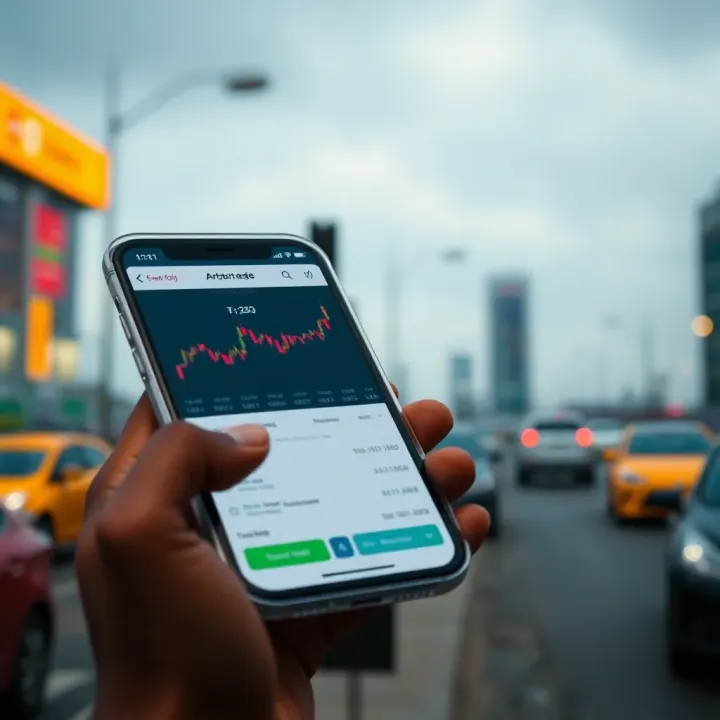
Customization is the cherry on top. Arbitrage trading thrives on strategy, so you need tools to tailor your approach. Being able to set limits on your trades, specify the minimum price difference for trades to trigger, or customize which coins you want to focus on can make your app feel like it’s built just for you. This flexibility helps control risk and boosts the chance for steady profits.
In short, the right arbitrage trading app should deliver lightning-fast data, robust security, and a user interface that feels natural. These features combine to help Nigerian traders act with confidence in a market where timing and trust are everything.
For Nigerian traders tapping into the world of arbitrage, picking the right app can make a huge difference. These apps are your trading partners, helping you catch those quick price gaps across markets. The best ones not only spot opportunities fast but also fit well with local realities like payment methods, currency exchange, and internet stability.
Choosing an app that packs the right features and works smoothly on your devices is essential. Look for apps with real-time price updates, automated trade execution, and multi-exchange access—this combo helps you jump on deals before others notice. For instance, apps like Bitsgap and ArbiSmart offer integration with major exchanges like Binance and Luno, which are popular among Nigerian traders due to their support for Naira deposits.
Compatibility matters too. Most Nigerian traders prefer mobile apps since many trade on smartphones. The app should work well on Android devices and not gobble up too much data or battery. Desktop versions are handy for detailed analysis, but not always practical for everyday trading on the go.
Fees can quietly eat into your gains, so understanding costs upfront is key. Some apps charge a monthly subscription—like Coinrule—which usually covers unlimited access but might not suit casual traders. Others take a cut of each trade, so if you're making several trades daily, those fees add up.
Also, watch out for hidden exchange fees or withdrawal charges, especially when converting between Naira and cryptocurrencies. A smart move is to compare total costs, not just the app's subscription, before committing your funds.
Mobile apps bring flexibility; you can react to shifting markets during your commute or even from the market stall. Push notifications keep you in the loop for price alerts or completed trades without staring at a screen all day. But sometimes complex interfaces get cramped on small screens, making it tricky to tweak settings precisely.
Desktop platforms, on the other hand, provide richer charts and more powerful tools, perfect if you like deep-diving into market data or setting detailed automation rules. The downside? You're tied to one spot, and urgent trades might seem like a hassle if you’re away from your PC.
If you’re a casual trader who wants quick alerts and easy trades, a well-designed mobile app like Pionex can hit the spot. For those handling larger volumes or employing advanced strategies, pairing a desktop platform like 3Commas with mobile access offers the best of both worlds.
Keep in mind your internet quality and daily routine. If your connection drops often or you're frequently on the move, mobile apps with offline-friendly features are lifesavers.
Choosing the right arbitrage app means balancing convenience, cost, and the tools you need. There's no one-size-fits-all, but understanding what each platform offers helps you trade smarter in Nigeria’s vibrant market.
Armed with these insights, Nigerian traders can better navigate the arbitrage app market, picking tools that align with their goals and trading styles.
Getting into arbitrage trading through an app can feel like stepping into a new world, especially for Nigerian traders. But the process doesn’t have to be complicated. This section breaks down the practical steps to start trading efficiently and safely. It’s crucial because without the right setup, even the best strategies can fall flat—think of it like setting the foundation before building a house.
One of the first hurdles in setting up an arbitrage trading app is identity verification. Nigerian regulations and international financial standards require this step to prevent fraud and money laundering. Typically, you’ll need to upload a government-issued ID, like your Nigerian National ID card, International Passport, or Driver's Licence alongside a selfie for verification. This process ensures that your account is secure and compliant with laws, giving you peace of mind when trading.
For example, platforms like Binance and Luno require this verification before you can trade or withdraw funds. Completing this quickly can save you headaches later by avoiding account freezes or delays in withdrawing your profits.
To fund your trading activity, connecting your bank account and crypto wallets to the app is essential. Nigerian traders often face hurdles with payment gateways due to restrictions, so it helps to know which banks and wallets are compatible. Banks like GTBank, Zenith Bank, and Access Bank typically work well with local fiat deposits. Wholesale crypto wallets like Trust Wallet or Metamask are common for holding and moving cryptocurrencies.
By linking these accounts, you ensure smooth transfer of funds to and from your arbitrage platform. This setup not only allows quick deposits but also means you can withdraw without jumping through hoops—saving you time and stress.
Nigerian traders usually top up their arbitrage accounts using several methods. Bank transfers, including NIP (Nigerian Inter-Bank Settlement System Instant Payment), remain popular for their reliability and speed. Some arbitrage apps also accept payments through mobile money services like Paga or even through USSD codes.
Cryptocurrency deposits from external wallets are another widely used option. For instance, depositing BTC or USDT directly from wallets like Binance or Paxful can bypass some traditional banking delays.
Understanding the available methods helps avoid delays and funds getting stuck because you used an unsupported payment type.
Since most arbitrage trading platforms operate in USD, Euro, or other major currencies, Nigerian traders often need to convert NGN to a foreign currency. Currency conversion can add costs and eat into your profit margins, so be cautious.
Use trusted forex rates and consider services like Flutterwave or Remitano, which offer competitive rates with minimal fees. Always check for hidden charges on conversion before funding your arbitrage account to ensure you’re not throwing away potential gains.
Arbitrage relies on quick moves, but setting clear risk limits is vital to avoid unwanted losses. Most apps let you define maximum trade sizes, stop-loss thresholds, or daily limits. For example, you can set a rule that the app won’t execute trades exceeding ₦500,000 or close out positions if losses hit 2%.
This approach locks down your exposure, useful especially when market conditions are unpredictable. It’s like having a safety net that keeps you from overreaching.
Automating parameters can turn arbitrage apps from a manual grind into a near-autopilot operation. You can program rules such as minimum price difference thresholds, the crypto pairs to target, or the time window to scan markets. This means the app acts whenever your specific conditions are met, eliminating delays caused by manual checks.
For example, setting your app to only execute when BTC shows a 1.5% arbitrage opportunity between Binance and KuCoin could boost efficiency significantly. But keep in mind that automation requires close monitoring initially—system quirks or unexpected market moves can happen, so stay alert.
Starting with solid basics—verification, funding, and careful strategy setup—will put Nigerian traders on firm footing with arbitrage trading apps. Taking these steps seriously is the difference between losing hard-earned cash and making consistent gains.
Jumping into arbitrage trading apps is exciting, but it’s not without its bumps along the road. Especially here in Nigeria, traders need to keep their eyes on specific risks and challenges that could throw a wrench in their plans. Understanding these hurdles helps you prepare better, avoid costly mistakes, and make the most of your trading ventures.
Market volatility is like the weather—a sudden gust can change the whole scene. In arbitrage trading, small price differences across markets are your bread and butter. But when volatility kicks in, those differences can evaporate in seconds, trimming your profit margins or wiping them out completely. For example, if you spot a price gap between Binance and Luno today, by the time your trade executes, the prices might have shifted, leaving you with little to no gain.
To guard against this, consider setting strict time limits on your trades. Use apps that execute orders instantly and offer smart alerts when price spreads narrow. Also, keep an eye on market trends regularly—there’s no substitute for staying informed. Locking in smaller but more frequent profits can be safer than chasing large spreads that might vanish too fast.
Ever tried to buy something online only for the site to crash? Now imagine that happening with your trading app. Technical issues like server downtime, slow internet, or bugs can delay trade execution. In arbitrage, seconds matter—delays might cause missed opportunities or even turn a planned profit into a loss.
Pick apps with a good reputation and proven uptime records. Nigerian traders should also consider their internet stability—reliable broadband or mobile data providers make a big difference. Keep your app updated to avoid bugs and enable notifications so you instantly know if something's off. Lastly, test your strategy in demo modes before going live, so you’re not caught off guard during real trades.
Trading is all fun and games until regulations step in. Nigeria's financial regulations can be a maze, especially with rapidly evolving cryptocurrency laws. Being compliant means you avoid fines, frozen accounts, or legal troubles. Always check if the arbitrage app you’re using adheres to Nigerian laws and follows proper KYC (Know Your Customer) procedures.
Some exchanges or apps might not legally operate in Nigeria or might restrict certain transactions. For example, due to Central Bank policies, direct access to foreign exchanges can be challenging. Knowing these restrictions upfront helps you avoid using platforms that could lock your funds or limit your trades. Being aware of currency controls and tax obligations also shields you from surprises down the road.
Staying ahead of these risks and challenges requires vigilance and good judgement. Equipped with the right knowledge, Nigerian traders can navigate arbitrage trading apps more confidently and safely.
Maximizing efficiency and profitability in arbitrage trading isn't just about spotting price differences; it hinges on making the right moves quickly and staying smart about risks. For Nigerian traders, where market volatility and exchange limitations can pose unique challenges, these tips can mean the difference between a small win and a solid payday. We'll cover practical ways you can keep your trading sharp and responsive, so you don't leave money on the table.
Staying on top of your app's software updates isn't just about getting the latest bells and whistles—it’s about keeping your trading safe and smooth. Security patches often include fixes that block new hacking attempts, so ignoring updates can leave your funds vulnerable.
Protecting accounts: Think of your trading apps like your bank — if you don't keep the locks updated, risks go up. Frequent updates patch bugs and close security holes hackers try to exploit. For instance, updating your app’s two-factor authentication settings can dramatically cut the chances of unauthorized access. Use strong, unique passwords combined with biometrics if available, and always keep your device's operating system current.
Ensuring compatibility: Older app versions can misbehave when exchanges upgrade their APIs or change trading protocols. This leads to execution delays or failed trades, which can be costly in arbitrage where every second counts. Regular updates ensure your app communicates perfectly with various platforms, avoiding errors or crashes. For example, apps like Pionex regularly update to stay compatible with Binance and Coinbase, which Nigerian traders often use.
No one wants to be stuck with outdated data. Arbitrage opportunities appear and vanish fast, so maintaining a pulse on global and local market trends is non-negotiable.
Staying informed of market trends: Use reliable news feeds and financial analysis tools to catch shifts in demand or regulations affecting currencies and commodities you trade. Reports about inflation rates or sudden policy changes in Nigeria, for instance, can shake the FX markets unexpectedly. Apps that integrate market news or tools like TradingView help traders react faster.
Adjusting strategies accordingly: Markets aren’t static, so your approach shouldn’t be either. If you notice certain pairs tightening their price spreads or volatility rising, tweaking your bot’s alert thresholds or risk limits can help avoid losses or seize new chances. For example, if Naira fluctuations increase, you might reduce automated trade size or switch to a more stable asset temporarily.
Relying on a single asset or market channel is like putting all your eggs in one basket. Spreading your trades across different assets and platforms guards against sudden setbacks.
Exploring different assets: While cryptocurrency arbitrage is popular, don't overlook traditional markets like foreign exchange or commodities, which Nigerian brokers like FXTM and OctaFX offer access to. This mix can smooth out your earnings when one market slows down.
Balancing risk: Diversification helps balance out unpredictable moves in one sector with stability in another. If Bitcoin slumps, gains in gold or oil markets might keep your portfolio afloat. Always weigh each asset's liquidity and volatility to tailor your risk appetite sensibly.
Keeping your arbitrage game sharp is about more than just trading fast—it’s about trading smart. By updating your tools, staying curious, and spreading your bets, you build resilience and boost your profit chances in Nigeria’s dynamic markets.
Reviewing real-life cases of arbitrage trading can really clarify how these opportunities come about and how traders can capitalize on them. By looking at successful trades, especially in the Nigerian context, we get to see the practical side of all that theory. These examples break down the sometimes abstract idea of arbitrage into something concrete; they show the benefits and draw attention to what to watch out for.
Using apps to execute trades: Cryptocurrency markets move fast and differ across platforms, which is where arbitrage trading apps shine. For instance, a trader might spot Bitcoin trading at $40,000 on Binance but $40,200 on Luno Nigeria. An arbitrage app can make almost instant buy and sell orders across these exchanges, squeezing out a profit from the 200-dollar price gap without the trader sweating over manual execution and timing. These apps also handle multiple exchanges at once, increasing the chances to catch fleeting opportunities.
Profit outcomes: The profit margins in crypto arbitrage usually look slim at first glance — say, 0.5% to 2% per trade. However, when the trades are automated and happen multiple times a day, these small gains can add up quickly. For instance, a £5,000 initial investment in Bitcoin arbitrage executed several times might turn into a £5,100 or more within a week, depending on fees and market volatility. The key takeaway is that consistent, quick execution supported by reliable software is what turns those tiny margins into real, attractive profits.
Currency exchange arbitrage: In Nigeria, currency arbitrage in the FX market is highly relevant due to exchange rate differences between official banks and parallel markets. A trader might buy US dollars at the Central Bank rate of 410 NGN/USD and sell it on the black market where rates might peak near 450 NGN/USD. While regulations and legal boundaries must be carefully navigated here, savvy traders use tools and apps to monitor live rates and time their trades to exploit these gaps. It’s less flashy than crypto but often steady, especially in volatile economic times.
Commodity trading arbitrage: Commodities like crude oil, cocoa, or even agricultural products can present arbitrage chances. Take cocoa, for example — traded on international exchanges and locally in Nigeria at different prices due to demand, shipping costs, and market access. A trader who uses market data apps to spot where cocoa is undervalued locally compared to global prices might purchase and then sell futures contracts or physical stock to profit from the price gap. Though this requires more capital and logistics than crypto, the profits can be significant with the right planning.
Understanding these tangible examples helps traders appreciate how arbitrage plays out beyond academic concepts. By connecting these dots, Nigerian traders can refine their strategies and use apps to automate the tedious parts, while keeping an eye on details that affect profitability.
This practical outlook enriches the user's knowledge, offering clear cases they can relate to or maybe even reproduce with caution and the right tools.
Looking ahead, arbitrage trading apps have a promising future in Nigeria, thanks largely to the growing appetite for digital trading and the increasing accessibility of technology. For Nigerian traders, these apps can open doors to swift, efficient trading across multiple markets, helping them tap into price differences that bring profit opportunities. However, success in this arena depends largely on staying updated with technological advancements and regulatory changes.
Nigerian traders are slowly but surely warming up to automated trading options. Unlike manual trading, which often feels like chasing a moving target, automated systems allow users to react almost instantly to market shifts. For instance, apps like Bitsogo and Yellow Card are gaining traction because they integrate automated arbitrage with Nigerian-friendly payment methods, making the transition easier.
This rising adoption is partly due to the convenience automatic trading offers—it cuts down on errors from manual input and lets traders execute deals around the clock without being glued to their screens. The practical takeaway here is that Nigerian traders can increase efficiency and potentially improve profit margins by learning to use these apps effectively.
On the tech side, emerging tools such as machine learning algorithms and AI-based prediction engines are becoming fundamentals in arbitrage apps. These technologies help identify profitable opportunities faster, even in volatile markets. For example, algorithms can adapt to sudden price swings in cryptocurrency exchanges like Binance or Luno, enabling responsive, smarter trades.
Understanding these tech features can give Nigerian traders a clear edge by allowing them to customize strategies, potentially automating risk management or diversifying trading portfolios more easily.
Regulations around trading apps in Nigeria are evolving, and keeping tabs on anticipated policy shifts is vital for any trader. The Central Bank of Nigeria (CBN) and the Securities and Exchange Commission (SEC) occasionally adjust rules to safeguard investors and maintain market integrity. For instance, new guidelines might affect how foreign exchanges interact with local traders or what kinds of cryptocurrencies are permissible.
These changes can impact arbitrage trading apps directly by enforcing stricter compliance standards or introducing new reporting requirements. For example, if the government implements more rigorous KYC (Know Your Customer) protocols, this might initially slow down account setups but ultimately enhance security for all parties involved.
Staying ahead of policy changes ensures you won’t be caught off-guard, helping you navigate shifts smoothly and continue trading without disruption.
The effect on app usage largely depends on how these changes are rolled out. Positive regulation can encourage more Nigerians to trust and embrace arbitrage apps, especially if it means better consumer protections. On the flip side, overly restrictive rules could deter innovation or reduce available arbitrage opportunities.
Ultimately, Nigerian traders should stay informed about government announcements and consult with local financial advisors or trading communities. This proactive approach allows you to adjust trading tactics and app choices to remain compliant and competitive.
In summary, the outlook for arbitrage trading in Nigeria is bright but requires a careful balance of embracing new technology and staying alert to regulatory environments. This combination of curiosity, caution, and adaptability is what will help Nigerian traders make the most of arbitrage opportunities using trading apps.
Find the best trading app in Nigeria 🇳🇬 with ease. Compare fees, security, assets, and support to pick the perfect platform for your investments 📈.

Explore how Nigerian crypto traders can spot price gaps, use smart tools, and handle risks in arbitrage trading to boost profits safely 🚀💰📊

Explore top copy trading apps in Nigeria 📱 Learn how to pick the best one, understand key features, regulatory tips, and start trading smarter today!
Discover top trading apps in Nigeria 📱 Learn how to pick the best platform for safe investing, key features to watch, and tips to boost your earnings 💰
Based on 8 reviews