
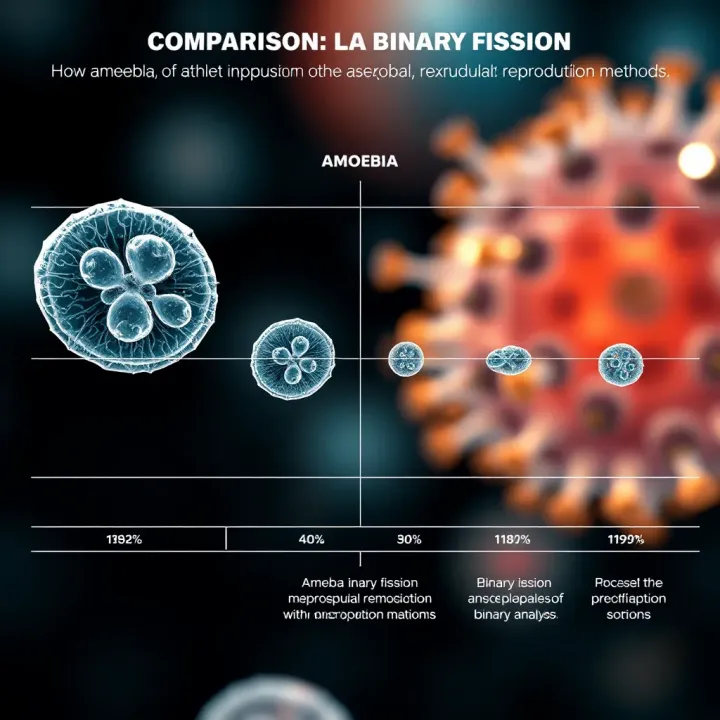
How Amoeba Reproduce by Binary Fission
Explore how amoebas reproduce asexually via binary fission 🦠. Understand its stages, biology, and role compared to other microbe reproduction methods 🔬.
Edited By
Sophie Grant
Binary fission might sound like a complicated science term, but it’s really just the straightforward way many single-celled organisms make copies of themselves. Think of it like a cell hitting the copy-and-paste button — splitting into two new cells, each an exact twin of the original.
This process is central to how bacteria, certain algae, and some protozoa multiply, pushing their populations to grow fast when conditions are right. For finance folks and traders, this might seem out of left field, but understanding such fundamental biological methods is useful as it illustrates basic concepts of replication, growth, and evolution — principles that sometimes mirror economic or market growth patterns.
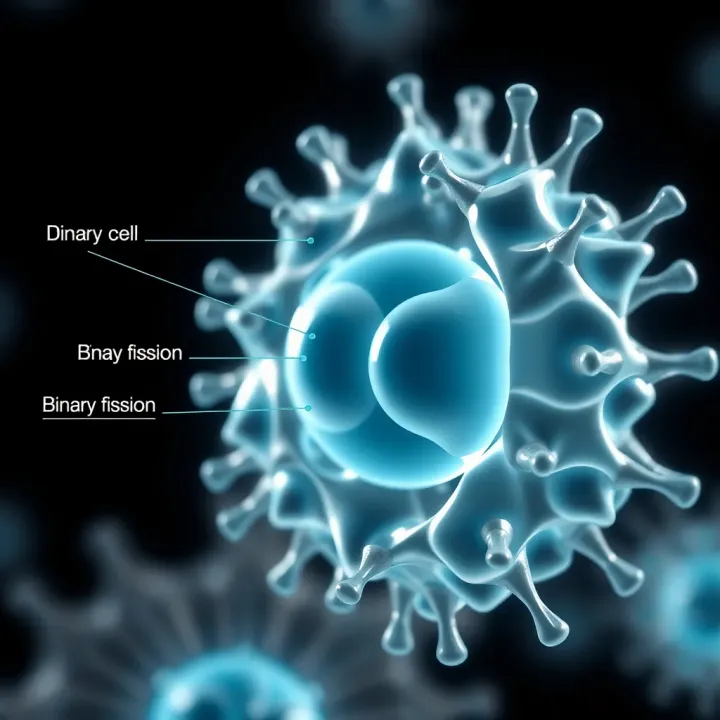
In this article, we’ll cover how binary fission happens step-by-step, why DNA replication is a big deal in this process, and compare it briefly to other cell division methods like mitosis. We’ll also touch on its role in nature’s cycles of population change and evolution. The goal is to get a clear, practical grasp of this biological process, adding another piece of general knowledge that might even help in cross-disciplinary thinking.
Binary fission is nature’s simple but effective method for reproduction, ensuring survival and adaptability of many microorganisms in an ever-changing environment.
With that said, let’s unpack how these tiny cells pull off their cloning act.
Binary fission is a fundamental process for many microscopic organisms. It’s the method they use to reproduce and multiply, splitting one cell into two identical copies. Understanding this process isn’t just academic — it has a direct bearing on microbiology, health, and even environmental management. For example, knowing how bacteria reproduce helps traders and investors who deal with biotech stocks or pharmaceuticals to evaluate risks and opportunities in managing bacterial infections or antibiotic development.
Binary fission is a type of asexual reproduction — this simply means a single organism makes a copy of itself without needing a partner. Think of it like making a quick photocopy of a document instead of rewriting it from scratch. In binary fission, one cell grows and divides into two cells, each a clone of the original.
Here's the critical part: each new cell contains an exact copy of the parent cell’s genetic material. Because the DNA is replicated before the split, the daughter cells are genetically identical. This is why bacterial populations can expand rapidly yet maintain stable traits unless mutations occur.
Having genetically identical cells means that beneficial traits, like antibiotic resistance, can quickly spread once they appear. This can have huge implications for infections in hospitals or communities, emphasizing the need to understand binary fission to manage health risks and develop effective treatments.
Binary fission is the main reproductive method for many bacteria and some other microorganisms like protozoa and certain algae. For instance, Escherichia coli (E. coli), a common bacterium found in the gut, reproduces through binary fission. It allows bacteria to multiply swiftly under favorable conditions, which is why bacterial infections can escalate so fast.
This rapid reproduction directly impacts population growth. Because the time taken for one bacterium to split can be as little as 20 minutes under ideal conditions, populations can skyrocket exponentially. This quick increase means microbial communities can exploit resources rapidly but can also lead to problems like antibiotic resistance spreading faster than expected.
In short, binary fission shapes not only the survival and adaptation of microorganisms but also influences ecological balance and medical treatment strategies.
Understanding how binary fission works gives analysts, brokers, and students insight into microbial behaviors that influence industries from healthcare to agriculture. It highlights the importance of tracking bacterial growth patterns and resistance development, essential for making informed decisions in related markets and research.
Understanding the step-by-step process of binary fission is fundamental because it gives us a clear picture of how some organisms, especially bacteria, multiply so rapidly. This is not just an academic exercise—it’s vital in fields like medicine, agriculture, and environmental science, where controlling bacterial growth is key. Knowing each phase in detail helps troubleshoot bacterial behavior, predict growth patterns, and develop effective interventions.
Before any cell divides, it needs to bulk up; this is known as the growth phase. Think of it like packing for a trip: you wouldn’t leave half-packed. In bacterial cells, they increase the volume of their cytoplasm and build up essential molecules. This priming ensures that after division, both daughter cells can function normally without scrambling for resources.
One of the critical parts here is copying the DNA. The bacterial chromosome is duplicated accurately so that each new cell receives a complete set. Picture it like photocopying important documents before handing them out. Without this step, the daughter cells could end up with missing or damaged genetic info, which would spell trouble for survival and function.
Once the cell has grown and its DNA is ready, the next phase is the actual split. The separation of chromosomes ensures that each new cell gets one copy of the genome. This segregation is a finely tuned process; think of it as dividing a pizza perfectly among friends so no one feels shortchanged.
Following chromosome segregation, the cell’s cytoplasm divides—a stage called cytokinesis—resulting in two daughter cells. Each cell essentially becomes a mini version of the original, fully equipped and ready to kickstart its own cycle. This stage is crucial because any hiccup here could mean uneven distribution of cellular contents, which impacts cell viability.
Understanding this process sheds light on how bacteria can colonize environments fast, helping us grasp the scale and speed of microbial activities around us.
By breaking down binary fission into these clear stages, it’s easier to appreciate how life sustains itself at the microscopic level and why controlling such processes matters in health and industry alike.
Understanding which organisms use binary fission gives us real insight into the biological world, especially at the microscopic level. This method of reproduction is particularly important because it allows populations to multiply rapidly and adapt to their environment with speed - invaluable traits in the natural world. Let's explore some common examples.
Binary fission is the main method by which bacteria reproduce. Species such as Escherichia coli (E. coli), Staphylococcus aureus, and Salmonella rely on this process to create identical offspring quickly. This fast reproduction rate supports exponential population growth, which can be crucial in both natural and clinical contexts.
By duplicating their DNA and splitting seamlessly, bacteria maintain efficient reproduction cycles, making them formidable in environments where resources are plentiful and competition is fierce.
The significance for infection and adaptation cannot be overstated. When bacteria reproduce through binary fission, each new cell has the potential to survive antibiotic treatments or adverse conditions, especially if spontaneous mutations or gene transfer occur. This explains why infections sometimes persist or why bacteria become resistant to drugs. For health professionals, understanding bacterial binary fission is key to developing treatments and controlling outbreaks.
Binary fission isn't exclusive to bacteria. Protozoans like Amoeba and some species of algae, such as Chlamydomonas, also reproduce this way. These organisms benefit from binary fission's straightforward division, enabling them to thrive in aquatic environments.
A notable difference from bacteria is how some of these organisms handle their organelles during the division process. For example, protozoa must carefully distribute various organelles to daughter cells, which adds complexity compared to bacterial fission.
The comparison highlights that while binary fission is fundamentally a simple division method, biological nuances exist between organisms, affecting how efficiently or quickly division happens.
In summary, recognizing the diversity of organisms that reproduce via binary fission enriches our understanding of microbial growth and evolution. Whether dealing with a bacterial outbreak or studying an algal bloom, grasping this reproductive method forms a basis for deeper insights into microbial life and its impact on ecosystems and human health.
Understanding how binary fission stacks up against other cell division methods helps clarify why it’s so common in microorganisms and how it serves different biological needs. This comparison highlights practical differences in speed, complexity, and genetic outcomes – details essential for grasping the role of cell division across life forms.
Binary fission is a straightforward process typically seen in prokaryotes like bacteria. In contrast, eukaryotic cells, found in plants, animals, and fungi, rely mostly on mitosis and meiosis, which are more involved but allow for greater cellular specialization and genetic diversity. Knowing these distinctions can help when studying microbial behavior in infections, antibiotic resistance, or ecosystem dynamics.
Binary fission is often described as a simpler, faster way cells divide. It consists mainly of replication of the cell’s DNA and splitting the cytoplasm, without the complex stages characteristic of mitosis. Think of binary fission as making a quick photocopy—almost exact reproduction, simple and efficient. On the other hand, mitosis involves multiple steps: prophase, metaphase, anaphase, telophase, and cytokinesis. This process ensures chromosomes are lined up and segregated properly before the cell divides.
One key practical point is the cell types involved. Binary fission happens in single-celled organisms like Escherichia coli or Staphylococcus aureus. These organisms rely on this rapid reproductive method to colonize environments quickly. Mitosis, however, is characteristic of multicellular organisms’ somatic (body) cells, allowing them to grow, repair tissues, and maintain organs.
This difference means binary fission supports rapid population spikes in microbes but isn’t suited for the complex tissue formation seen in plants and animals. For example, skin cells in humans divide by mitosis to replace dead cells regularly, a process far more coordinated than simple microbial fission.
Meiosis is a more specialized division process, mainly tasked with forming sex cells with half the chromosome number (gametes). Its end goal is genetic diversity, achieved through two rounds of division that shuffle genes and reduce chromosome count by half. This contrasts starkly with binary fission, which aims merely to produce two identical copies.
In terms of outcomes, meiosis is all about mixing genes to enhance variability in offspring, essential in sexually reproducing species to adapt and thrive. Binary fission, by producing clones, favors consistency and rapid reproduction in stable environments.
A common example is human reproduction: sperm and egg cells form through meiosis, ensuring each has 23 chromosomes, combining to make a full set of 46 in the offspring. Meanwhile, a bacterium like Salmonella divides through binary fission to quickly populate a surface. The offspring are genetic twins, relying on mutation or gene transfer rather than sexual mixing for variation.
Binary fission offers speed and simplicity, mitosis supports complex organism development, and meiosis drives genetic diversity—each has a clear role based on the organism’s needs.
Understanding these distinct cell division methods lays the groundwork for more effective study or application in biotechnology, medicine, and environmental science, especially when dealing with microbial life or genetics.
Binary fission is often seen as a straightforward way cells reproduce — splitting into two clones that carry the same genetic material. But behind this simplicity, there’s a balance between keeping genetic stability and allowing for some variation, both of which are crucial for the survival and adaptation of microorganisms. This section sheds light on how cells maintain their DNA integrity, while still managing to introduce changes that can lead to evolution.
When a bacterium or other single-celled organism prepares to divide, it first makes an exact copy of its DNA. This step is crucial — if there were frequent errors here, harmful mutations would pile up quickly, threatening the organism’s survival. Remarkably, cells use proofreading enzymes like DNA polymerase, which checks and corrects mistakes during replication. Think of it like a meticulous editor scanning for typos as the genetic instructions are copied.
This accuracy in copying means that daughter cells carry nearly identical genetic material. For traders or analysts familiar with idea of replication fidelity, it’s much like high-quality data replication that avoids any loss or corruption — essential for consistent outcomes.
Even with proofreading, mutations can still happen occasionally. Cells deploy additional mechanisms to keep these errors in check. Repair systems scan DNA for damage or mismatches and fix them before the cell fully splits. For example, mismatch repair fixes tiny mispairings, and excision repair removes damaged bases caused by external factors.
These layers of error-checking act like multiple security checkpoints in a financial audit, minimizing risky errors. This is how bacterial populations maintain genetic stability over countless generations without losing key functions.
No biological process is perfect; mutations are inevitable, especially during DNA replication. Although most are neutral or harmful, some mutations can be beneficial or at least give the microbe a survival edge, especially in changing environments. For example, a mutation might help a bacterium resist antibiotics, which has been a big challenge in healthcare.
Mutation introduces genetic 'shakes' in an otherwise stable system, offering the raw material for natural selection and evolution. Understanding this helps investors or analysts appreciate how microbial populations adapt — important for sectors like pharmaceuticals or agriculture.
Binary fission creates identical offspring, but bacteria aren’t limited to just mutation for genetic variation. They can swap genes sideways, a process known as horizontal gene transfer (HGT). It’s like quickly acquiring a new skill or tool beyond family inheritance.
Mechanisms like conjugation (bacteria sharing DNA through a physical bridge), transformation (absorbing DNA fragments from the environment), and transduction (virus-mediated DNA transfer) allow microbes to pick up new traits rapidly. This transfer is especially critical for spreading antibiotic resistance genes among different bacterial species.
Understanding these pathways helps professionals in health and biotech fields predict how bacteria evolve and develop resistance, affecting treatment strategies and market responses.
Together, mutation and horizontal gene transfer provide the raw material to drive diversity while binary fission keeps this change mostly controlled. This fine-tuned balance between stability and variability is a cornerstone of microbial life’s resilience and adaptability.
Binary fission plays a big part in how ecosystems function and how microbes evolve over time. It’s not just a biological curiosity—it's a process that enables rapid population growth and drives how species adapt to different environments. This section breaks down how binary fission influences the balance of life around us and touches on the evolutionary side of things.
Binary fission allows microorganisms, especially bacteria, to multiply quickly. In ideal conditions, some bacteria can double their population in as little as 20 minutes. This speed means that a single bacterium can become millions within hours. For traders and investors in the biotech or pharmaceutical sectors, understanding this rapid growth is critical. It explains why bacterial contamination must be controlled so rigorously in drug production or food storage.
Think of binary fission as a factory's assembly line running nonstop; the faster it moves, the more products (in this case, cells) it pumps out.
Rapid bacterial growth through binary fission impacts ecosystems by influencing nutrient cycles. For example, in the soil, bacteria break down organic matter, releasing nutrients that plants rely on. Overgrowth of certain bacteria can upset these cycles though, leading to problems like algal blooms in water bodies which disrupt oxygen levels and harm aquatic life. Investors considering environmental or agricultural technologies should weigh how microbial balance affects ecosystem health and resource sustainability.
Binary fission produces offspring genetically identical to the parent, meaning evolution occurs slower compared to sexual reproduction. However, microbes adapt through mutations during DNA replication and processes like horizontal gene transfer. These subtle changes accumulate, allowing bacteria to develop resistance to antibiotics, for example. For analysts tracking antibiotic resistance trends, it’s essential to monitor these evolutionary pressures influenced by fission.
In changing environments, bacteria adjust by acquiring new traits quickly through mechanisms linked to binary fission. Horizontal gene transfer allows them to share useful genes, like those for toxin resistance or new metabolic abilities, with neighbors. This means even without sexual reproduction, populations can survive environmental challenges or antibiotic treatments. For investors and healthcare professionals, understanding these mechanisms helps in developing strategies to manage bacterial threats and harness beneficial microbes.
By grasping binary fission’s role in population growth and evolution, traders and analysts can better appreciate microbial dynamics affecting health, agriculture, and industry markets.
Explore how amoebas reproduce asexually via binary fission 🦠. Understand its stages, biology, and role compared to other microbe reproduction methods 🔬.
Explore how bacteria reproduce asexually through binary fission 🔬. Learn the steps, factors affecting it, and why it's key to bacterial growth and spread 🌱.

📊 Learn how binary addition works in computing and digital electronics! Understand basic rules, methods, and common errors with clear examples. 💻

Learn how binary addition works 🔢 from rules to step-by-step methods, addressing challenges and its key role in computing technology 💻.
Based on 13 reviews