
Guide to Candlestick Patterns for Trading
📈 Explore a complete guide to major candlestick patterns in trading! Learn how they form, their market impact, and tips for smarter trading in Nigeria and beyond.
Edited By
James Thornton
Candlestick patterns are essential tools for anyone involved in forex trading. These patterns visually represent price movements within a specific time frame, helping traders spot potential market direction changes and momentum shifts quickly.
Originally developed in Japan centuries ago, candlesticks have become a staple in chart analysis worldwide. Each candlestick displays four key data points: opening price, closing price, high, and low during the chosen period. By recognising distinctive shapes and formations, traders can interpret market sentiment without needing complex calculations.
For instance, a single bullish engulfing pattern—where a small bearish candle is followed by a larger bullish candle that fully covers the previous one—often signals an upcoming upward trend reversal. Conversely, a shooting star pattern, characterised by a small body and long upper shadow, frequently warns of a potential bearish turn after an uptrend.
Understanding these patterns allows traders to anticipate price swings and align their entries and exits with greater confidence. Besides offering signals, candlestick patterns can be combined effectively with other technical tools like support and resistance levels, moving averages, or RSI (Relative Strength Index) to reduce false signals and improve trade timing.
Clear identification of candlestick patterns helps traders avoid guesswork and build more robust strategies anchored on market psychology and price action.
Key points to consider:
Candlestick patterns offer visual clues on market sentiment and possible direction.
They reflect real-time battle between buyers and sellers, making them practical for short-term and long-term analyses.
No single pattern guarantees success; combining patterns with volume, trends, and other indicators is crucial.
For example, suppose the EUR/USD chart shows a morning star pattern forming near a historical support level. This confluence of signals can give a more reliable indication that the pair may rise, prompting the trader to consider a long position.
In summary, mastering candlestick patterns is a valuable step for anyone serious about forex trading. It brings clarity to price action, improves timing, and aligns trades with underlying market forces experienced on global forex markets such as those involving the naira-dollar pair or euro-dollar rates.
Candlestick patterns offer traders a practical way to understand price movements in the forex market. They condense information into simple visual shapes, allowing traders to spot potential reversals or trend continuations quickly. For instance, when the price of the USD/NGN pair forms a bullish hammer on the daily chart, it suggests buyers are stepping in despite earlier selling pressure.
Recognising these patterns can help traders make more informed decisions and time their entry or exit points better. Instead of staring endlessly at raw data or line charts, candlestick patterns give a snapshot of market sentiment — whether bulls or bears are dominating a particular moment. This visual edge can be especially useful during volatile sessions or around economic events like CBN policy announcements.
Candlestick patterns are formed by one or more candles on a price chart. Each candlestick displays the opening, closing, highest, and lowest prices within a set time frame, such as 1 hour or 1 day. The body of the candle captures the difference between the open and close, while the wicks (or shadows) show the extremes.
By observing groups of these candles, traders identify patterns that historically predict market moves. For example, a ‘morning star’ pattern, which starts with a bearish candle followed by a small-bodied candle and then a bullish candle, often signals a potential bullish reversal. These patterns are not perfect but offer valuable clues when combined with other analysis techniques.
Forex traders rely on candlesticks because they provide more detail than simple line charts and are easier to interpret than raw number streams. This extra layer of detail helps traders gauge the intensity behind price moves. A long-bodied bullish candle, for example, shows strong buying momentum, whereas a doji with equal open and close suggests market indecision.
Moreover, candlestick patterns assist traders in anticipating market turns and managing risk. Rather than chasing the market blindly, traders use these patterns to back up their decisions. They can set stop-loss orders just below key pattern points to protect their capital. In volatile markets like forex, where prices can swing wildly, this is a sensible approach.
Successful forex trading often boils down to understanding what the market is trying to tell you visually – and candlestick patterns speak volumes about trader psychology and market supply-demand dynamics.
Ultimately, mastering candlestick patterns can sharpen your trading skills and increase confidence in analysing complex forex charts, whether you’re watching the EUR/USD, GBP/NGN, or any other currency pair.
Reading forex candlestick charts is a fundamental skill for any trader or analyst looking to decode price movements. Candlestick charts provide a clear visual snapshot of market activity within a particular timeframe, whether it’s a minute, hour, day, or week. This visual approach helps traders quickly grasp shifts in momentum, compare past price action, and make informed decisions.
A candlestick chart differs from other chart types because each individual candle shows four key price points: the opening price, closing price, and the highest and lowest prices during that period. These four data points tell a story of market psychology, which is why being able to interpret them correctly offers a strong trading edge.
Understanding how to read these charts lets you spot trends turning bullish or bearish, recognise indecision periods, and anticipate reversals. For instance, if a candle closes much higher than it opened with only a small lower wick, that suggests strong buyer interest during that timeframe. Traders in Nigeria, dealing with volatile forex pairs like USD/NGN, often rely on such cues to time entry and exit points better.
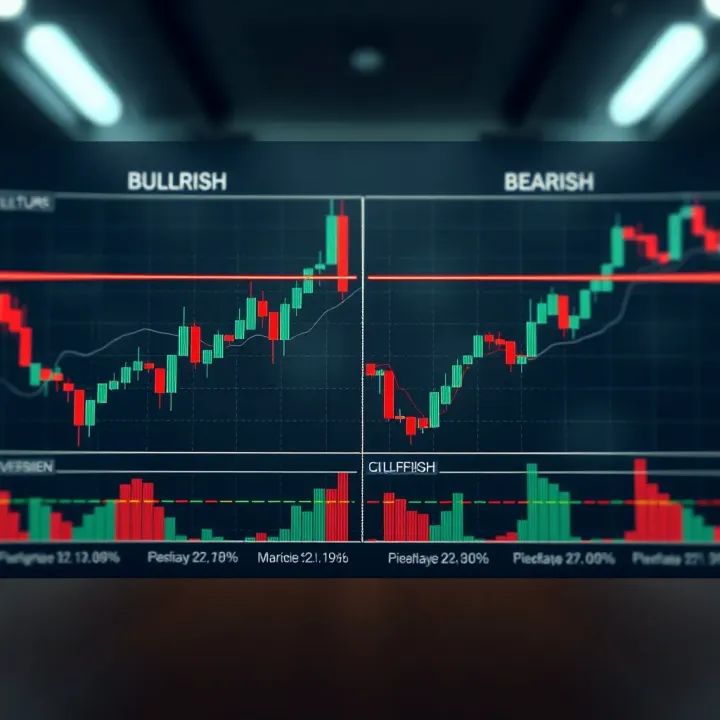
Each candlestick is made up of two key parts: the 'body' and the 'wicks' (also called shadows). The body represents the price range between the opening and closing values. A tall body means significant price movement, while a short body suggests little change.
The wicks extend from the top and bottom of the body, showing the highest and lowest prices reached within that period. For example, if you see a long upper wick but a short body near the candlestick’s bottom, it means sellers pushed prices down after a rally attempt.
Colours also play a vital role. In most charts, a green or white candle indicates the price closed higher than it opened (bullish), while a red or black candle shows the price closed lower (bearish). This simple colour coding adds instant clarity when scanning for trading signals.
The shape and colour combo of a candlestick give insight into market sentiment and strength. Consider a long green candle with little to no wicks — it shows buyers dominated throughout, pushing prices up consistently.
Conversely, a red candle with a long upper wick means buyers tested higher prices but couldn’t hold them, suggesting a possible resistance or upcoming pullback.
Patterns that combine multiple candles should also be read in context. For example, several small-bodied candles may signal market indecision, while a sudden large candle might confirm a breakout after consolidation.
Reading candlesticks isn’t just about spotting patterns but understanding what those price shifts reflect about trader emotions and supply-demand dynamics.
Grasping these elements sharpens your ability to navigate forex markets efficiently. Traders incorporating this knowledge with other indicators—like moving averages and RSI—can reduce risk and increase chances of profitable trades.
Understanding common bullish and bearish candlestick patterns is essential for forex traders aiming to anticipate market shifts. These patterns provide visual cues on trader sentiment and potential reversals or continuations of trends. Recognising these formations quickly can make the difference between entering a profitable trade or getting caught on the wrong side of market movement.
Hammer
The hammer pattern forms when a candle has a small body near the top and a long lower shadow, resembling a hammer. It usually appears after a downtrend, signalling that sellers pushed prices lower but buyers regained control by close. This pattern shows a potential bullish reversal as it reflects growing buying pressure.
In practical terms, if you spot a hammer near a key support level, the odds of price bouncing back up increase. However, confirmation with the next candle is advisable before taking long positions. For example, in the forex pair USD/NGN, a hammer after a sustained decline could hint at a rebound.
Morning Star
The morning star is a three-candle pattern marking a strong bullish reversal. It starts with a large bearish candle, followed by a small-bodied candle (could be bullish or bearish) indicating indecision, and ends with a sizeable bullish candle closing well into the first candle's body.
Traders often see the morning star as a reliable signal that selling pressure is fading and buyers are taking over. Spotting this pattern around a known support area can guide you to enter long trades with manageable risk.
Bullish Engulfing
This pattern features a smaller bearish candle followed by a larger bullish candle that completely engulfs the previous candle's body. It reflects a decisive shift from sellers to buyers.
Bullish engulfing is often found at the bottom of downtrends, hinting at a sharp reversal. For instance, in currency pairs impacted by economic data or geopolitical events, this pattern might confirm renewed buyer confidence, giving traders a clearer entry point.
Shooting Star
The shooting star looks like an inverted hammer but appears after an uptrend. It has a small body near the bottom and a long upper shadow, signalling that buyers pushed prices up but sellers forced a close near the open price.
This pattern warns of a potential bearish reversal as upward momentum weakens. If you see a shooting star near resistance or after a strong rally in forex, it might be time to tighten stops or consider sell positions.
Evening Star
This three-candle pattern mirrors the morning star but signals bearish reversal. It begins with a strong bullish candle, followed by a small-bodied indecision candle, and finishes with a large bearish candle closing deep into the first candle's body.
The evening star often appears at market tops, indicating buyers are losing steam and sellers gaining ground. When confirmed in a forex pair with other indicators, it can signal exit points to lock profits or start short positions.
Bearish Engulfing
In bearish engulfing, a small bullish candle is followed by a larger bearish candle that engulfs the previous one. This pattern indicates sellers overwhelming buyers and a possible shift downward.
Seeing this pattern after an uptrend is a cue for traders to assess their risk exposure. It often precedes price retracement or reversal, especially when confirmed by volume or momentum indicators.
Recognising these candlestick patterns and understanding their context aids in making smarter, more timely trading decisions. Always combine pattern analysis with other tools and market insights to avoid traps and improve your chances of success in the forex market.
Candlestick patterns provide valuable signals about market sentiment but using them alone can be risky. Successful forex trading requires integrating these patterns within a broader strategy. Combining candlestick analysis with other technical indicators helps confirm signals and strengthens your trading decisions. It also enables better management of entry and exit points, improving overall trade accuracy.
Candlestick patterns often signal potential reversals or continuations, but these signals should not stand in isolation. Confirming patterns with additional tools reduces false alarms. For example, you might spot a bullish engulfing pattern on a EUR/USD chart, but checking the Relative Strength Index (RSI) can confirm if the pair is oversold, increasing confidence in a possible upward move.
Moving averages also help validate candlestick signals. A bullish hammer appearing near the 50-day moving average can indicate stronger support than the pattern alone suggests. Similarly, volume indicators show whether a price move is supported by significant trading activity — without adequate volume, a pattern’s reliability slackens.
Integrating candlesticks with indicators like RSI, moving averages, and volume provides a fuller picture of market dynamics and reduces the chance of misleading signals.
Even confirmed candlestick patterns can fail, so managing risk is essential. Always set stop-loss levels based on recent swing highs or lows to limit potential losses. For instance, if you trade a morning star pattern on the GBP/USD, a stop-loss placed just below the pattern’s low can prevent a total wipeout if the market moves against you.
Position sizing is another crucial risk management element. Don’t commit too much of your capital to a single trade just because a pattern looks promising. Limiting exposure to, say, 1–2% of your account balance per trade helps you survive losing streaks.
Furthermore, watch the broader market context. Trading a bearish engulfing pattern during a strong uptrend without confirmation from volume or momentum indicators can be dangerous. Sometimes markets are driven by factors beyond technical patterns, such as economic data releases or geopolitical events, which should be factored into your risk assessment.
Integrating candlestick patterns with other indicators and solid risk management turns raw signals into actionable trades. This approach helps traders avoid chasing false leads and protects capital in volatile forex markets.
Candlestick patterns are powerful tools in forex trading, but traders often fall into traps that reduce their effectiveness. Understanding common mistakes helps you use these patterns more reliably and improve your trading outcomes. Recognising pitfalls such as overreliance on single patterns and ignoring the broader market context is key to making smarter decisions.
Many traders make the mistake of placing too much faith in a single candlestick formation, expecting it to consistently predict market direction. Take the classic hammer pattern, for example. It can indicate a potential bullish reversal after a downtrend, but if you blindly enter a buy position every time you see one, you risk losses. Markets often require confirmation from multiple candles or other signals. For instance, combining a hammer with increased volume or a supportive moving average strengthens its credibility. Without these confirmations, the pattern alone may be misleading, especially in choppy or sideways markets.
To avoid this, treat candlestick patterns as part of a wider toolkit. Use them alongside indicators like RSI or MACD, or watch for key support and resistance levels. This way, you reduce false signals and make better entry decisions.
Candlestick patterns do not exist in a vacuum. Ignoring market context can lead to misreading signals or mistiming trades. For instance, a bullish engulfing pattern during a strong downtrend may not signal an immediate reversal. It could simply be a corrective bounce within a larger bearish move. Similarly, patterns formed during news releases or volatile periods might provide distorted signals.
Think of market context like the background to the candlestick story. Fundamental factors, recent price trends, and broader economic events all influence what the patterns really mean. A forex trader who overlooks these elements risks entering trades with poor timing.
To navigate this, always consider:
Current trend direction and strength
Volume levels accompanying the pattern
Key economic calendar events that might affect volatility
Overall market sentiment as reflected in price action and news
Using candlestick patterns without considering market context is like guessing the weather by looking at a single cloud. It rarely tells the full story.
In short, combining pattern recognition with a keen eye on the bigger picture will improve your odds of success in forex trading. Avoid these common mistakes to trade more confidently and reduce costly errors.
📈 Explore a complete guide to major candlestick patterns in trading! Learn how they form, their market impact, and tips for smarter trading in Nigeria and beyond.
📉 Learn how to spot bearish reversal candlestick patterns and use them alongside other tools to predict downtrends for smarter trading decisions in Nigeria.
📈 Discover powerful candlestick patterns with our detailed guide—learn how to spot, interpret, and trade them confidently. Includes a handy PDF with 35 key patterns!
Discover how to pick the most effective forex trading indicators 📈 Learn to assess markets, avoid common mistakes, and make smarter trades in Nigeria's forex scene.
Based on 8 reviews