
Benefits of Risk Management in Business and Life
Explore how effective risk management 💼 safeguards your resources, sharpens decision-making, and boosts resilience for businesses and individuals alike.
Edited By
Liam Sheridan
Risk management is vital for Nigerian organisations because of the unpredictable economic climate and operational uncertainties. Companies face challenges such as currency fluctuations, power supply instability, regulatory changes, and security risks. Without a solid risk management framework, businesses may struggle to respond effectively when these risks materialise.
A risk management framework provides a structured approach for identifying, assessing, and controlling risks. It enables businesses to anticipate potential threats and make better decisions that protect their assets, reputation, and continuity. Unlike ad-hoc risk handling, a formal framework ensures risks are managed systematically, not left to chance or gut feeling.
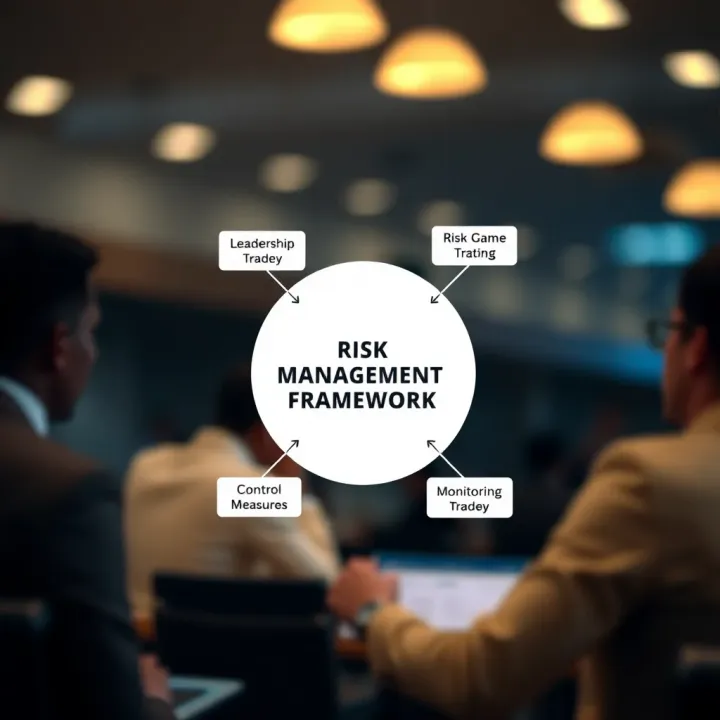
In Nigerian markets, practical risk management goes beyond theoretical talk — it means actively mapping local challenges, such as naira depreciation or irregular fuel supply, and embedding controls that address those issues. For example, a manufacturing company might set up backup generators and diversify suppliers to reduce downtime caused by power cuts or fuel scarcity. This kind of tailored risk control helps firms maintain operations even when the environment turns difficult.
Leadership also plays a key role by championing risk awareness across the organisation. When executives set clear risk tolerance levels and integrate risk considerations into everyday decisions, teams become proactive rather than reactive. Training staff on recognising risks — like cyber threats or fraud — strengthens the company’s shield against losses.
Building a risk management framework is not a one-off project; it's a continuous cycle of identifying risks, evaluating their impact, putting measures in place, and reviewing outcomes to improve over time.
To sum up, Nigerian businesses that develop an effective risk framework gain significant advantages: smoother operations, clearer decision-making, and resilience against typical challenges like inflation or market volatility. This foundation prepares firms to grow sustainably in the often-turbulent Nigerian business environment.
Risk management is about recognising potential threats before they become costly problems. For Nigerian businesses, this means identifying risks related to market instability, currency fluctuations, power outages, or even security challenges. A manufacturer in Lagos, for instance, must prepare for frequent electricity disruptions or fuel scarcity that can stall production, while a fintech startup needs to manage data security risks and regulatory changes. Understanding risk management helps organisations anticipate these hurdles and plan how to minimise their impact.
Risk management is not just a defensive tool but a strategic asset. When done right, it allows businesses to navigate the Nigerian business terrain—marked by complex regulations and volatile markets—with confidence. For example, traders on the Nigerian Stock Exchange (NSE) use risk frameworks to decide when to buy or sell shares, balancing potential gains against market risks. Similarly, investors consider economic shifts, inflation trends, and political developments affecting returns.
Having a structured risk management framework means going beyond reacting to problems; it involves a systematic way to spot, assess, and control risks. This helps organisations stay ahead, reduce surprises, and save costs caused by unforeseen events. Take for instance a logistics company in Abuja that faces frequent road closures due to construction or security concerns. By mapping these risks and planning alternatives, the company can avoid costly delays and maintain client trust.
A clear risk framework also supports better decision-making. When leaders have reliable standards and data on risks, they can choose investments or projects that align with their risk appetite. In practice, this means a bank might refuse a loan application that doesn’t meet its risk criteria, protecting its capital and reputation.
Finally, a good risk management framework fosters compliance with local laws and international standards. Nigerian businesses often deal with multiple regulators—like the Central Bank of Nigeria (CBN) for financial firms or the Nigerian Communications Commission (NCC) for telecoms. Staying compliant reduces penalties and builds credibility with customers and investors.
A well-crafted risk management framework acts as a business’s safety net, catching potential pitfalls before they cause harm and paving a smoother path for growth.
In sum, understanding the purpose of a risk management framework equips Nigerian organisations to handle uncertainty, protect assets, and seize opportunities confidently. It is a vital part of sustainable business operations in today’s challenging economic environment.
Strong leadership and governance form the backbone of any effective risk management framework in Nigerian organisations. Without clear leadership commitment, risk processes may become sidelined or treated as low priority. Effective governance ensures risks are identified, assessed, and controlled with accountability running from the boardroom to operational teams.
The board holds a supervisory role by setting the organisation’s risk appetite and ensuring adequate risk oversight mechanisms. They must regularly review risk reports and challenge management on how emerging threats are handled. For example, a bank’s board might insist on stress testing credit portfolios to understand the impact of naira volatility or regulatory changes on loan defaults.
Management, on the other hand, drives day-to-day risk management activities. This includes developing frameworks, policies, and training for staff. Consider an oil company in the Niger Delta where management must manage operational risks such as pipeline vandalism and community unrest. Clear delegation of risk responsibility ensures issues are addressed promptly without passing the buck.
Organisations must embed risk management in policies that are easy to understand and accessible at every level. These policies should define roles, reporting lines, and consequences for non-compliance. Take a manufacturing firm facing frequent power outages: documented policies may require procurement of backup generators and define who’s accountable for maintaining uptime.
Accountability drives risk culture. When employees know their risk-related duties are monitored and rewarded, they engage more actively. This reduces occurrences like cyber-attacks resulting from careless staff behaviour or fraud due to lack of controls. Annual risk training and performance appraisals linked to compliance encourage responsibility.

Strong leadership signals that risk is everyone’s business, ensuring Nigerian organisations are better equipped to handle uncertainty and protect value.
By clearly defining leadership roles, embedding policies, and fostering accountability, companies reduce surprises and stay resilient even in volatile environments common in Nigeria’s business arenas.
Recognising and evaluating risks is a vital part of any effective risk management framework. Without pinpointing the exact challenges your organisation faces, it's impossible to defend against them properly. For Nigerian organisations, this step becomes even more critical given the unique economic, political, and infrastructural challenges prevalent in the country. Accurately identifying risks helps firms allocate resources wisely, avoid costly surprises, and maintain business continuity.
Risk identification must consider local realities. Nigerian organisations can employ several practical techniques to spot potential threats:
Workshops and Brainstorming Sessions: Drawing from employees across departments reveals risks tied to everyday operations and market changes. For example, a manufacturing firm might uncover supply chain vulnerabilities due to poor road networks or fuel scarcity.
Scenario Analysis: Imagining specific events like power outages during peak production or sudden naira devaluation highlights critical vulnerabilities to prepare for.
Stakeholder Consultations: Engaging suppliers, customers, and regulatory bodies can reveal external risks such as policy shifts by the Central Bank of Nigeria or changing consumer behaviour during ember months.
SWOT Analysis (Strengths, Weaknesses, Opportunities, Threats): This tool helps organisations gauge internal and external risk factors simultaneously, highlighting areas that need attention.
In one notable instance, a Lagos-based retail chain identified cash flow risks linked to unreliable electricity and costly generator fuel. This discovery, made through staff input and supplier feedback, allowed them to develop practical contingency plans.
Once risks are identified, the next step is to assess their potential impact and how likely they are to happen. This evaluation guides how an organisation prioritises its response. Risks with high impact and likelihood demand immediate attention, whereas low-impact risks may require monitoring only.
Organisations usually use a risk matrix, plotting impact on one axis and likelihood on the other. For Nigerian businesses, impact might include financial loss in naira, reputational damage in the local market, or regulatory penalties from agencies like the Securities and Exchange Commission (SEC).
Consider a fintech company facing the threat of cyberattacks due to inadequate IT infrastructure. If cybercrime is frequent and the potential financial loss runs into millions of naira, this risk rates high on impact and likelihood. Assigning such rankings enables targeted investments, perhaps upgrading security systems or staff training.
Effective risk assessment sharpens decision-making and resource allocation, ensuring Nigerian organisations tackle the most pressing threats first.
Remember that risk evaluation is not a one-off exercise. Nigerian markets are volatile, and conditions can shift quickly, such as changes in fuel subsidies or election periods, which may increase operational risks. Regular reassessment keeps the risk profile current and the organisation prepared.
By mastering these steps to identify and evaluate risks, Nigerian firms lay a solid foundation to build controls and monitor risks proactively, securing their long-term success.
Designing and implementing controls stand as a decisive step in managing risks within Nigerian organisations. Controls are measures put in place to reduce the probability or impact of identified risks. Without effective controls, companies may struggle to contain losses or mitigate operational disruptions, especially given Nigeria’s unique business environment marked by infrastructure challenges, currency volatility, and regulatory changes. A robust control system not only shields businesses but enhances investor confidence and operational resilience.
Risk controls fall under three main categories: preventive, detective, and corrective. In Nigeria, preventive controls are highly valuable. For example, a manufacturing firm might regularly service its generators to prevent breakdowns amid unreliable power supply from the grid. This simple preventive move reduces costly downtime and fuel expenses.
Detective controls are also critical, such as daily reconciliation of cash collected in retail shops or mama put stalls. This helps catch misappropriation or accounting errors quickly. On the corrective side, companies arrange swift response teams to fix IT system breaches or supply chain hiccups caused by insecurity or strikes.
Besides general categories, Nigerian firms often rely on:
Segregation of duties: Avoids fraud in small businesses by assigning cash handling and record-keeping to different people.
Physical controls: Use of safes or CCTV at banks and retail outlets to deter theft, important amid rising crime rates.
Policy controls: Clear guidelines on procurement and approval processes to prevent corrupt practices.
These controls must reflect the company size, industry, and exposure to local risks.
Risk control should not be a once-off project but part of everyday business activities. Embedding risk mitigation means that employees at all levels understand their role in managing risks and act accordingly. For instance, an oil and gas firm in Port Harcourt trains field workers to follow safety protocols rigorously to reduce hazards on-site.
Daily checklists, routine audits, and prompt reporting systems encourage vigilance. A Lagos-based fintech company, for example, incorporates fraud detection software in daily transactions alongside staff awareness to reduce cyber risks. Likewise, logistics companies routing danfo or okada deliveries track real-time GPS data to prevent theft or delays.
Controls work best when they become second nature in operations, not just top-down mandates. They must align with the flow of work and the realities at ground level.
Monitoring, reporting, and review form the backbone of an effective risk management framework. Without regular oversight, risks can grow unnoticed, potentially causing costly disruptions. For Nigerian organisations, where external factors like currency fluctuation, power instability, and regulatory changes frequently affect business, these processes aren't just bureaucratic steps—they're vital safeguards.
An effective risk monitoring system captures risk indicators early, allowing proactive measures before issues escalate. Nigerian firms can leverage both simple and advanced tools based on their capacity. For instance, a manufacturing company might monitor supply chain delays by keeping track of supplier performance data weekly. Meanwhile, a fintech startup could use real-time dashboards connected to transaction systems to spot unusual patterns signalling fraud attempts.
Technology plays a big role here. Platforms like Microsoft Power BI or even specialised Nigerian fintech tools can collate risk data from different departments for easy access by management. The key is to focus on relevant risk metrics—be it foreign exchange exposure, compliance deadlines, or sales targets—ensuring that monitoring doesn't become noise but actionable insight.
Risk environments rarely stay static, especially within Nigeria’s dynamic economy. Regular reviews, typically quarterly or biannual, help organisations reassess their risk landscape and the effectiveness of existing controls. It’s important to engage cross-functional teams during these reviews to gather diverse perspectives. For example, the finance team might highlight emerging credit risks, while operations notice challenges from power outages affecting production.
Beyond formal reviews, a culture of continuous improvement encourages quick adaptation. Suppose a newly introduced control isn’t curbing vendor delays as expected; management should be ready to modify processes rather than wait for the next review. This agile approach reduces exposure and builds resilience against shocks like sudden fuel scarcity or policy shifts.
Risk reports translate data into meaningful narratives that drive better decisions. Nigerian businesses often face choices with tight resource constraints, making risk-informed decisions critical. For example, a bank reviewing loan applications can use risk reports highlighting regional economic trends and client credit behaviour to adjust lending policies.
Clear and concise reports should focus on key risks, their potential impact, and the status of mitigation efforts. Visual aids like heat maps or trend graphs help busy executives grasp the picture quickly. These reports must reach the right people on time—be it the board, risk officers, or department heads—so decisions are timely and informed.
Monitoring risk without acting on what you find is like seeing a storm coming but refusing to take cover. Nigerian organisations thrive when risk reports lead to concrete planning and action.
In sum, structured monitoring, thorough reviews, and well-crafted risk reports provide a practical foundation for managing uncertainty. Nigerian businesses that prioritise these processes can navigate local and global challenges with greater confidence and control.
In today’s fast-moving Nigerian business environment, combining technology with a strong risk-aware culture can significantly improve how organisations manage hazards. Digital tools help firms detect, assess, and respond to risks faster, while a culture where every employee understands and values risk management ensures those tools are used effectively and consistently.
Using digital tools tailored for risk management makes handling complex data easier and enhances decision-making processes. Nigerian companies can benefit from risk dashboards available on platforms like SAP Risk Management or Oracle Risk Management, which integrate data from different departments for real-time updates. These tools help track exposures related to currency fluctuations, power outages, or supply chain disruptions more precisely.
For example, fintech platforms like Paystack and Flutterwave have built-in fraud detection mechanisms that alert businesses early about suspicious transactions. Similarly, big companies implementing enterprise risk management software can automatically generate risk reports and compliance checks, reducing errors from manual processes. Cloud storage and analytics platforms also allow easy access to risk data across locations, which is crucial for firms operating in multiple Nigerian states with varying regulatory environments.
However, adopting technology requires investment and training. Some firms may struggle with inconsistent power supply or limited internet connectivity, especially outside Lagos or Abuja, but solutions like offline-enabled apps or solar power backups can mitigate these challenges.
Technology alone isn't enough; organisations must foster a culture where risk management is part of everyday work. This means training staff at all levels on recognising risks and empowering them to act promptly. Regular workshops and internal communication, such as short video clips or simple newsletters explaining risk policies, can demystify risk concepts and make them relatable.
In Nigerian companies, involving frontline workers, like sales agents or warehouse staff, is particularly valuable since they often spot early signs of operational issues that top management might miss. Encouraging these teams to report anomalies without fear of blame strengthens the early warning system.
Management should lead by example, openly discussing risks and demonstrating commitment to risk-aware behaviour. Incentives for risk reporting and swift corrective action create practical motivation for employees. Including risk questions in performance reviews also signals its importance.
Embedding technology alongside a risk-aware culture turns risk management from a narrow compliance exercise to a daily habit, protecting Nigerian firms from shocks and helping them thrive in an unpredictable market.
By marrying the right tools with committed people, organisations build resilience that pays off in better decisions and sustained growth, even amid Nigeria’s unique challenges.
Explore how effective risk management 💼 safeguards your resources, sharpens decision-making, and boosts resilience for businesses and individuals alike.

Start forex trading in Nigeria with just $10! Learn smart strategies, manage risk, and avoid mistakes to grow your small investment 📈💡💰

Discover top trading apps in Nigeria 📱 Learn how to pick the best platform for safe investing, key features to watch, and tips to boost your earnings 💰

📊 Explore key forex trading indicators tailored for Nigerian traders! Learn how to interpret signals and customize tools for smarter trading decisions.
Based on 5 reviews