

Understanding Binary Numbers with Simple Tables
🔢 Understand binary numbers easily with tables! Learn reading, converting, and practical uses of binary in tech with clear, simple explanations for everyday use.
Edited By
Emily Carter
Binary numbers form the backbone of all modern computing – from the phone in your pocket to the stock trading platforms analysts use daily. But what exactly are binary numbers, and why should traders, investors, and finance students care? Understanding binary not only demystifies how computers process information but also gives insight into data accuracy and security in financial technology.
This piece walks you through the essentials: starting with the basics of binary representation, moving on to how we convert standard decimal numbers into binary, and finally, providing a practical list of binary numbers ranging from one to one thousand. Whether you’re reviewing financial software, analyzing complex datasets, or just curious about the digital world, grasping binary numbers can make your work clearer and more informed.

The tech world in Nigeria is booming, and with that comes the need to understand foundational concepts that power everyday transactions and investments. So, buckle up – this isn’t just about numbers; it’s about decoding the language that shapes modern finance.
The binary number system is the backbone of modern computing and digital technology. Understanding its basics isn't just academic; it has real practical benefits, especially for traders, investors, and analysts who often deal with data representations and electronic transactions. At its core, binary numbering simplifies the complex chaoses of digital data into just two digits, 0 and 1, making it easier for machines to process and for professionals to interface with technological tools in finance and beyond.
A binary number is a number expressed in the base-2 numeral system, which uses only two digits: 0 and 1. This simple system represents everything from stock price changes to compiled code in a way that silicon chips can interpret. The real power of binary lies in its efficiency for hardware—processing binary data means fewer errors and higher speeds in computing tasks. In practical terms, when you check stock quotes on your phone or execute trades electronically, binary number principles are quietly running the show behind the scenes.
Unlike our everyday decimal system, which uses ten digits (0 to 9), the binary system sticks to just two. This difference might seem small, but it’s huge when it comes to electronic processing. Decimal numbers rely on place values moving by powers of ten (units, tens, hundreds, etc.), whereas binary numbers increase by powers of two (1, 2, 4, 8, 16, and so forth). For example, the decimal number 5 is represented as "101" in binary (1×4 + 0×2 + 1×1). Understanding this contrast helps finance professionals tailor their analytical tools more efficiently, especially where precision at the binary level matters.
Each digit in a binary number is called a "bit." The value of each bit depends on its position from right to left, increasing in powers of 2. For instance, let’s take a binary number like 1101:
The rightmost bit is 1 × 2^0 = 1
Next is 0 × 2^1 = 0
Then 1 × 2^2 = 4
Leftmost is 1 × 2^3 = 8
Adding those up (8 + 0 + 4 + 1) gives us 13 in decimal. This positional value system is the core of how binary numbers convert into something humans easily understand and use.
Zeros and ones might look like a simple on/off switch, but their significance is massive. Zero represents an "off" state, and one represents an "on" state, which corresponds to how electronic circuits work—either there is current flowing or not. For the practical user, this binary pattern directly translates into how data is stored, transmitted, and received. It’s like a coded message where every pattern of zeros and ones tells a different story, be it a stock price tick or a cryptographic key protecting your investments.
Remember, mastering binary isn’t just about numbers; it’s about empowering your understanding of the digital foundations that support modern finance and investment platforms.
Whether you're managing portfolios or analyzing market trends, a solid grip on binary fundamentals can enhance your digital literacy and make working with tech-driven financial tools less daunting.
Converting decimal numbers to binary is like translating from one language to another—a skill that’s super handy in the world of computing and digital tech. For traders and analysts especially, understanding this conversion can demystify how computers handle data behind the scenes. It’s not just academic; binary underpins everything from stock trading algorithms to financial data encryption. So, knowing how decimal—and what we deal with daily—gets converted helps you grasp computing on a fundamental level.
The dividing by two method is the bread and butter for converting decimal numbers to binary manually. It works like this: you divide your decimal number by 2, note the remainder, then keep dividing the quotient by 2 until you reach zero. Each remainder you record is either a 0 or 1—those are your binary digits.
For example, to convert 13 into binary:
13 ÷ 2 = 6 remainder 1
6 ÷ 2 = 3 remainder 0
3 ÷ 2 = 1 remainder 1
1 ÷ 2 = 0 remainder 1
Now you read the remainders backward: 1101. That’s the binary form of 13.
This method is straightforward, especially if you’re just starting to wrap your head around binary numbers. It shines because it directly ties each step to the binary digits you need, making the process transparent and reliable.
Reading the remainders in the correct order is key. Since the first remainder you get is the least significant bit (or the rightmost digit in the binary number), you have to reverse the sequence of remainders you collected. This flipping often trips up beginners but is essential for getting the right binary number.
Think of it as stacking blocks: the first block you place is at the bottom, but you read the stack top-down. So, collect your remainders as you go, then flip 'em to reveal the binary number.

Remember, the order in which you read these remainders affects your final answer, so always reverse them to get the correct binary number.
In today’s digital age, calculators and software tools do most of the legwork. Tools like Windows Calculator (which has a programming mode) or online binary converters take a decimal input and instantly spit out the binary equivalent. These are lifesavers when converting large numbers or when you need quick, error-free translations during trading or financial analysis.
Using these tools can save time but also serve as a double-check if you’re practicing manual conversion. For example, when quickly analyzing a binary-encoded data stream from a market report, you don’t want to second-guess your manual conversions—these tools offer a reliable backup.
Going old school with manual calculations builds your understanding. Here’s what helps:
Write it down: Keep track of each division and remainder in neat rows.
Use small chunks: Break big numbers into smaller parts to handle them stepwise.
Double-check by re-converting: Once you get your binary number, convert it back to decimal to see if it matches your original number.
Also, practicing the doubling technique can speed things up: if you know the binary for a number, the binary for twice that number is just that number shifted left (like adding zeros in decimal). For example, knowing 6 is 110 means 12 is 1100.
This hands-on approach not only reinforces your skill but helps you spot mistakes that calculators might miss if input is faulty.
Understanding these conversion methods equips you with a solid foundation to work confidently with binary numbers, vital for anyone dealing with data or programming, right from tech roles to finance professionals navigating digital platforms.
Understanding binary numbers from one to one thousand is more than just memorizing a series of zeros and ones. For traders, investors, and finance students, this knowledge digs into the backbone of how computers process vast amounts of data, including financial transactions, market trends, and trading algorithms. By breaking down this range, you get a solid grasp of how binary grows and behaves, which is crucial when dealing with data encoding or interpreting digital signals in trading platforms.
Starting with numbers one to ten in binary is a practical first step. These numbers are simple and help establish a foundation. For example, 1 is represented as 1, 2 as 10, 3 as 11, up to 10, which is 1010. Getting comfortable converting these basics helps later on when you face bigger numbers. It’s like learning your ABCs before writing a full report. Recognizing these simple binary numbers also helps in debugging systems or understanding small-scale data packets in fintech platforms.
Early binary numbers show clear patterns. For instance, moving from 1 (1) to 2 (10) doubles the place value, revealing a pattern of shifting digits to the left as numbers grow. This pattern goes on with powers of two acting as landmarks: 4 (100), 8 (1000), and so on. Spotting these patterns is practical for traders who deal with binary-coded data streams or want to optimize algorithms. Recognizing when zeros and ones flip enables quick mental calculations or spot errors in numerical data.
Between fifty and one hundred, the binary sequences get longer, ranging from 110010 (50) to 1100100 (100). This increase in length means you start to work with more bits, which is like adding more digits in decimal numbers but in binary form. This range is significant because many financial software and stock tickers use 7-8 bit binary numbers for compact data representation. Understanding this helps when analyzing or customizing software parsing such values.
The growth in binary numbers isn’t linear like decimal; it’s exponential. For example, going from 50 (110010) to 100 (1100100) may look like a simple increase, but in binary, you’re often adding bits to represent bigger powers of two. This insight helps when dealing with data storage or optimizing network traffic where binary lengths influence speed and capacity. Noticing how binary numbers expand can guide developers and analysts to select efficient data formats or to compress financial records.
The numbers near one thousand in decimal, like 900 (1110000100) up to 1000 (1111101000), push binary representation to 10 digits or more. This larger bit size means your systems must handle longer binary inputs. For traders and analysts working with big data sets, knowing how binary scales at this level underpins better error checking and validation processes in algorithms.
As you cross thresholds like 512 (1000000000 in binary), the binary digit length grows by one. These jumps are critical because they affect processing power and storage. In practical terms, each additional bit doubles the number range you can represent, but it also demands more computing resources. For finance professionals, grasping this concept clarifies why some software limits or rounds off values and why precision might get lost without the right binary handling.
Understanding binary numbers’ behavior from one to a thousand reveals the subtle complexities underlying everyday digital finance tools. This range showcases the balance between simplicity in smaller numbers and the complexity that comes with scale, directly impacting trading technology and data management.
Binary numbers might seem like just a school lesson, but they actually form the backbone of many technologies we use every day. Understanding how binary works in real-world applications helps demystify why this number system matters beyond just counting or math classes. Whether you’re an investor interested in tech stocks or a trader making decisions based on data systems, knowing how binary drives computing and communication provides valuable context.
At its core, all computers rely on binary because it's a simple way to represent on or off states — think of it like a light switch being either flipped up or down. This binary system forms the basis of how data is stored; for instance, each bit corresponds to a 0 or 1 in memory chips. When you save a file or run a program, your computer essentially translates that information into long strings of binary digits.
Beyond storage, binary plays a key role in processing. CPUs (central processing units) operate using instructions written in machine code, which consists of binary commands. This lets processors perform calculations, comparisons, and decision-making on data rapidly and without much room for error.
A practical example would be the apps traders use for real-time stock analysis. They rely on quick binary computations behind the scenes to sort, analyze, and display data through user-friendly interfaces.
Programming languages, from Python to C++, ultimately boil down to binary instructions that computers can understand. While high-level languages let us write readable code, compilers or interpreters convert this code into binary or machine language before execution.
This process allows complex algorithms—like those forecasting market trends or managing financial databases—to function smoothly. For investors and analysts who depend on automated trading systems or risk models, it's crucial to recognize that all these rely on binary at the heart.
Without binary, the entire software ecosystem that powers trading platforms, financial modeling, and even simple spreadsheets wouldn’t exist.
Binary isn’t just for computers; it plays a vital role in communication too. Modern mobile networks and internet connections transmit data as binary signals. Whether it’s a voice call, a WhatsApp message, or an email, everything is encoded in 0s and 1s before being sent over the airwaves or cables.
In Nigeria, where mobile access is a primary mode of connectivity, understanding binary helps appreciate how messages remain accurate and intact despite long distances and network noise. The binary system enables error detection and correction protocols that keep communication reliable.
Security is paramount in financial sectors, and binary is fundamental in data encryption methods. Encryption algorithms convert readable data into coded forms using binary operations so only authorized users can decrypt and access the information.
For instance, online banking platforms in Nigeria use encryption to protect users’ personal info and transaction details. These protective measures depend on binary computations to scramble and unscramble data securely.
Traders and investors should note that understanding these encryption basics can enhance trust in digital transactions and help spot potential security flaws.
Binary numbers, therefore, do more than count — they power the systems managing data, enable programming languages to execute, strengthen communication links, and protect information through encryption. Their practical applications are woven into the fabric of everyday technology, influencing decisions and operations across multiple sectors including finance and trading.
Grasping binary numbers can feel like learning a new language, especially for those used to the decimal system. However, knowing some solid tips for learning and memorizing binary numbers makes this task much easier. This section breaks down practical strategies to help both beginners and seasoned learners get comfortable with binary, especially when dealing with numbers from one to one thousand.
One handy trick in binary learning is grouping digits into chunks—usually sets of four. This is similar to how we read large numbers in thousands or millions by breaking them into smaller parts. For example, the binary number 11011010 can be split into two groups: 1101 1010. Grouping makes it easier to identify and remember patterns, especially since each group of four binary digits corresponds neatly to a single hexadecimal digit. This method also reduces errors when you’re converting or reading longer binary numbers, like those close to a thousand which use more bits.
Another practical approach is understanding how doubling and halving work in binary. Since each place to the left doubles the value, you can think of moving one digit left as multiplying by two. Conversely, shifting right halves the value. For example, if you know 101 (which is 5 in decimal), moving it one place to the left gives you 1010 (which is 10 in decimal). This way, instead of converting every number from scratch, you can quickly estimate values based on shifts — a useful shortcut for traders and analysts who deal with quick computations.
For a hands-on way to solidify your binary skills, online quizzes and conversion tools can be a godsend. Websites and apps like "BinaryFun" or "Quizlet" offer interactive quizzes where you convert decimal to binary and vice versa, providing immediate feedback. This gentle practice helps catch common slip-ups like confusing zeros and ones or misreading digit positions. For someone trading multiple stocks or working with financial algorithms, these quick quizzes build speed and confidence.
Physical worksheets and manuals may sound old-school, but they’re still solid options for steady practice. Worksheets allow you to practice writing out binary sequences for numbers from one to one thousand, which reinforces memory through repetition. Manuals or guides, such as those published by educational outlets in Nigeria, often contain stepwise breakdowns and explanations tailored to local learners' needs, helping to bridge gaps in understanding. Keeping a printed reference nearby makes it easy to refresh your knowledge whenever you have brief downtime.
Consistently practicing with a mix of grouping strategies, mental tricks like doubling and halving, plus varied resources will build your familiarity with binary numbers quickly and thoroughly.
Mastering binary isn’t just academic; it’s a practical skill in today’s tech-driven financial environment where quick numeric conversions can matter. With these tips, you’ll not only remember binary numbers better but also apply the concepts efficiently in real-world situations.
🔢 Understand binary numbers easily with tables! Learn reading, converting, and practical uses of binary in tech with clear, simple explanations for everyday use.

Explore how binary numbers power everyday tech and computing in Nigeria 🌍. Learn to read, write, and convert binary with clear examples and history 📊.
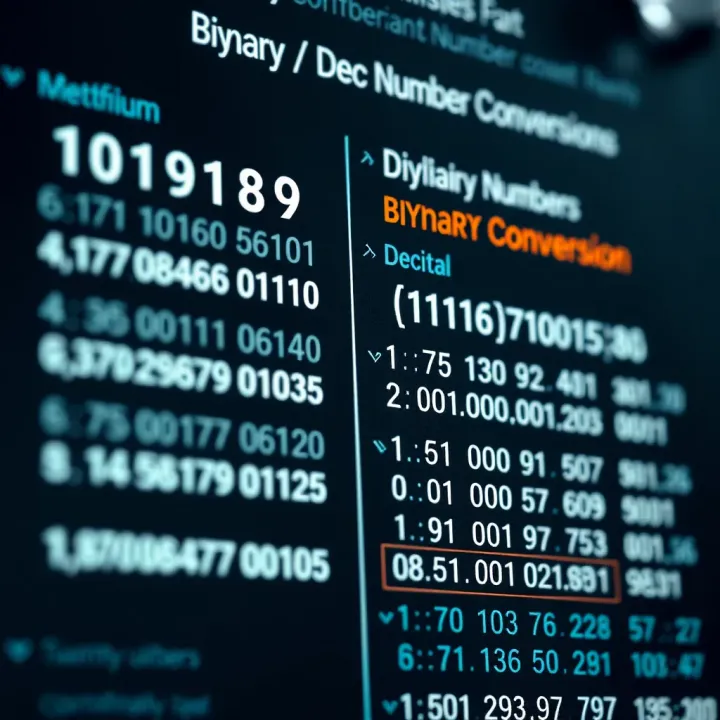
📊 Explore how binary numbers work, their role in computing, and practical tips for conversions and applications, plus free PDFs for easy learning!

Explore how 1 - 1 works in binary math 🧮. Understand binary subtraction rules, borrowing, and clear explanations for anyone new to binary numbers.
Based on 15 reviews