

Understanding Binary Fission in Simple Terms
Explore binary fission 🦠—how simple cells like bacteria in Nigeria split and reproduce. Learn its steps, pros, cons, and role in life sciences.
Edited By
Isabella Martin
Binary code underpins every gadget and system we depend on today—from the smartphones in our pockets to the ATMs we use daily. This basic language, made entirely of zeros and ones, allows computers to process data and execute commands, turning complex tasks into manageable digital signals.
At its core, binary code is a system that uses two states to represent information: ON (1) and OFF (0). This simple structure makes it highly reliable, especially in electronic devices where voltage is either present or absent. Every app you open, every online transaction you make, and even the blackout reports the Nigerian Electricity Regulatory Commission (NERC) monitors involve extensive binary operations.
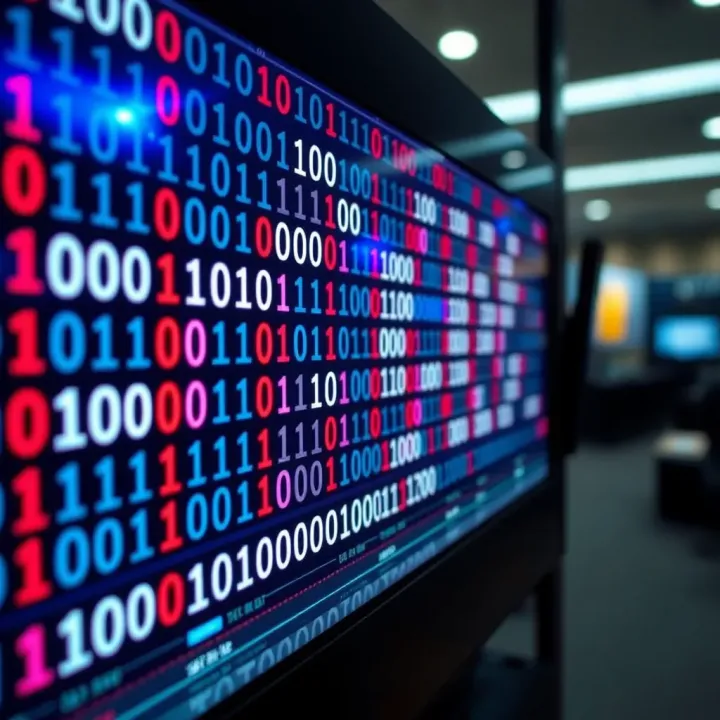
Historically, binary concepts trace back centuries, but its application to computing surged in the 20th century, particularly with pioneers like Claude Shannon, whose work linked Boolean algebra to electrical circuits. In Nigeria, the growing tech hubs in Lagos and Abuja rely heavily on binary operations to run fintech platforms like Paystack and Flutterwave, enabling millions of naira transactions every day.
Learning binary code helps you understand how digital solutions optimise financial markets—vital for traders and investors who depend on electronic data for real-time decisions.
Computers read binary through bits, the smallest unit of data. Eight bits form a byte, which can represent a single character, such as a letter or number. These bits combine in patterns that software interprets, converting into instructions banks' core systems or stock trading platforms follow.
Automated trading systems: Algorithms use binary logic to execute trades in milliseconds.
Data encryption: Binary sequences protect transaction integrity and user information across Nigerian banks.
Digital receipts and records: Generated as binary data for easy storage and retrieval.
Understanding this language offers a clearer perspective on how Nigerian fintech firms innovate and ensures your investments stay current with technology moving swiftly.
The language of binary, though seemingly abstract, is very much grounded in our daily financial and technological activities. This foundation is what keeps modern markets running and helps Nigeria's tech ecosystem grow steadily.
Binary code forms the backbone of modern computing and digital technology. It is a system that represents information using just two distinct symbols, typically 0 and 1. For traders, investors, and analysts, understanding binary code is key to grasping how data is processed behind the scenes in electronic devices, financial software, and communication networks. Think of it as the digital language that powers your mobile phone, online banking platforms, and trading terminals.
At its core, binary uses two symbols—usually 0 and 1—to store and communicate information. This simplicity makes it incredibly reliable and efficient for electronic devices. In physical terms, these two states can represent off and on, low and high voltage, or false and true. For example, a stock trading app converts price updates into binary signals, allowing your device to display fresh market data almost instantly. This two-symbol system reduces errors and complexity compared to systems with many symbols.
The choice of 0 and 1 aligns well with how electronic hardware operates. Digital circuits easily distinguish between two voltage levels: zero volts (0) and a positive voltage (1). This clear distinction helps prevent data corruption, especially important in noisy environments like busy Lagos traffic during ember months when signal consistency can be affected. Using 0 and 1 also simplifies hardware design and lowers manufacturing costs, making technology more affordable and accessible across Nigeria.
Binary doesn’t just represent numbers; it can also encode text and instructions. For example, in your email app, each letter you type converts into a binary number according to standard codes like ASCII. This makes text storage and transfer practical and seamless. Similarly, computer instructions that tell a processor what to do are also written in binary, enabling automated decision-making in financial algorithms that analyse market trends on the Nigerian Stock Exchange (NGX).
While computers use binary internally, humans find decimal numbers more intuitive. Converting binary to decimal involves adding the respective powers of 2 for each bit set to 1. For instance, the binary number 1101 translates to decimal 13 (8 + 4 + 0 + 1). This conversion is vital for programmers and analysts when debugging code or interpreting machine-level data. On trading platforms, understanding these conversions can help clarify how raw data translates to market values.
Knowing how binary code works gives you an edge in comprehending the technology behind your financial tools and digital devices. It’s not just abstract science – it's practical knowledge powering everyday transactions.
Binary uses two symbols because of electronic simplicity.
It encodes numbers, text, and instructions.
Converts easily to human-friendly decimal numbers.
Understanding these basics helps decode the digital life all around us, from your smartphone to complex financial models operating in Nigeria's evolving tech ecosystem.
Understanding the history of binary code helps us appreciate its central role in modern computing. The binary system isn't a recent invention; it has roots in early ideas that shaped how information is processed and stored today. This background explains why binary has become the universal language for digital devices, from smartphones to stock market software.
Leibniz, a 17th-century German mathematician, is credited with formalising the binary number system as we know it. He showed how complex calculations could be reduced to simple combinations of zeros and ones, a breakthrough that paved the way for digital logic. This approach is practical because electronic circuits only need to detect two states: on or off, making binary ideal for machines.
Leibniz’s work emphasises efficiency and simplicity—principles that financial analysts rely on today when processing massive data streams. By reducing complex financial models into binary data, computers can rapidly crunch numbers, predict trends, and execute trades on stock exchanges like the Nigerian Exchange (NGX).
Long before Leibniz, binary principles appeared in ancient cultures. The Chinese I Ching, dating back over 3,000 years, uses broken and unbroken lines to represent dual states akin to binary’s zeros and ones. Similarly, ancient Egyptians used hieroglyphs to encode information in ways that reflected binary choices.
These early uses demonstrate humanity's intuitive grasp of two-state systems, which is crucial because it underlines binary’s natural fit for encoding and decoding information. Traders and financiers today indirectly benefit from this legacy as they rely on binary-based digital systems for accurate data communication and secure transactions.
The 20th century saw binary's practical adoption in electronic devices. Digital circuits interpret electrical signals as either high (1) or low (0) voltages, thanks to transistors invented in the late 1940s. This simple yet reliable switching mechanism formed the backbone of calculators, cash registers, and eventually, computers.
For investors, this means the devices they use—from laptops to digital payment terminals—operate in a language that ensures speed and precision. For example, POS terminals in Nigerian markets convert your card information into binary signals for quick and secure payment processing.
Early computers like the ENIAC and later the UNIVAC used binary code to store instructions and data. This binary foundation allowed them to perform a variety of tasks faster than any human could. In Nigeria's growing tech scene, these pioneering ideas inspire current developers building fintech solutions tailored to local needs.
Recognising that early computers relied on binary explains why modern systems continue to improve on this foundation. Algorithms for stock trading software or mobile banking apps translate real-world activities into binary instructions, enabling complex analysis and real-time decision making for traders and brokers.
The history of binary code shows a remarkable journey from ancient thinking to practical digital tools. This evolution ensures that binary remains the dependable backbone of computing systems powering Nigeria's financial and technological progress today.
Binary code comes alive through electronic components that operate using two states: on and off. This simple principle allows digital devices—from mobile phones to sophisticated trading platforms—to process information efficiently. Electronics use these states to represent the digits 0 and 1, forming the backbone of all digital communication and calculation.
Digital circuits rely on switches, typically transistors, to control electrical signals. When a transistor allows current to flow, it represents the “on” state or binary 1. When it blocks current, it represents the “off” state or binary 0. This binary switching simplifies complex operations because circuits only need to detect two clear states rather than a range of values.
In practical terms, this means your smartphone’s processor uses millions of tiny switches working together, flipping on and off rapidly to perform calculations or display images. Even in noisy environments with voltage fluctuations, the clear binary distinction helps devices maintain accuracy in processing data.
The physical heart of binary code in electronics lies in integrated circuits (ICs), commonly known as chips. These chips contain layers of silicon with millions to billions of transistors embedded within. Each transistor acts as a microscopic switch, controlled by electrical signals.
For example, a Central Processing Unit (CPU) in a computer is a chip where billions of these switches execute instructions in binary form. The design allows chips to be highly compact, energy-efficient, and powerful, enabling devices like ATMs and POS terminals to run complex programs reliably. This technology's scalability ensures that from small gadgets to large data centres, binary code can be processed swiftly and consistently.
Binary data storage depends on memory components that hold sequences of 0s and 1s. Common memory devices include Random Access Memory (RAM) for temporary data storage and Solid-State Drives (SSDs) or hard drives for longer-term data keeping.
In RAM, each bit corresponds to a tiny cell that stores charge (representing 1) or no charge (representing 0). This arrangement allows computers and trading systems to access and modify data instantly during operations. SSDs use flash memory with similar binary storage but designed for permanence and faster retrieval compared to traditional hard drives.
Processors interpret and act upon binary instructions—a coded set of commands for operations like addition, subtraction, or data transfer. Each instruction is itself a sequence of binary digits that the processor's control unit decodes.
Instruction sets form the processor’s language. For example, the ARM architecture common in mobile devices uses binary instructions tailored for efficiency and performance. These instructions enable software running on smartphones or laptops to function smoothly, whether calculating stock prices or streaming videos. The precision of binary coding ensures commands are executed accurately and quickly, supporting the high demands of modern financial and tech environments.
The fundamental strength of binary code in electronics lies in its simplicity and reliability, which directly impacts device performance, data integrity, and operational speed—critical factors for traders, investors, and analysts relying on fast, trustworthy technology.
By understanding how binary code operates within electronic components, you gain insight into the nuts and bolts shaping the digital tools that drive today’s financial markets and everyday tech usage.
Binary code remains the backbone of the digital world, influencing how devices and systems operate in Nigeria and beyond. Its practical use covers a wide spectrum, from what powers everyday gadgets to how software and networks communicate. Understanding these applications gives investors, traders, and analysts sharp insight into the tech industry’s infrastructure.
Mobile phones and computers rely heavily on binary code to function. Whether it’s the smartphone in your pocket or the laptop on your desk, each processes data in binary form—strings of 0s and 1s translate commands, display visuals, and run applications. For example, when you send a message via WhatsApp or check your balance on a mobile banking app like Kuda, those instructions convert to binary signals the device’s processor understands.
Most importantly, binary enables devices to handle complex tasks swiftly while consuming less power, a key consideration given Nigeria’s power supply challenges. This efficiency ensures that your phone or computer stays responsive throughout the day.
Digital television and audio systems also depend on binary code to deliver quality entertainment. In digital TV sets, broadcasts are encoded in binary before decoding in your TV receiver, ensuring clear images without the snowy or fuzzy screen typical of analogue signals. Similarly, streaming services transmit audio in binary streams, allowing your device to play crystal-clear music or podcasts from platforms like Boomplay or Apple Music.
This digital encoding means less vulnerability to interference and better compression, so you use less data — critical for Nigerians mindful of mobile data costs.
Binary forms the foundation of programming languages that create software applications. From python scripts used in fintech startups to Java code running enterprise banking platforms, all instructions translate into binary for the computer’s processor to execute. Developers writing code for services such as Paystack or Flutterwave depend on this translation to build reliable, efficient software.
The use of binary extends further in data transmission and internet communication. Every email you send, transaction you make online, or social media update travels across networks as a series of binary bits. Protocols like TCP/IP manage how these bits move across devices to maintain accuracy and security.
These binary sequences underpin Nigeria's vibrant digital economy, enabling secure transactions on platforms like OPay and PalmPay, and ensuring smooth connectivity despite infrastructure constraints.
In summary, binary code’s role spreads through daily electronics and software to the very fabric of internet communication. For professionals in finance and trading, grasping these applications highlights how technology shapes market access, data security, and service delivery in Nigeria’s growing digital landscape.
Many people think binary code is only relevant for computers, but that's a narrow view that misses its broader significance. Clearing common misconceptions helps us appreciate its role beyond digital gadgets and understand the limitations within which binary operates. For traders and analysts, grasping these points is vital since many financial systems and communication protocols rely on clear data interpretation at a fundamental level.
Although mostly linked to computers and smartphones, binary isn't confined to digital devices alone. For example, in logic systems and decision-making models, binary principles help categorise options into "yes" or "no", "true" or "false"—a concept that guides complex financial algorithms and trading bots. Binary also shapes simple everyday tools like toggle switches and some mechanical devices that rely on a two-state system.
That said, the assumption that everything working with zeros and ones is digital oversimplifies reality. Not all binary representations are electronic; some are manual or conceptual, used in fields like information theory and telecommunications. Recognising this helps traders and programmers avoid confusion when dealing with different types of data encoding and transmission formats.
One common misunderstanding is that binary code can represent anything perfectly. In truth, while binary forms the base for digital representation, it has limits, especially when dealing with real-world complexities like analogue signals or infinite decimals. For instance, stock market prices with fractional cents or fluctuating values require approximations, so binary encoding introduces rounding errors.
Another limitation is the assumption that binary is the most efficient system for all applications. In some contexts, alternative number systems or encoding methods offer better speed and simplicity. Understanding these constraints enables financial experts to better interpret data accuracy and the performance of automated calculations in trading platforms.
Binary is a base-2 number system using only 0 and 1, whereas decimal is base-10, using digits 0 through 9. For traders used to decimal figures, recognising how binary encodes these numbers is crucial for understanding how computers process financial data. For example, the decimal number 13 is represented as 1101 in binary. This simple knowledge demystifies data formats in financial software.
The decimal system suits human arithmetic better because of its intuitive scale, but computers rely on binary for electronic circuits' on-off states. This fundamental difference is why financial analysts must grasp both to interpret reports or debug software systems effectively.
Hexadecimal, or base-16, uses sixteen symbols (0–9 plus A–F) and acts as a shorthand for binary. Since every hex digit corresponds to four binary digits, it simplifies reading and writing long binary strings. Traders involved in fintech development encounter hexadecimal when analysing data packets or encrypted transactions.
For instance, the binary 1111 1010 corresponds to hex FA, which is easier to manage in code or digital logs. Understanding this relationship improves clarity when reviewing technical reports, ensuring no details get lost in translation between systems.
Grasping these number systems and dispelling misconceptions around binary code can greatly improve your ability to navigate the tech-driven financial space confidently.
Explore binary fission 🦠—how simple cells like bacteria in Nigeria split and reproduce. Learn its steps, pros, cons, and role in life sciences.
🔢 Explore the basics of binary numbers and their structure, learn conversion methods, arithmetic, and how they power computers and communication tech in Nigeria.
🔍 Understand binary coin: its workings, uses, benefits, and risks in digital finance. Perfect for Nigerians keen on emerging tech and crypto trends!
Discover how binary code shapes everyday tech in Nigeria and worldwide 💻. Learn the basics, history, and its role in software and hardware 🖥️.
Based on 5 reviews