
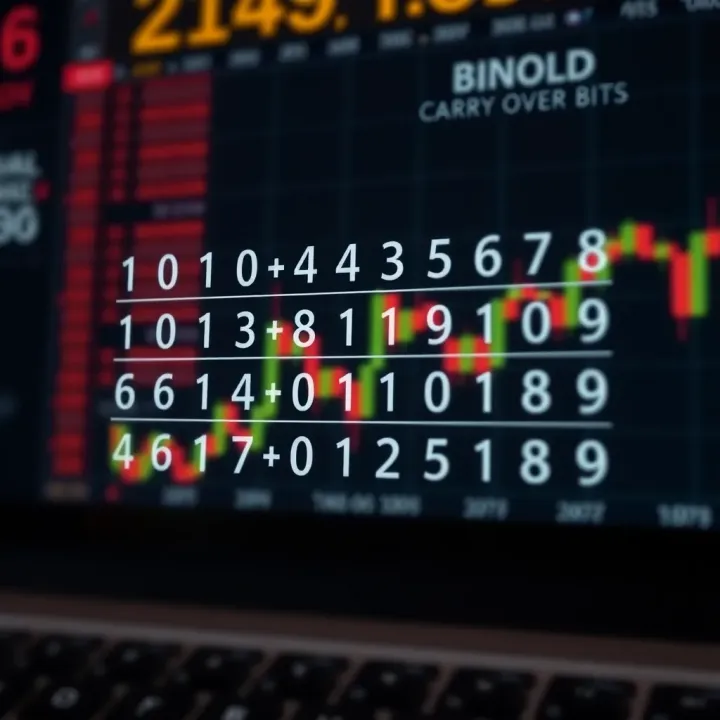
Understanding Binary Addition: A Simple Guide
🔢 Learn binary addition step-by-step with clear examples and essential rules. Discover its role in digital systems and avoid common mistakes! 💻
Edited By
Emily Carter
Binary charts might sound like something strictly for tech geeks, but they actually play a pretty big role in fields like trading, finance, and data analysis. If you’ve ever found yourself scratching your head over how to interpret binary data visually, this article is here to clear things up.
Simply put, a binary chart represents information in a format built on zeros and ones—straight from the basics of binary number systems. But beyond just raw data, these charts help traders, investors, analysts, and brokers quickly spot trends, patterns, or anomalies that can guide decisions.

We’ll start by looking at the fundamentals of binary numbers, then move into how those numbers can be turned into handy visual charts. Next, we’ll explore various practical uses for binary charts across industries, especially in finance and tech sectors. Along the way, I’ll share real examples and point out tools that can make creating and reading these charts way easier.
By the end of this guide, you won’t just be familiar with the concept—you’ll know how to put binary charts to work for you, whether you’re analyzing stock price movements or crunching data for a project. So, let’s get down to brass tacks and understand why getting the hang of these charts could give you an edge in your day-to-day work.
Understanding the basics of binary numbers is a starting point for grasping how binary charts work. Since traders, investors, and finance analysts often deal with large datasets, recognizing how data is represented behind the scenes can offer an edge. Binary numbers form the foundation of digital data storage and processing; without them, visualizing complex financial information in a binary chart would be impossible.
At its core, the binary system uses only two digits: 0 and 1. Each digit represents a power of two, rather than ten, making it quite different from the decimal system most people use daily. This simple on/off setup mirrors how many digital devices work, using switches that are either off (0) or on (1). For financial data, this system helps computers handle large volumes of transactions and status flags efficiently, turning complex info into clear, binary-friendly formats.
While the decimal system revolves around ten symbols (0 through 9), binary sticks to two. This means expressing numbers requires longer sequences of numbers in binary. For example, the decimal number 13 is written as 1101 in binary. Although it might seem cumbersome, this format fits neatly into computing processes, allowing for rapid calculations and easy data conversion—essential for developing accurate binary charts related to market signals or trading algorithms.
Digital electronics, including computers and financial servers, rely on binary because it simplifies circuit design and error detection. Transistors inside chips act as tiny switches, representing data straightforwardly with 0s and 1s. This reliability and efficiency keep the digital backbone of financial markets running smoothly, enabling real-time analysis and visualization through binary charts.
Binary digits, or bits, are the building blocks of binary numbers. Each bit can either be 0 or 1, and their position from right to left represents increasing powers of two. For instance, in the binary number 1010, the rightmost '0' represents 2^0 (which is 0), while the leftmost '1' represents 2^3 (which is 8). Traders analyzing binary charts can trace back patterns understanding how each bit contributes to the overall value or signal.
Counting in binary is straightforward once you get the hang of it. It starts with 0, then 1, then it flips to 10 (which equals 2 in decimal), 11 (3), 100 (4), and so on. This progressive doubling aligns well with computational tasks that require binary logic, such as identifying buy (1) or sell (0) signals in chart datasets. Practicing binary counting sharpens your ability to interpret the underlying data represented in binary charts.
Binary numbers are often marked with prefixes like '0b' or 'b' to distinguish them from decimal values. For example, 0b1011 clearly tells you this is a binary number. In financial software and programming tools used for charting, understanding these prefixes helps prevent confusion and mistakes in data interpretation. It’s a small but crucial detail when manipulating or reading binary datasets that feed into charts.
Grasping these fundamental concepts sets the stage for confidently diving into how binary charts work and how you can use them to spot trends in financial data quickly.
Binary charts play an important role in making sense of binary data, especially for those working with digital information in trading, finance, and tech fields. They provide a visual method that helps break down streams of zeros and ones into clearer, digestible insights. This section covers why these charts matter and what practical benefits they bring when analyzing binary information.
Using binary charts, traders or analysts can quickly spot patterns that would otherwise be buried in raw data. For example, instead of scanning a lengthy binary log of buy/sell signals, a binary chart simplifies that into bars or lines, making trend spotting and anomaly detection easier without diving into complex code or raw numbers.
Overall, understanding binary charts helps make informed decisions faster by translating complex binary sequences into a form that’s easier to interpret and communicate.
Visualizing binary data converts strings of 0s and 1s into clear graphical formats, making it easier to grasp large volumes of information at a glance. This is especially useful when a lot of binary inputs are involved, like monitoring system statuses or market signals. By showing data as simple on/off or true/false states in visual form, decision-makers avoid getting bogged down by details and can focus on what the data is actually saying.
Consider a forex trader tracking a binary indicator that flags whether a currency pair is entering a buy (1) or sell (0) zone based on algorithmic triggers. A binary bar chart instantly visualizes this signal over time, making it simpler to decide when to enter or exit a trade.
Binary data, especially from multiple sources or datasets, can quickly become overwhelming. Binary charts break down that complexity into straightforward visuals that highlight key points without drowning users in unnecessary details. This simplification helps in spotting trends or exceptions that require attention.
For instance, in network security, binary charts can simplify log data showing access attempts (success or failure) across multiple servers. Security teams benefit from a clear, concise overview instead of inspecting thousands of individual records.
Binary bar charts represent data as bars corresponding to binary states, commonly 0 or 1. These charts are excellent for showing the presence or absence of certain conditions over time or across categories. Their simplicity makes them intuitive for quick data scanning.
In trading, a binary bar chart might display a sequence of buy/sell signals where each bar’s height or color denotes the market condition at a given interval. This makes it easy to see which periods had more buying pressure.
Binary line charts connect binary data points over time, making changes in state more apparent and highlighting transitions between states. This is useful for detecting sequences and trends within binary data.
For example, an investor tracking a binary signal that switches between hold (0) and buy (1) over several days can visually assess when the market conditions shifted with a binary line chart.
Binary decision trees illustrate decision-making processes based on binary variables. They visually map out each binary choice leading to different outcomes, helping analysts understand and communicate complex decision flows.

Finance analysts might use binary decision trees to model a series of yes/no questions leading to investment decisions; say, "Is the market volatile?" followed by "Is the trend upward?" each branching out to final suggestions.
Using the right type of binary chart depends on your data and the story you want to tell. Whether it’s tracking signals, monitoring system statuses, or modelling decisions, these charts bring clarity to the binary maze.
This section offers an essential foundation for slicing through binary data clutter, enabling readers like traders, brokers, and analysts to harness clearer, actionable insights.
Building binary charts from data is a vital step in making sense of binary information in a visual form. This process transforms raw numbers into charts that reveal patterns, trends, or anomalies, helping analysts and traders grasp complex binary datasets quickly. The ability to construct these charts correctly ensures insights are meaningful and actionable, especially in fields like finance where quick interpretation of binary outcomes can influence decision-making.
At the heart of any binary chart lies the identification of binary variables — data points limited to two possible values, typically represented as 0 or 1. Recognizing these variables is crucial because binary charts best serve discrete, dual-state data such as win/loss records, yes/no responses, or on/off states in systems. For example, a trader might track whether a stock closed above or below its moving average each day as a binary variable, helping highlight patterns over time.
Preparing data for binary charts is more than just plugging numbers into a graph. It involves cleaning the dataset to remove errors, ensuring values are formatted consistently, and organizing it to fit the binary format. This stage might include converting non-binary attributes into binary form; for instance, translating text like "buy" or "sell" into 1s and 0s. Proper preparation guarantees that the final chart will accurately reflect the dataset without misleading signals.
Although manual plotting might sound old-school, sketching binary charts by hand still offers a hands-on approach useful for quick, small-scale analyses. For instance, an investor could mark a simple x-y grid on paper to track daily binary events like market uptrends or downtrends over a month. This technique helps understand data structure before committing to digital tools but is impractical for large datasets.
Spreadsheets like Microsoft Excel or Google Sheets are popular tools for creating binary charts. They offer functions, templates, and charting capabilities that turn binary data arrays into visuals such as bar charts or heat maps. For example, Excel's conditional formatting can color code 1s and 0s for easy spotting of patterns within thousands of rows. This method combines user-friendliness with enough power to handle moderately sized datasets effectively.
For handling larger or recurring datasets, automation through programming languages like Python proves invaluable. Libraries such as Matplotlib or Seaborn can generate sophisticated binary charts quickly. A financial analyst might write scripts to automatically pull binary trade signals and plot them daily, saving hours of manual work. This approach allows customization and scale but requires some coding know-how.
Tip: Whether building charts manually, via spreadsheet, or programming, always double-check your data input and chart logic to avoid misleading conclusions.
Building binary charts from the right data and using suitable methods ensures clear, actionable visuals that enhance understanding in trading, investing, and broader data analysis contexts.
Understanding how to read and interpret binary charts is a skill that can save time and reduce mistakes, especially for those dealing with large data sets or complex decision-making processes. In finance and trading, where data points often boil down to binary outcomes like buy/sell signals or risk/no-risk flags, being able to quickly see patterns or spot oddities in binary charts is invaluable. A clear grasp here allows you to make smarter, faster calls based on what the data visually communicates.
Binary charts often display sequences of 0s and 1s—think of them as a language or code. Recognizing frequently occurring patterns, such as repeated sequences like 1010 or 1110, helps traders and analysts predict upcoming behaviors or market shifts. For example, a recurring 111 pattern in a binary chart tracking asset performance could indicate sustained periods of growth or stability. Spotting these sequences quickly can guide when to act or hold back.
A practical tip here is to familiarize yourself with the particular binary patterns related to your data’s context. If you’re monitoring algorithmic trading signals, certain arrangements might mean a buy or sell alert. Knowing these can turn raw data into actionable insight.
Anomalies in binary charts show up as interruptions in expected sequences — say a surprising 0 stuck in a series of 1s, or erratic spikes that don’t fit the trend. These irregularities might mean data errors, unusual market conditions, or emerging risks. Detecting them early can prevent costly mistakes.
For instance, a network monitoring binary chart showing mostly 1s (active status) dropping suddenly to 0 in one segment may signal device failure or security breach. In trading, an unexpected binary flip in a buy/sell signal could warrant further investigation before making a move.
Always treat anomalies as red flags. Even if they turn out to be false alarms, their presence suggests you need to double-check your data or strategy.
In signal processing, binary charts often represent on/off states, presence or absence of a particular signal, or errors in transmission. Interpreting these charts means identifying patterns that indicate normal operation or signal degradation. For example, consistent binary 1s may signify a steady stream of valid data, while intermittent zeroes might flag noise or interference in transmission.
Engineers use these charts to quickly diagnose problems—say, where within a sequence packet loss occurs or how stable a connection is over time. For traders using data feeds, interpreting such signals can translate into recognizing market signal quality or errors in automated trading inputs.
Monitoring system statuses through binary charts is common in tech environments and increasingly in finance systems as well. Such charts might show whether components are operational (1) or down (0), running normally or flagged for maintenance.
For brokers dealing with platforms or trading tools, reading these charts helps them respond fast. A dip from 1 to 0 in a binary status chart might tell them to check their software or hardware before system failure affects trades. It’s about staying one step ahead to maintain smooth operation.
In a nutshell, interpreting binary charts effectively means going beyond just reading numbers. It involves understanding what the patterns signify in your specific field and using that insight to make faster, smarter, and more confident decisions.
Binary charts aren't just academic tools; they're deeply embedded in numerous practical fields, especially where decisions hinge on clear, two-state information. In sectors such as computer science, electronics, and data analytics, these charts help unravel patterns from streams of zeros and ones, making complex data easier to understand and act upon. Their visual clarity lets analysts spot trends and anomalies that might otherwise slip through the cracks.
When it comes to debugging, binary charts play a quiet yet crucial part. Software developers often use these charts to visualize bits and bytes across memory or during execution, helping identify where a program might be going off the rails. For example, a sudden flip in a binary state shown in a chart might indicate a corrupted memory segment or an unexpected state switch in a control flow.
This visual aid speeds up fault detection over raw code inspection by highlighting irregular patterns. Tools like GDB or Visual Studio can sometimes integrate binary views to support developers in zeroing in on bugs.
Networks thrumming with data packets pump out loads of binary data, and visualizing these helps IT specialists keep tabs on communications flows. Binary charts can illustrate packet headers or flag bits, showing when certain network protocols activate or when errors pop up.
For instance, spotting a burst of '1's where there should be '0's can signal packet loss or retransmission bursts, alerting network admins to potential weak links. Tools like Wireshark often feature ways to break down binary packet structures, but custom binary chart visualizations can add another layer of clarity for complex diagnostics.
In electronics, designing digital circuits demands a keen eye for binary states since circuits fundamentally operate with switches turning on or off. Binary charts help engineers map out how signals travel through logic gates, registers, or flip-flops.
They offer an at-a-glance view of circuit behavior over time, essential when testing designs like multiplexers or memory arrays. If, for example, a binary chart shows signals overlapping incorrectly, it might indicate timing issues or logic errors.
Having such visual confirmations beside simulation software like Cadence or Altium Designer makes troubleshooting more efficient.
Faults in circuits or electronic systems can manifest as erratic binary signals. Binary charts can spotlight deviating patterns that indicate short circuits, open lines, or component failures.
A practical example is spotting noise spikes translating to unpredictable binary toggling, which could be a sign of interference or hardware degradation. Binary charts thus act as an early warning system, reducing downtime and repair costs.
Data scientists using binary classification models (like logistic regression or decision trees) benefit from binary charts to visualize prediction outcomes: success (1) or failure (0). These charts reveal how models classify data points and where they might struggle.
For instance, a binary chart mapping credit approval decisions over time can quickly show periods with more frequent denials, flagging shifts in economic conditions or data quality.
Performance metrics like accuracy, precision, recall, and F1 scores — often binary in nature — are better understood through visual tools. Binary charts can display these metrics across different datasets or model iterations to aid in comparative analysis.
Seeing how a model's true positives and false negatives change visually helps analysts fine-tune algorithms, making informed decisions about trade-offs.
Understanding these applications isn't just academic; it can empower traders, analysts, and IT professionals to interpret binary data more quickly and with greater confidence, ultimately improving decision-making quality across various sectors.
By grounding binary charts in real-life uses, this guide arms readers with the tools and insights needed to apply this visualization technique effectively.
Creating binary charts by hand is doable but far from efficient when handling complex or large data sets. Tools and software designed for this task are invaluable—they save time, reduce errors, and add polish to the final output. In trading or finance, where binary data frequently appears in algorithmic signals or decision patterns, having reliable software helps analysts see the story hidden in 0s and 1s without the headache.
Selecting the right tool depends on your specific needs. Are you making quick, small charts? Or do you need automated scripts for huge datasets? That choice guides which software suits you best.
Excel remains the go-to spreadsheet software for many finance professionals. Its grid layout and formula capabilities make it straightforward to handle binary data. You can easily create binary charts using conditional formatting and built-in chart types like bar charts to represent binary states visually.
Excel’s ability to handle logical functions, like IF or AND, also lets users filter binary data dynamically. For example, a trader could flag all signals where a binary indicator switches from 0 to 1, then chart those transitions over time. Plus, Excel's pivot tables can summarize large binary datasets, providing a snapshot that's quick to interpret.
Google Sheets offers much of Excel's functionality but with the added advantage of cloud access and real-time collaboration. This makes it ideal for teams that need to update binary charts simultaneously or share snapshots with clients instantly.
The capabilities include similar conditional formatting and charting tools, with the added perk of easy integration with Google Apps Script. This scripting allows users to automate repetitive tasks, like updating charts when new binary data streams are added. For analysts often on the move or working remotely, Google Sheets is a flexible, no-fuss solution.
When it comes to handling complex and large amounts of binary data, Python steps up as a powerhouse. Libraries such as Matplotlib and Seaborn provide fine-tuned control over chart appearance and data manipulation.
These tools can create custom binary charts: think heatmaps where 1s and 0s correspond to colors, or binary line charts showing shifts in binary states over time. Python scripts can batch-process massive datasets, which spreadsheet software might choke on.
For example, an analyst might write a Python script to analyze several binary trading indicators at once, flag unexpected patterns, and export polished charts automatically. This extends beyond basic visualization, integrating with data science workflows commonly used in finance.
python import matplotlib.pyplot as plt import seaborn as sns import numpy as np
binary_data = np.random.randint(0, 2, (10, 10))
plt.figure(figsize=(8,6)) sns.heatmap(binary_data, cmap='binary', cbar=False) plt.title('Binary Heatmap Example') plt.show()
#### Dedicated binary visualization tools

There are also tailored visualization programs explicitly built for binary data analysis, such as BitViz or Binary Viewer. These tools specialize in representing binary information intuitively, often supporting unique chart types like binary decision trees or pattern search visualizations.

Their key selling point is efficiency with binary-specific functions, such as highlighting sequence patterns or directly importing binary logs from systems. If you work regularly with binary datasets and need more than general-purpose tools provide, these dedicated solutions can be a game saver.

> Choosing the right tool can significantly affect how well you interpret binary data. Spreadsheets provide ease and collaboration, Python offers power and automation, and dedicated software brings specialized features—knowing when to use each is half the battle won.

By having a toolkit that covers all these bases, traders, analysts, and investors can handle binary charts with confidence, ensuring data-driven decisions are clear and accurate.

## Limitations and Challenges of Binary Charts

Binary charts are valuable tools for visualizing binary data, yet they come with a set of limitations and challenges that deserve attention. Understanding these hurdles is key, especially for traders, investors, and analysts who rely on such charts to make informed decisions. When overlooked, these challenges might lead to misinterpretations or performance bottlenecks, impacting the quality of insights drawn.

### Handling Large Binary Data Sets

#### Scalability issues
Handling massive binary datasets can be tricky because binary charts typically represent data points as straightforward zeroes and ones. However, when the volume escalates to thousands or even millions of entries—as is common in high-frequency trading logs or network monitoring systems—the chart can become cluttered and hard to manage. This overcrowding reduces clarity and may slow down visual processing.

For example, an investor monitoring binary trading signals across multiple stocks might find their dashboard overwhelmed with information, making it tough to spot meaningful patterns. To manage scalability, splitting data into more digestible chunks or using sampling techniques can help maintain clarity while still capturing essential trends.

#### Performance considerations
From a technical standpoint, plotting large binary datasets requires efficient processing. Spreadsheet programs like Microsoft Excel can start lagging when asked to handle hundreds of thousands of data points due to memory constraints. Similarly, visualization libraries such as Matplotlib in Python can become sluggish if not optimized—particularly if charts are updated in real-time.

Professionals often address this by leveraging more powerful tools designed for big data, such as Apache Hadoop combined with visualization libraries optimized for speed. This approach ensures that performance remains stable, enabling quick interpretations without waiting on charts to load.

### Avoiding Misinterpretation

#### Clarity in labeling
One common pitfall with binary charts is unclear or insufficient labeling, which causes confusion. Since binary charts flip between just two states, labeling needs to precisely convey what those states mean. For instance, in a binary status monitoring chart, "1" might represent 'active' and "0" 'inactive.' Without explicit labels or a legend, viewers might guess differently, leading to wrong conclusions.

Always ensure labels are clear, distinct, and consistently placed. Using descriptive terms alongside numeric binary values bridges the gap for users unfamiliar with the data source. For example, annotating a chart with "Signal On (1)" and "Signal Off (0)" can prevent mixed interpretations.

#### Avoiding data overload
Displaying too many binary variables on a single chart jumps into the territory of data overload, which can drown out significant trends. Imagine a broker trying to analyze multiple binary indicators—buy/sell signals, alert flags, connection statuses—all crammed into one graphic. This makes it nearly impossible to distill actionable insights at a glance.

Best practice involves limiting the chart to a few binary variables per view or adding interactive layers where viewers can toggle different datasets. This way, the chart remains clear and focused, avoiding the trap of cognitive fatigue.

> When working with binary charts, keeping data manageable and labeling crystal clear isn't just good practice—it's essential for confident decision-making.

In summary, understanding the limitations and challenges of binary charts helps users avoid common pitfalls like scalability slowdowns, performance lags, and misinterpretation. By respecting these boundaries, the value offered by binary visualizations can shine through with sharp, actionable insights.

## Best Practices for Designing Clear Binary Charts

Designing binary charts that actually make sense at a glance isn't just about making things look neat—it's about making sure the information speaks clearly to its user. This matters a lot, especially in fast-paced fields like trading and finance where a split-second misunderstanding could lead to poor decisions. Good design keeps the chart from turning into a tangled mess of ones and zeros that confuse rather than clarify.

Clear binary charts help highlight patterns and changes without overwhelming the viewer. When charts are cluttered or poorly colored, what should be quick insights instead become puzzles. So, the goal is to keep everything straightforward, easy on the eyes, and packed with actionable info. Let's break down the core elements to focus on to achieve that.

### Effective Visual Design Principles

#### Color Choices for Binary Data

Colors are your first handshake with the viewer—it sets the tone and clarity immediately. When mapping binary data, think of colors as on/off switches. Usually, black and white or blue and gray combos do well because they contrast sharply. But don't stop there; using colors like green for "1" and red for "0" can convey go/no-go signals intuitively, which traders especially appreciate.

Avoid excessive colors; too many hues turn a binary chart into a rainbow that distracts rather than informs. Also, consider colorblind-friendly palettes like blues and oranges to make charts accessible. Tools like Color Brewer can help pick palettes that avoid confusion.

Practical tip: Keep the background neutral and use bold colors only for the binary states. For example, a trader monitoring market signals might use bright green squares to indicate bullish signals and muted gray for bearish to make key points leap out.

#### Simplifying Chart Elements

Less is often more, especially here. Binary charts should strip down to essentials—no extra gridlines or fancy effects that detract from the core data. Remove unnecessary labels and keep axis notations simple.

Use clear, clean fonts and avoid cluttering with multiple chart types on the same graph unless it really adds value. For instance, combining a binary heatmap with a line chart showing price trends can work if carefully done, but throwing in additional elements like pie charts might just cause noise.

A good rule of thumb is to ask: does this element help tell the story, or just dress it up? Stick to the helpers and skip the fluff.

### Communication and Context

#### Providing Explanatory Notes

Charts don’t live in a vacuum; people need context to understand what those binary signals really mean. Annotations or short notes explaining the meaning behind the 0s and 1s enhance comprehension, especially for complex datasets.

For example, in a network security binary chart, a note might clarify that "1 represents active threat detected, 0 means clear." Such clarifications prevent misreadings and save users time flipping back to explanations elsewhere.

Good notes can be brief but must be precise. They’re like a compass in the data jungle.

#### Using Appropriate Scales

Even though binary data toggles between two states, the scales on your chart axes affect how we perceive its patterns. If the time intervals on the x-axis are uneven or too compressed, patterns can appear misleading.

Make sure your scales reflect real-world timing or event spacing to avoid skewing trends. For example, a trader analyzing binary buy/sell signals would want uniform time intervals so sudden floods of data don’t mask actual market moves.

Scaling properly aids in spotting real anomalies or trends without false signals.

> Clear and thoughtfully designed binary charts save time and reduce errors. They present just enough information in the right way to keep the viewer's focus exactly where it should be: on the data that matters most.

**In Summary:** Use contrasting yet accessible colors, keep your chart free of distractions, explain your data well, and mind your scales. Following these best practices helps create binary charts that traders, analysts, and students alike can quickly grasp and rely on.🔢 Learn binary addition step-by-step with clear examples and essential rules. Discover its role in digital systems and avoid common mistakes! 💻

💻 Explore how binary format shapes computing and data storage, learn binary number basics, applications, and clear up common misconceptions in tech.

🔢 Understand binary numbers easily with tables! Learn reading, converting, and practical uses of binary in tech with clear, simple explanations for everyday use.

Explore binary fission 🦠—how simple cells like bacteria in Nigeria split and reproduce. Learn its steps, pros, cons, and role in life sciences.
Based on 12 reviews