
Top Benefits of Forex Trading for Nigerians
Discover why Forex trading is gaining popularity in Nigeria 🇳🇬. Learn about its flexibility, liquidity, 24/7 market access, low entry costs, and how tech boosts your profit potential 📈.
Edited By
Oliver Fletcher
Artificial Intelligence (AI) is no longer just a buzzword in tech conferences—it’s making waves in financial markets, especially in forex trading. Traders in Nigeria and around the world are tapping into AI to get that extra edge, trying to predict currency swings and manage risks with smarter, faster tools.
Forex trading has always been a game of speed and strategy, where every second counts. With AI tools becoming more accessible, even individual traders now have tech that was once available only to big institutions. But what exactly does AI bring to the table? What benefits can traders expect, and where do the pitfalls lie?
In this article, we'll cover the nuts and bolts of AI in forex trading. From the practical upsides like improving decision-making and automating routine tasks, to the risks such as over-reliance on black-box algorithms, we’ll paint a clear picture. You'll also find real-world examples of AI strategies and some guidance tailored for Nigerian traders, ensuring the content hits home.
Understanding AI isn’t just for tech geeks anymore; in forex trading, it's quickly becoming a must-know for anyone serious about making smarter moves in the currency markets.
So, whether you’re a trader looking to try AI tools or just curious about how tech is changing forex, this guide lays out what you need to know in plain language, with practical tips and honest insights.
Understanding the basics of AI in forex trading sets the foundation for anyone looking to use technology effectively in the currency markets. AI isn't just a fancy buzzword—it changes how traders analyze, predict, and react to the forex market's fluctuations. It's useful to start with the essentials so you can see how AI tools fit into the bigger picture of trading.
AI forex trading means using computer programs that mimic human intelligence to make trading decisions. Instead of relying solely on human judgment, AI systems scan massive amounts of market data to find patterns and signals that might escape even the keenest trader. This includes machine learning models that adjust and improve over time based on new information.
For example, an AI program might analyze real-time price changes, news reports, and historical trends to decide whether to buy or sell a currency pair. The practical benefit here is the AI's ability to process complex data faster and more accurately than a person working manually.
AI algorithms break down forex market data by using techniques like statistical analysis and pattern recognition. They look for recurring behaviors, such as consistent price movements after certain economic announcements. These programs quantify those patterns with numbers and probabilities, allowing the system to predict possible price directions. This sort of data examination goes beyond simple moving averages or RSI indicators commonly used by traders.
The advantage is not just speed—it’s depth. AI can digest multiple streams of information simultaneously, such as price feeds, geopolitical events, and sentiment analysis from social media. This broad view often leads to smarter trade decisions.
Manual trading depends heavily on human judgment, gut feelings, and experience. Traders watch charts, read news, and place trades based on their interpretation. While experience counts for a lot, humans are prone to errors like emotional bias or missing fast-moving opportunities.
In contrast, algorithmic trading powered by AI removes emotional swings from the equation. The AI acts strictly on data and defined rules, which means it won't panic or hesitate during sudden market moves. This consistency can improve trade execution quality over time.
One big difference is speed and capacity. Humans struggle to analyze hundreds of currency pairs or digest real-time news quickly. AI systems handle this effortlessly. For instance, a seasoned trader might focus on a handful of pairs but AI can monitor dozens, instantly identifying setups everywhere.
These systems react faster to market changes, sometimes initiating trades milliseconds after a signal occurs. This speed is a game-changer in forex, where timing can mean the difference between profit and loss. AI's powerful data processing abilities enable traders to stay competitive in fast-paced trading environments.
In short, AI trading tools don't replace human traders but give them a powerful edge by crunching more data, faster and more consistently than people ever could.
Understanding these basics helps traders appreciate why AI is becoming integral in forex markets worldwide, including Nigeria. It’s not just science fiction—it’s real, practical technology reshaping how trades are made every day.
Understanding the main benefits of AI in forex trading helps traders unlock smarter trading approaches, especially in fast-paced markets like Nigeria’s. Using AI tools means tapping into more precise, quick, and unbiased information, which can translate into better trading outcomes. Let’s break down these advantages to see why more traders rely on AI nowadays.
Real-time data processing is one of AI's standout powers. Imagine trying to keep an eye on dozens of currency pairs, tracking price movements, news feeds, and economic reports all at once—it’s overwhelming for a person. AI systems can scan and analyze all this data instantly, spotting opportunities or risks as they arise, without missing a beat. For example, if EUR/USD suddenly spikes due to breaking news in Europe, an AI system can react faster than any human, allowing traders to make timely decisions.
Another strength is pattern recognition over large datasets. Forex markets produce mountains of historical and live data daily. AI algorithms dig through this massive information pool to find recurring trends or subtle signals—which might be invisible to humans. For instance, an AI might notice that certain currency patterns repeat before significant shifts in demand from Asian markets. Recognising such patterns can give traders an edge by anticipating moves before they happen.
One big hurdle for human traders is managing human biases. Fear, greed, or overconfidence can mess up judgement and lead to poor trades. AI systems don’t get emotional. They stick strictly to the numbers and rules set in their programming. This helps avoid mistakes like holding onto losing trades out of hope or jumping into a trade impulsively.
Along with that comes consistency in trade execution. A trader might waver or hesitate, missing the chance to act at the optimal time. But AI trades follow the set algorithms 24/7 without wavering—executing buys or sells exactly as planned. This reliable discipline can improve overall profitability by reducing costly human errors.
Forex runs around the clock, and trying to watch the market non-stop is practically impossible for humans. AI offers continuous operation without fatigue, monitoring multiple markets and currency pairs all day, every day. No coffee breaks needed. So even when night falls in Nigeria, an AI system can keep spotting trading chances in London or New York sessions without missing a tick.
Moreover, taking advantage of global market hours means no opportunity slips through the cracks. AI can jump on fleeting chances arising out of time-zone differences—like quick currency reactions to US economic data releases while Nigerian markets are closed. This continuous vigilance often lets traders open positions several hours before they’d normally be active, increasing their trading scope.
Harnessing AI tools effectively can transform how you approach forex trading. By improving analysis speed, removing human emotional pitfalls, and providing round-the-clock trade monitoring, AI brings significant advantages that can boost your edge in challenging forex markets.
Understanding these benefits in depth helps traders appreciate why their peers are increasingly trusting AI as more than just a tech buzzword—it’s a genuine companion in forex trading success.
When it comes to forex trading, not all strategies are created equal—especially when AI is involved. AI-driven strategies give traders an edge by analyzing vast amounts of data faster than any human can. Understanding these strategies can help you figure out when to trust automated decisions and when to step in yourself.
Trend following is one of the oldest trading strategies, but AI takes it to the next level. Basically, the AI system scans the market for strong upward or downward trends and then executes trades that align with those trends. For example, if the EUR/USD pair is steadily rising over several hours, the AI might enter a buy position to ride that bullish wave.
The advantage here is speed and consistency. Humans might hesitate or second-guess, but AI sticks to the rules without emotion. It looks at diverse factors such as moving averages, momentum indicators, and historical price action all at once. Of course, trend following isn't foolproof—false breakouts can cause losses—so AI models keep refining their parameters based on past performance.
This approach banks on the idea that currency prices tend to revert to a historical average over time. AI algorithms identify when prices stray too far from their typical range and bet on a reversal. For instance, if the GBP/USD is unusually high compared to its 30-day average, the AI might predict a drop and place a sell order.
One neat thing about AI and mean reversion is the ability to process complex statistical calculations instantly. Humans might miss subtle shifts or hold onto losing positions, but the AI can quickly spot opportunities to buy low and sell high within short time frames. The key here is to set good boundaries—too narrow, and the AI triggers trades too often, too wide and it may miss out.
Forex markets react sharply to news like economic reports or political events. AI uses Natural Language Processing (NLP) to read and understand news articles, tweets, or announcements in real-time. Imagine an AI parsing through statements from the Central Bank of Nigeria or updates on oil prices, instantly gauging the tone—positive, negative, or neutral—and what that means for currency pairs.
This ability is super useful because it cuts through the noise quickly. Instead of waiting for a trader to interpret headlines, the AI acts immediately, adapting its strategy. For example, if there's a sudden hike in interest rates announced by the Federal Reserve, the AI could interpret this as bullish for the USD and adjust trades accordingly.
Timing is everything in forex, and AI excels at reacting swiftly to market-moving events. When unexpected news breaks, like geopolitical tensions or sudden economic shifts, an AI trading system can jump in faster than a human could even read the headlines. This speed can mean the difference between catching a profit or suffering a loss.
However, not all market moves are predictable, and AI systems must be carefully calibrated to avoid overreaction to noise. But overall, their ability to react in real time to news and events complements trend following and mean reversion strategies, providing a fuller toolkit for trading.
Using these AI-driven strategies, traders can better navigate the fast-moving forex market by combining data-driven insights with the precision of automated execution. Still, it’s important to test and adapt these models regularly to stay ahead.
In summary, knowing how trend following, mean reversion, and news-based AI strategies work helps traders make smarter decisions, blending human judgment with machine efficiency.
Even though AI holds a lot of promise for forex traders, it's important to keep an eye on the risks and limitations it brings to the table. No technology is a silver bullet, and AI has its own set of weaknesses that can affect trading outcomes. For traders in Nigeria and elsewhere, understanding these downsides helps avoid costly mistakes and build smarter strategies.
Overfitting happens when an AI model becomes too focused on historical quirks rather than the true underlying patterns in the forex market. Imagine a trader who learns every tiny detail of past data, including random price blips, and assumes these will repeat exactly. That’s the AI reacting to noise instead of the actual signal. Overfitting means the model may perform brilliantly in backtests but falter badly when faced with fresh market data.
Backtesting challenges are closely tied to this. While it’s essential to test AI strategies against historical market records, past data has limits. Market conditions evolve, and what worked well last year might not stick this year. A backtest that looks perfect could simply be the AI memorizing the past instead of learning adaptable rules. Traders should therefore use backtesting cautiously, combining it with forward testing in live or demo environments.
Forex markets can swing wildly due to geopolitical crises, central bank decisions, or sudden economic shocks — events often called "black swans." AI systems may struggle with these unforeseen changes because their training data rarely includes such extreme scenarios. Handling sudden market shifts requires adaptability that some models lack.
Moreover, AI cannot always foresee or adjust instantly to black swan events. For example, during the 2020 COVID-19 market crash, some AI strategies that relied on smooth trends failed to adjust quickly enough. This limitation means traders should keep a close watch on trades and not rely solely on AI when the market feels unpredictable.
AI trading depends heavily on reliable hardware, software, and data feeds. System failures—whether hardware glitches, power outages, or network disruptions—can halt algorithmic trading at the worst moments, causing missed opportunities or losses.
Additionally, AI’s decision-making is only as good as the data it receives. Inaccurate, delayed, or incomplete data can throw off predictions significantly. For instance, if an AI system receives outdated market prices due to delayed data, it might make bad trades. Nigerian traders should ensure their AI platforms source data from steady, trusted providers and have safeguards to manage downtime or errors.
The key takeaway: while AI tools enhance forex trading, they don't replace vigilance and sound judgment. Traders must blend AI advantages with practical oversight to succeed sustainably.
By recognizing these risks—overfitting, sudden market shocks, and tech dependency—traders can design more robust AI-assisted strategies that aren’t easily blindsided. Keeping a human in the loop remains crucial, especially in volatile forex markets like those frequently seen in Nigeria and globally.
Nigerian traders have a unique landscape when it comes to forex trading powered by AI. With increasing internet access and mobile technology, many local traders are starting to explore AI-driven tools to stay competitive. However, the approach needs to be practical—understanding the right platforms, regulatory environment, and how to blend personal skills with AI assistance can make or break success.
Choosing the right AI trading platform is like picking the right set of tools for a job. For Nigerian traders, the key features to look for include real-time data feeds, customizable algorithm settings, and robust security measures. A platform should offer transparency on how their AI models work, giving traders insight into the decision-making process rather than a black box.
Popular platforms like MetaTrader 5, which supports algorithmic trading with expert advisors (EAs), have gained good traction. Meanwhile, some local brokers integrate AI tools directly, catering specifically to Nigerians. Reliable platforms also come with responsive customer support and educational resources tailored to varying skill levels.
Trusted brokers and software providers play a big role in ensuring a smooth trading experience. Platforms linked with well-known brokers such as FXTM, HotForex, or Pepperstone often offer built-in AI features or support third-party bots, combining reliability with advanced tech. It’s wise to test platforms via demo accounts first to understand the AI’s behavior and avoid surprises.
Navigating the regulatory landscape is crucial for Nigerian traders using AI in forex. Compliance with local financial laws ensures that traders operate safely within legal boundaries. The Securities and Exchange Commission (SEC) Nigeria oversees forex activities, and being aware of their guidelines helps avoid scams and illegal operators.
Understanding restrictions and protections means recognizing the limits of AI tools under Nigerian law. For instance, not all AI-based solutions might be officially approved, so due diligence is necessary when selecting services. While AI can automate trades, traders should remember that the Nigerian market mandates transparency on fees, withdrawal rules, and taxes.
Always verify the broker or platform’s certification status with SEC Nigeria or other financial watchdogs before investing real money.
AI is a powerful tool, but it’s not a magic wand. Nigerian traders should view AI as an assistant rather than a replacement for their judgment. The software can handle repetitive tasks, scan multiple currency pairs simultaneously, and alert to trading opportunities, but human oversight is essential to interpret market conditions and news.
Ongoing learning and observation are vital. The forex market doesn’t stand still, and neither should a trader. Keeping an eye on AI performance, tweaking algorithms, and staying updated on macroeconomic events improves trading outcomes. For example, during unexpected Nigerian market changes like policy shifts or currency revaluations, seasoned traders can adjust AI settings faster than just letting it run on autopilot.
In summary, Nigerian traders aiming to harness AI in forex should:n
Pick trustworthy, transparent trading platforms with AI support.
Stay aware of regulatory requirements and ensure compliance.
Use AI for data crunching but keep personal expertise in play.
Continuously monitor and learn from the market and AI results.
This balanced approach not only safeguards investments but also empowers traders to fully benefit from AI’s capabilities without losing control over their trading decisions.
AI tools in forex trading aren't a set-it-and-forget-it deal. To really get the best out of them, traders need to stick to some solid best practices. These practices make sure AI helps with smart decisions without leading us blindfolded into risky territories.
No AI setup delivers perfect trades non-stop. That’s why monitoring its performance is a must. Traders should keep a close eye on results and be ready to tweak settings when things don’t go as expected. For example, if your AI starts misreading a particular currency pair because of some sudden economic change, adjusting parameters or retraining algorithms can help tune it back on track.
Blindly trusting AI runs the risk of ignoring warning signs. Even the best systems can falter if market conditions rapidly shift or if there’s a software glitch. By regularly reviewing performance, you catch potential errors early and avoid costly mistakes.
Always think of AI as a useful tool, not a magical money printer. Your job is to keep tabs and steer it right.
Setting stop-loss and take-profit levels is like putting protective gear on your trades. These limits ensure that if the market goes against you, losses are cut early, and profits are locked in timely. For example, if trading USD/NGN with AI signals, setting a stop-loss at 1% below your entry point shields you from deep, unexpected dips.
Diversifying trading approaches spreads your risk. Instead of depending solely on one AI strategy, combining trend-following with mean reversion or news-based tactics reduces chances of blowing up your account when one approach fails. Think of it as not putting all your farm’s eggs in one basket.
Markets are always on the move, and so is technology. Staying informed about forex shifts—like changes in global interest rates or geopolitical events—helps you interpret AI signals in proper context. This awareness prevents misreads where AI treats a major news event simply as noise.
Similarly, AI tools keep evolving. A tool that was top-notch last year might miss new features like improved sentiment analysis or faster real-time data integration. Following updates from trusted providers, attending webinars, and reading expert reviews helps you keep your AI trading sharp and competitive.
Keeping current can be the difference between capitalizing on new opportunities and getting caught flat-footed.
By adopting these best practices, Nigerian traders and investors anywhere can use AI as a reliable ally rather than a mysterious black box. Approach AI seriously, but with caution and continuous input, and you'll stand a better chance of thriving in the fast-paced forex world.
Looking ahead, AI is set to reshape forex trading even more profoundly. While we've already seen notable benefits—speed, accuracy, and automation—the next wave of developments promises smarter, more adaptable systems. For traders, especially in markets that change quickly like Nigeria and other emerging economies, staying ahead means understanding these advances can give you an edge. As AI tools become more refined, traders can expect not just more reliable predictions but also better integration with other tech that makes trading more intuitive and flexible.
AI's predictive capabilities are improving steadily, thanks largely to advancements in machine learning techniques. Traditional algorithms might catch obvious patterns, but newer models, like deep reinforcement learning, dig deeper into market complexities. These models can identify subtle, non-linear trends that often escape human traders or simpler AI systems.
For instance, a machine learning model trained on years of forex data can learn to spot early signs of market shifts—like unusual volume changes or volatility spikes—before they fully develop. This means traders can enter or exit positions earlier, reducing losses and maximizing gains.
Besides prediction accuracy, today's AI models are better at adapting to ever-changing market conditions. Earlier AI setups often struggled when faced with unforeseen events or regime changes, like sudden political turmoil or economic policy shifts. But newer models continuously update themselves, re-learning from fresh data to recalibrate strategies on the fly. This adaptability is crucial because it helps traders avoid sticking to outdated assumptions when the market flips unexpectedly.
The future also points toward AI working hand-in-hand with other tech like blockchain and big data. Blockchain can provide transparent and tamper-proof transaction histories, which, when combined with AI, offer a way to verify and analyze trade authenticity and market sentiment more effectively. For example, an AI system could use blockchain data to detect unusual trading patterns that might hint at manipulative practices.
Big data complements this by feeding AI vast amounts of information—from economic indicators to social media trends—painting a fuller picture of market forces. By crunching these diverse data types, AI can generate trade signals that consider both traditional charts and current global sentiments, giving traders a leg up in decision-making.
Another exciting development is the move towards personalized trading experiences. Just like music or movie recommendations tailor themselves to your tastes, future AI systems could customize forex trading strategies to suit individual risk appetite, trading style, and even lifestyle. For example, an AI tool might suggest lower-risk trades if you prefer a steady income or go for aggressive positions if you’re after higher returns.
Personalization could be a game changer, especially for part-time traders or those balancing multiple commitments, letting AI handle routine tasks while you focus on strategy refinement.
All in all, the future of AI in forex trading looks promising. Traders who keep pace with these tools and understand their strengths and limits will likely find themselves better equipped to navigate the fast-moving forex market.
Discover why Forex trading is gaining popularity in Nigeria 🇳🇬. Learn about its flexibility, liquidity, 24/7 market access, low entry costs, and how tech boosts your profit potential 📈.
Explore forex trading benefits 🌍: easy access, high liquidity, profit chances 💰, and risk tips 📉. Compare it with other investments wisely.
💹 Learn how Nigerian traders can create a smart $100 forex plan. Manage risks, pick the best pairs, and grow your small capital confidently.
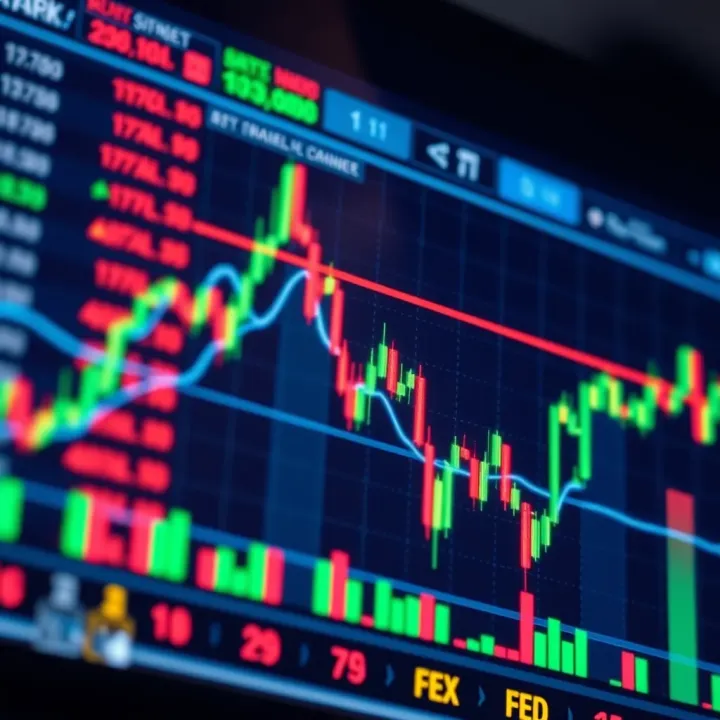
Explore how Nigerian traders benefit from forex trading 🌍: flexible hours, access to global markets, earning potential, and risk management tools 📊.
Based on 5 reviews